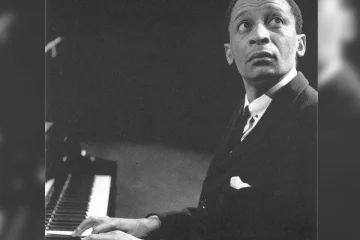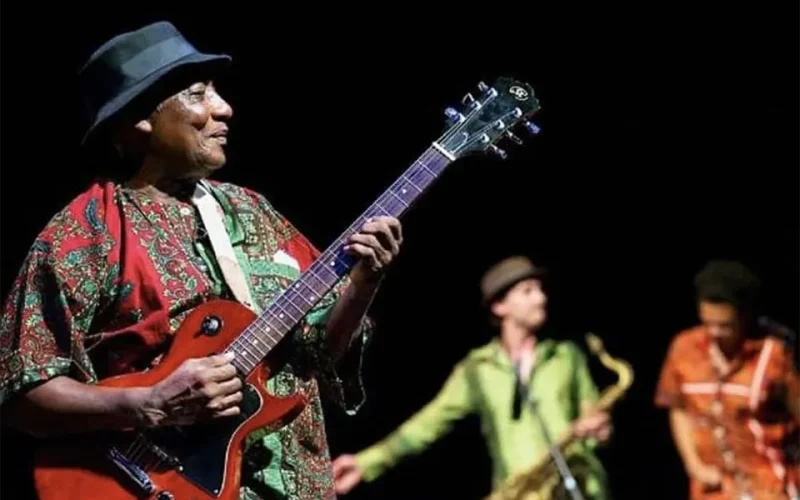
EBO Taylor didn’t just play music—he conjured it from the red earth of Cape Coast and sent it spinning across continents, a hypnotic fusion of palm wine guitar, jazz sophistication, and funk’s irresistible pulse. The legendary Ghanaian guitarist, composer, and bandleader who spent six decades weaving the soul of his nation into every note has died at 90, leaving behind a sonic tapestry as rich and complex as Ghana itself.
Born Deroy Taylor in 1936, he emerged during Ghana’s cultural awakening, when highlife music floated through colonial dance halls, and independence hung electric in the air. By the late 1950s and 60s, young Ebo was already transforming the genre, his fingers coaxing traditional Ghanaian rhythms into conversation with jazz, funk, and soul—creating something entirely his own, entirely irresistible.
His London years proved alchemical. There, amid the vibrant diaspora of African musicians, Taylor found himself jamming with a fiery young Nigerian named Fela Kuti. Those sessions, crackling with creative energy and Pan-African pride, would help birth Afrobeat—a revolution dressed in polyrhythm and protest. Taylor returned home carrying those innovations like precious cargo, ready to plant them in Ghanaian soil.
Back in Accra, he became the maestro everyone wanted, the bandleader who could make any session swing, the arranger who understood both the village drum circle and the recording studio’s possibilities. He shaped the sound of giants—Pat Thomas, CK Mann—while leading his own bands with an easy authority that never needed to announce itself.
For decades, Taylor worked quietly, steadily, a craftsman more concerned with the music than the spotlight. Then came the remarkable renaissance: Love & Death, Appia Kwa Bridge, Yen Ara—albums that introduced global audiences to what Ghanaians had known all along. Suddenly, DJs in Tokyo and Berlin were spinning his vintage recordings. Usher, the Black Eyed Peas, Kelly Rowland, and Jidenna—all sampled his grooves, his guitar lines becoming the foundation for new monuments.
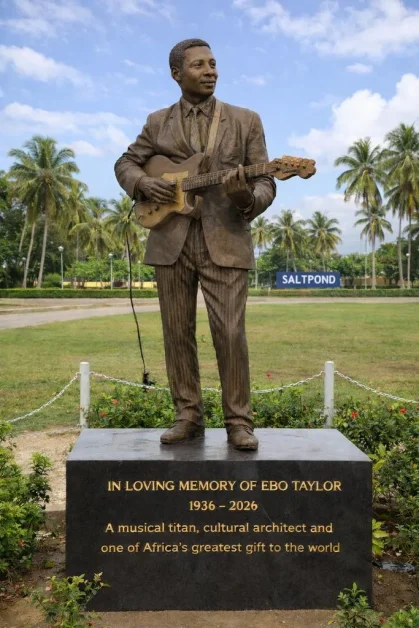
But Taylor never chased trends. He remained rooted in what he called “the African way”—music as community, as healing, as ancestral conversation. Producer Panji Anoff remembered him simply as “Uncle Ebo,” a mentor who treated studio newcomers and international stars with the same generous spirit. Rapper Black Sherif spoke of “a legend whose music created worldwide ripples”—ripples that became waves, waves that changed the shoreline.
Ghana’s government rightly called him a cultural colossus. But Taylor wore his titan status lightly, preferring the company of musicians to monuments, the studio to the pedestal. His legacy isn’t preserved in amber—it lives in every contemporary Afrobeat track, every guitarist who understands that tradition and innovation are lovers, not rivals.
Ebo Taylor leaves us having done what all great artists do: he made the world larger, more connected, more beautiful. His guitar spoke languages that needed no translation. His rhythms proved that borders are just lines on maps, meaningless to music determined to move.
The maestro has laid down his instrument. But listen—you can still hear him in the drums, in the dancing, in every song brave enough to honour the past while reaching for something new.
Rest in power, Uncle Ebo. The music plays on.