Our website use cookies to improve and personalize your experience and to display advertisements (if any). Our website may also include cookies from third parties like Google Adsense, Google Analytics, and Youtube. By using the website, you consent to the use of cookies.

Great Zimbabwe: debunking the myth of tyrants and forced labour

Great Zimbabwe: debunking the myth of tyrants and forced labour

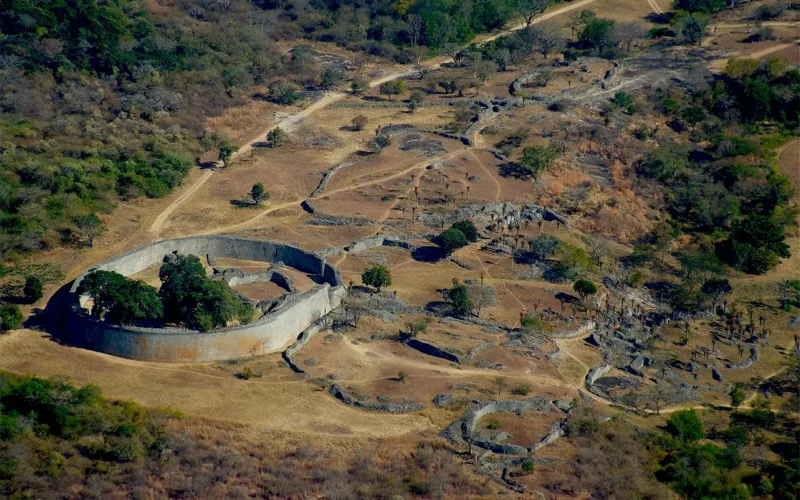
FOR more than a century, Great Zimbabwe has stood at the centre of a powerful story about the Zimbabwe culture. This remarkable African civilization flourished in southern Africa during the Middle Ages, constructing more than 200 dry-stone palaces, locally known as madzimbahwe (houses of stone). These towering monuments, immense gold wealth, and an array of exotica, including glass beads and glazed ceramics from distant lands, have often been interpreted as proof that southern Africa’s early states were ruled by authoritarian kings. Leaders who exercised near-absolute control over their subjects. In archaeology textbooks, museum exhibitions, and even political discourse, the image…
Read More
Money, food and survival: what drives paid sex among young mums in 3 African countries

Money, food and survival: what drives paid sex among young mums in 3 African countries

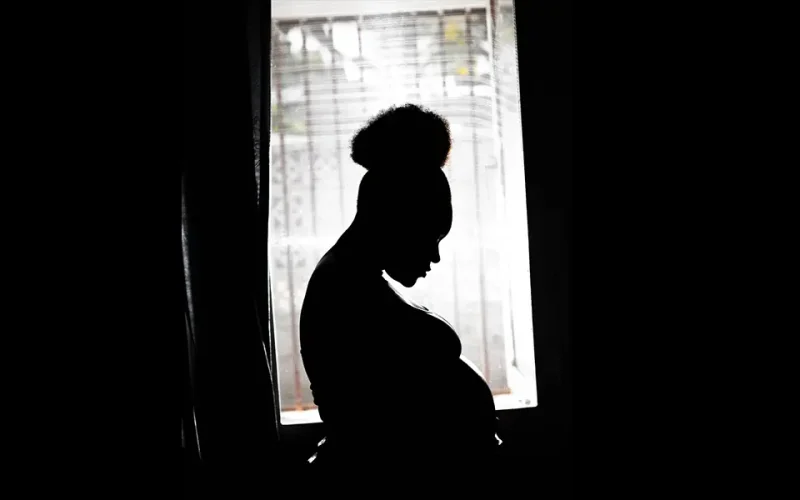
TRANSACTIONAL sex, defined as the exchange of sex for money, food, or favours, is common among young people in Africa. Studies have reported that about 10% of those aged 15-24 have engaged in this exchange in South Africa, 23% in Nigeria and 25% in Uganda. The behaviour has been linked to negative consequences such as unintended pregnancy, sexual violence and HIV infections. Transactional sex refers to sexual relationships outside marriage that are not classified as commercial sex work, but where there is an expectation that material, financial or other benefits will be exchanged for intimacy or companionship. We are sexual…
Read More
Nigerians tell their stories of banditry. ‘A month will not go by without someone being killed in this village.’

Nigerians tell their stories of banditry. ‘A month will not go by without someone being killed in this village.’

BANDITRY is widespread in Nigeria. It has been defined as “a loose collection of various criminal groups involved in kidnap-for-ransom, armed robbery, cattle rustling, rape and sexual violence, pillage and attacks on traders, farmers and travellers, particularly in Nigeria’s northwest region”. This criminal activity has caused deaths, displacement, destruction of property and widespread fear. In 2025 alone, 599 attacks were reported, with 2,742 casualties. This was a sharp increase from 2024, when 256 attacks and 1,585 deaths were recorded. Banditry has also extended its reach to the northwest and southwest of Nigeria. Studies have examined its costs and implications, and…
Read More
Appolonia: the story of an African kingdom that resisted the Atlantic slave trade

Appolonia: the story of an African kingdom that resisted the Atlantic slave trade

THE transatlantic slave trade was a multilayered, highly commercialised global enterprise that lasted from the early 1500s to the mid-1800s. The events over this period are far too complex to fit into a straightforward perpetrator-victim narrative. While the trade catastrophically dehumanised and commodified over 12.5 million Africans, it was not just an external conquest. Europeans lacked the geographical knowledge, immunity to endemic tropical diseases, and the military power to venture into the African interior. So they became dependent on African states and merchant elites for the supply of captives. By controlling coastal ports, regulating market access, and managing the interior…
Read More
World Cup 2026: the real story of the resilient African migrants reshaping global football

World Cup 2026: the real story of the resilient African migrants reshaping global football

GLOBAL football body FIFA is branding the World Cup 2026 – and global football in general – as a celebration of inclusivity and diversity. It’s presented as a harbinger of peace and hope, and even somehow a saviour of African migrants who drown while attempting to cross the Mediterranean Sea. The humanitarian posturing should not distract us from the existence of a precarious global class of migrants. They have travelled (especially from West Africa) to Europe (and elsewhere) by various means, with dreams of playing football for a living. As plenty of research has shown, many become stranded as unauthorised…
Read More
Internet access is unequal in South Africa’s economic powerhouse: survey shows race and income mark the digital divide

Internet access is unequal in South Africa’s economic powerhouse: survey shows race and income mark the digital divide

DIGITAL technologies create great opportunities, but the transformation they offer isn’t equally within reach of everyone. Access is determined by a vast digital divide. The digital divide refers to the gap between individuals and households who have access to the internet and those who do not. The digital divide can restrict educational attainment, economic opportunity, the ability to adapt to rapidly changing employment environments, healthcare access, social inclusion, and overall quality of life. While digital technology will bring about many environmental, social and economic gains, the pathway to South Africa’s digital future is not without challenges. The country needs to…
Read More
In eastern DR Congo, a cultural revival after a year of rebel rule

In eastern DR Congo, a cultural revival after a year of rebel rule

A packed crowd pressed against the stage of a cultural centre courtyard as a musician walked on for the first concert held in many months. A microphone crackled, and the artist smiled, as if to ward off fear. Then he announced with pride: "Hello Goma!" This story was originally published by The New Humanitarian. By Sumulia For the past year, Goma, the largest city in eastern Democratic Republic of the Congo, has been under the control of the Rwanda-backed M23 rebel group, whose insurgency has fuelled one of the worst security crises in the country in decades. Alongside massive displacement…
Read More
Women pay the price of surging banditry in northwest Nigeria

Women pay the price of surging banditry in northwest Nigeria

AMINA Ya’u* was six months pregnant when gunmen attacked her village of Rinaye in the Shagari district of Nigeria’s northwestern Sokoto State. Her husband, Abubakar Tunau, had just finished eating when the armed men forced their way into their home. He was struck with a rifle butt and shot in the chest. Ya’u collapsed. When she regained consciousness, her mother-in-law was beside her, crying. Her husband was dead. In the days that followed the September 2025 attack, 35-year-old Ya'u could not eat or sleep. She experienced repeated flashbacks. Four days later, she suffered a miscarriage. “His murder did not only…
Read More
Unearthing Namibia’s forgotten genocide through forensic archaeology

Unearthing Namibia’s forgotten genocide through forensic archaeology

THE Namibian genocide was one of the first genocides of the 20th century. Between 1904 and 1908, tens of thousands of Ovaherero and Nama people were killed under German colonial rule. Despite the scale of these events, the material and human legacy of this genocide remains less understood than later atrocities. Historical accounts exist, but are often incomplete or shaped by the perspectives and priorities of the colonial period in which they were produced. The landscapes of Namibia that testify to this violence still survive, but are under increasing pressure from urban expansion, infrastructure development and environmental change. Archaeological research…
Read More
Kenya’s war on traditional alcohol: a colonial hangover about what it means to be ‘civilised’

Kenya’s war on traditional alcohol: a colonial hangover about what it means to be ‘civilised’

AT the dawn of Kenya’s colonial era in 1902, consumption of home-made alcohol was deeply embedded in society. For instance, among the Mijikenda of coastal Kenya, palm wine was integral (p.290) to traditional ceremonies, such as marriage and initiations, and in ritual offerings. This partly explains why the colonial authorities did not consider prohibiting African home-made liquors. As early as 1908, however, they did prohibit Africans from consuming or handling European liquors. The prohibition was ratified on the pretext of Europe’s commitment to preserving the presumed innocence of Africans. The ban on Africans’ consumption of European liquor fostered and sustained…
Read More