Our website use cookies to improve and personalize your experience and to display advertisements (if any). Our website may also include cookies from third parties like Google Adsense, Google Analytics, and Youtube. By using the website, you consent to the use of cookies.

Shock at Mali attacks, and fear of what may be to come

Shock at Mali attacks, and fear of what may be to come

MORE than a decade ago, I stood inside a basketball stadium in Bamako, among people who had fled an upscale hotel after one of the first jihadist attacks on Mali’s capital. Some had been injured jumping from windows. Everyone was in shock. Standing in that stadium, on one of my first journalistic assignments, it never occurred to me that more than a decade later I would still be documenting similar scenes. Yet last weekend's attacks on Bamako and other cities by al-Qaeda-linked JNIM fighters and separatists show how wrong I was. On Saturday, I stood on a road leading to…
Read More
South Africa’s AI policy cited fake research, created by AI: what lessons need to be learned

South Africa’s AI policy cited fake research, created by AI: what lessons need to be learned

SOUTH Africa’s first attempt to establish a binding artificial intelligence (AI) policy framework came to an abrupt halt just 16 days after it was officially gazetted. On 10 April, the Department of Communications and Digital Technologies published the Draft South Africa National Artificial Intelligence Policy for public comment. Journalists checked the references and found that they contained fabrications. These fell into two categories: academic journals that do not exist, and real journals in which the referenced research articles were never published. Such fabrications are typical of a known generative AI problem called hallucination. Withdrawing the draft, the communications minister was…
Read More
To deliver a better humanitarian response, we need to fix Nigeria’s state dysfunction

To deliver a better humanitarian response, we need to fix Nigeria’s state dysfunction

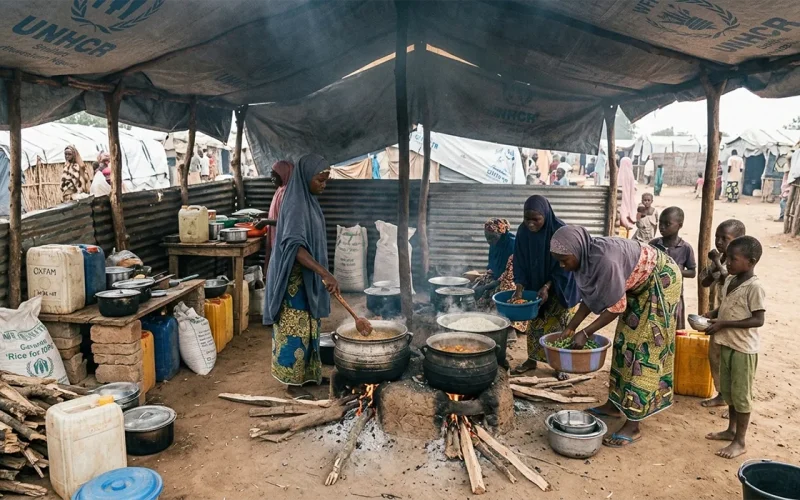
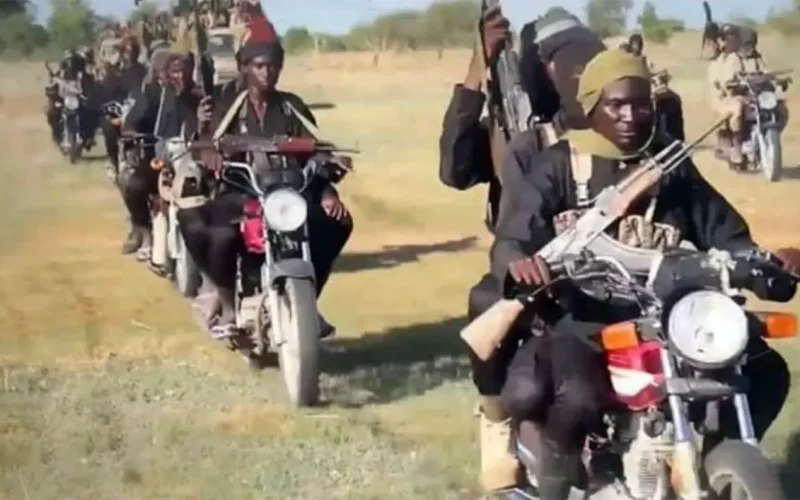
THE humanitarian crisis in northeast Nigeria is often described in the familiar shorthand of protracted conflict, mass displacement, chronic food insecurity. But this obscures a deeper truth; one that explains why, despite billions of dollars in aid, the situation continues to deteriorate. This story was originally published by The New Humanitarian.By Philip Alesin Northeast Nigeria is not just a long-running emergency. It is a complex crisis inside a dysfunctional state, where humanitarian outcomes are shaped as much by failures – of governance, security, infrastructure, and socioeconomic systems – as by the violence of Boko Haram and its jihadist cousin, Islamic…
Read More
Ghana’s mining law aims to stop speculation but leaves communities in limbo – insights from a lithium case study

Ghana’s mining law aims to stop speculation but leaves communities in limbo – insights from a lithium case study

GHANA’S parliament ratified the country’s first lithium mining agreement in March 2026. This came three years after lithium mining was confirmed as commercially viable in September 2023. The Ewoyaa Lithium Project, in the Central Region of Ghana, covers an area where farming communities have lived for generations. It spans several communities. The agreement is between the government and Barari DV Ghana Limited, the local subsidiary of Australia-based Atlantic Lithium. Lithium is a mineral used in batteries that power electric vehicles, renewable energy storage systems, and everyday electronics. It’s at the heart of global minerals supply chains to decarbonise energy and…
Read More
Clinging to the throne: Mnangagwa, Tshisekedi chart the same dangerous path

Clinging to the throne: Mnangagwa, Tshisekedi chart the same dangerous path

THERE is a peculiar theatre that plays out in certain African capitals whenever a president, having grown comfortable in the presidential palace, begins to hear the faint tick of the constitutional clock. The pageantry of consultation is assembled. Ruling-party conferences pass reverential resolutions. Legal advisers produce learned opinions. And slowly, the machinery of the state is bent toward a single purpose: ensuring the incumbent does not leave. In the spring of 2026, two of Africa's most consequential leaders are performing this theatre simultaneously - and the audience, from Harare's townships to Kinshasa's roiling streets, is not applauding. In Zimbabwe, President…
Read More
From genocide to countless acts of solidarity: Documenting three years of war in Sudan

From genocide to countless acts of solidarity: Documenting three years of war in Sudan

AFTER three years of catastrophic conflict, Sudan is divided and partitioned between the warring parties and their various armed allies, with few signs of any breakthrough in mediation efforts, and every indication of further regional escalation. The national army – the Sudanese Armed Forces (SAF) – and the paramilitary-turned-rebel Rapid Support Forces (RSF) were former allies who overthrew a civilian-led government before violently fracturing amid plans to integrate their forces. Many Sudanese see the SAF as a sovereign army fighting a legitimate battle against a rebel group that has been backed to the hilt by the United Arab Emirates, allowing…
Read More
Love, grace and world peace: how an African saint has shaped Pope Leo’s worldview

Love, grace and world peace: how an African saint has shaped Pope Leo’s worldview

POPE Leo XIV’s first official trip to Africa started with a fascinating stop in Algeria. Here, the pontiff’s visit to the Grand Mosque of Algiers was an attempt to strengthen Christian-Muslim relations. The stop was also to pay homage to Saint Augustine, the founder of the order that he is a member of. Catherine Conybeare, a professor of history, language, and the classics, has written a book revising Augustine’s story to place his African origins and beliefs at the centre. We asked her about it. What is the main takeaway from the book? Above all, one of the foundational figures…
Read More
Pope Leo’s visit to Africa: theology scholar outlines 3 realities the Catholic church must face

Pope Leo’s visit to Africa: theology scholar outlines 3 realities the Catholic church must face

POPE Leo’s decision to make Africa one of the early destinations of his young papacy signals the continent’s importance in global Catholicism. His April 2026 visit reflects both his personal ties to Africa and the rapid rise of Christianity across the continent. His 10-day itinerary to Algeria, Angola, Cameroon and Equatorial Guinea is also historically significant. In Algeria, for instance, Pope Leo will walk in the footsteps of Augustine of Hippo (who lived around the year 400), his spiritual father, highlighting the African roots of Christianity. But when the pope announced his Africa trip in February 2026, few could have…
Read More
South African court orders Eskom to disclose R70 billion coal and diesel contracts – why the ruling matters

South African court orders Eskom to disclose R70 billion coal and diesel contracts – why the ruling matters

SOUTH Africa’s Supreme Court of Appeal recently ruled that the country’s state-owned electricity utility Eskom must disclose its contracts with coal and diesel suppliers. This is a major victory for transparency in a sector that has long been marked by secrecy, financial instability and weak public trust. Eskom generates about 90% of the country’s electricity, mainly through burning coal that it buys from South Africa’s coal mines. Eskom spends R70 billion (US$4.16 billion) a year on coal and its transport alone but until now, its contracts with the mines have been kept hidden. The case began in 2024, when South…
Read More
US and Iran: A brief history of how decades of mistrust and bad blood led to open warfare

US and Iran: A brief history of how decades of mistrust and bad blood led to open warfare

WITH U.S. bombs raining down on Iran and Tehran’s leaders responding by hitting targets across the Persian Gulf and restricting transit through the Strait of Hormuz, it is fair to suggest that the present moment represents a low in relations between the two countries. But the bad blood isn’t new: The U.S. and Iran have been in conflict for decades – at least since the U.S. helped overthrow a democracy-minded prime minister, Mohammed Mossadegh, in August 1953. The U.S. then supported the long, repressive reign of the Shah of Iran, whose security services brutalised Iranian citizens for decades. The two…
Read More