IN the thirty years since South Africa’s democratic Constitution was signed into law, the country has produced a generation of achievers whose contributions have redrawn the boundaries of what is possible – on the rugby field, in the medical laboratory, in the community clinic, and in the halls of international science. On Tuesday, the Presidency recognised them.
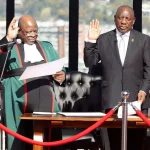
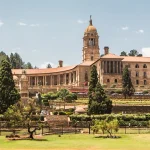
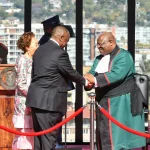
The 2026 National Orders investiture, presided over by President Cyril Ramaphosa at Sefako Makgatho Guest House in Tshwane, was the most substantive public accounting of national excellence in recent memory. The honours cut across every sector that defines a functioning, aspiring nation: sport, public health, scientific research, artificial intelligence, political activism, and international solidarity.
At the apex of the sporting honours and, arguably, of the entire ceremony – stood one name.
THE COACH WHO CHANGED EVERYTHING
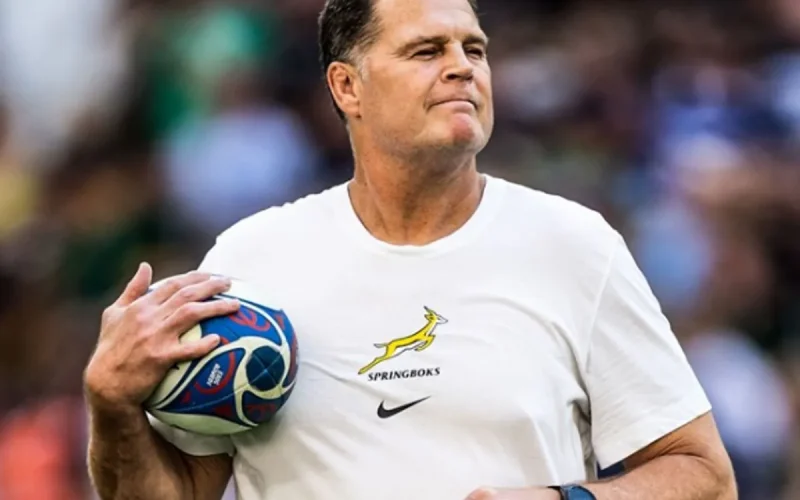
Johan Rassie Erasmus received the Order of Ikhamanga in Gold, the highest recognition the country bestows in arts, culture, journalism, and sport. His citation is, by the standards of official language, almost effusive: recognition for “inspirational leadership in national and international rugby that has propelled the Springboks to repeated Rugby World Cup Championships.”
Repeated is the operative word. Erasmus has now engineered three successive Rugby World Cup victories for South Africa – an achievement without precedent in the history of the global game. No coach, no nation, has done what Erasmus and his Springboks have done. The back-to-back-to-back feat places South Africa in a category of one, and places Erasmus among the most consequential sporting figures this country has produced since the democratic transition.
His citation acknowledges something beyond the scoreboard: that victory “has advanced social cohesion among South Africans and raised the nation’s esteem in the international community.” This is the particular weight that sport carries in South Africa – where the Springbok jersey was, for decades, a symbol of exclusion, and has been transformed, deliberately and sometimes painfully, into something the whole country can claim.
Erasmus did not merely win rugby matches. He coached a nation through an ongoing argument about who belongs, who leads, and what a South African team looks like. That argument is not finished. But the three World Cup trophies have shifted their terms in ways that no political speech could have managed.
THE SCIENCE OF SURVIVAL
If Erasmus dominated the sporting honours, the Order of Mapungubwe – reserved for excellence and exceptional achievement beyond South Africa’s borders – was defined by the country’s medical and scientific community, and in particular by two figures who became household names during the COVID-19 pandemic.
Professor Tulio de Oliveira, who leads genomic surveillance work at Stellenbosch University, received the Mapungubwe in Gold for the discovery of the Omicron variant of COVID-19 in November 2021 – a discovery that changed the trajectory of the global pandemic response. De Oliveira’s team identified the variant in South African samples and published findings with a speed that the world’s most resourced health systems struggled to match. The consequence was that South Africa, briefly and unfairly, faced travel bans from countries that had benefited from the warning. The gold medal is, among other things, an acknowledgement that the country’s scientific community performed at a world-class level under conditions that were both epidemiologically demanding and politically hostile.
Professor Salim Abdool Karim, who received the Mapungubwe in Gold alongside De Oliveira, needs little introduction to South Africans who lived through the pandemic — or, for that matter, to anyone who followed South Africa’s long, gruelling and ultimately world-shaping response to HIV/Aids. Abdool Karim’s contributions to TB and HIV research span decades and have influenced public health policy on multiple continents. His leadership of the Ministerial Advisory Committee during COVID-19 brought him to a wider public audience, but the body of work behind him is what the gold medal recognises.
Together, the two Mapungubwe Gold citations constitute the country’s formal acknowledgement that, in a crisis, its scientists were among the best on earth.
THE BROADER MEDICAL FIELD
The Mapungubwe Silver went to Professor Keertan Dheda, an internationally recognised expert in pulmonology whose research on tuberculosis and other respiratory infections has shaped clinical practice and public health policy in multiple countries. TB remains the single largest infectious disease killer in South Africa, and Dheda’s work sits at the intersection of bench science, clinical application, and policy influence that actually moves numbers in the real world.
Professor Karen Sliwa-Hahnle, also awarded Mapungubwe in Silver, has done groundbreaking work on cardiovascular disease — specifically cardiac disease in pregnancy, a condition that disproportionately affects African women and has been historically under-researched globally. Her citation notes that her work has “shaped guidelines that significantly reduced maternal mortality in Africa and beyond.” In a region where maternal mortality remains a defining public health challenge, that sentence carries considerable weight.
Professor Vukosi Marivate received the Mapungubwe in Silver for his contributions to data science, artificial intelligence, and natural language processing. The citation specifically notes advancement of “national and continental technological capabilities” — a recognition that AI capability in Africa is not merely aspirational but is being built, by South Africans, right now.
SPORT BEYOND RUGBY
The Order of Ikhamanga’s sporting citations extend beyond Erasmus to Norman Hlabane, the former professional boxer who turned twenty-one professional bouts into a platform for youth development and mentorship. Although he trained world champions such as Dingaan “Rose of Soweto” Thobela, Hlabane’s is not a story of championship belts – it is a story of what sporting figures do with the platform the sport provides them, and whether that platform is used to build something lasting in the communities from which they came. His Ikhamanga Silver says it was.
THE STRUGGLE, STILL ALIVE
President Ramaphosa made particular mention, in his address, of the Order of Luthuli – the National Order dedicated to those who fought for a non-racial, non-sexist and democratic South Africa. “This National Order is one we particularly cherish,” he said, “for we are determined to honour our veterans and stalwarts while they still walk among us.”
The 2026 Luthuli recipients span the living and the dead. Jack Simons and Ray Alexander Simons — the husband-and-wife pair whose contributions to South African historiography, labour organisation, and liberation politics are enormous and still not fully appreciated by the general public — received the Order in Gold, posthumously. Their joint citation recognises a lifetime of work among marginalised communities under apartheid and a significant contribution to the peaceful democratic transition.
Mmagauta Molefe, a former detainee of the notorious John Vorster Square security police headquarters, received Luthuli in Silver. She has since produced a documentary about the women detained and tortured there — titled Surviving John Vorster Square — which ensures that the evidence does not disappear with the survivors.
Caiphus Nyoka, who “selflessly paid the ultimate price” in the struggle against apartheid, received the Luthuli in Silver posthumously. His citation notes that his murderers were convicted four decades after his death — a detail that speaks both to the persistence of justice and to the length of its arm in South Africa.
Adele Kirsten — founding member of the End Conscription Campaign and longtime director of Gun Free South Africa — received Luthuli in Bronze for work that has bridged the liberation-era struggle against state violence and the contemporary struggle against gun violence in civilian life.
COMMUNITY, SCIENCE AND CONSCIENCE
The Order of the Baobab, which recognises contributions to community service, business, science, medicine and innovation, brought recognition for Prof. Chabani Noel Manganyi (Gold, posthumous) for his foundational work in Black Consciousness and Black identity; Prof. Kubedi Patrick Mokhobo (Silver) for pioneering cardiology work and community upliftment; and Prof. Pumla Gobodo-Madikizela (Bronze) for her internationally recognised work on forgiveness, trauma and social cohesion — a body of work that emerged from the TRC process and has since been taken up by transitional justice scholars worldwide.
THE FOREIGN FRIENDS
The Order of the Companions of OR Tambo — reserved for foreign nationals who showed friendship to South Africa — went, in Silver, to five recipients whose stories collectively sketch the geography of international solidarity during the anti-apartheid struggle: an American education advocate who built the Student Sponsorship Programme; two Dutch citizens who worked inside South Africa at personal risk for the liberation movement; a Mozambican who supported activists under dangerous conditions; and Prof. Chérif Keita of Mali, whose documentary on Nokuthela Dube — the pioneering ANC figure largely erased from mainstream historical memory — has brought a critical chapter of South African women’s history back into public view.
THE LARGER ARGUMENT
In his address, Ramaphosa returned to the constitution signed thirty years ago, describing it as “the mirror of South African society, reflecting both the history from which we have emerged, and the values of human dignity, equality and freedom we now cherish.”
The 2026 National Orders class is, by any measure, an argument for the depth of that mirror. From a rugby coach who has become the most successful in the history of the world game, to a genomic scientist whose findings redirected a global pandemic, to an elderly activist who survived John Vorster Square and turned the memory into testimony — the class reflects a country that is still, thirty years on, trying to account honestly for what it has been and what it is capable of becoming.
The accounting is not finished. It never is. But on Tuesday, in Tshwane, South Africa took stock — and found, as it periodically does when it is honest with itself, that it has more to be proud of than it sometimes allows.