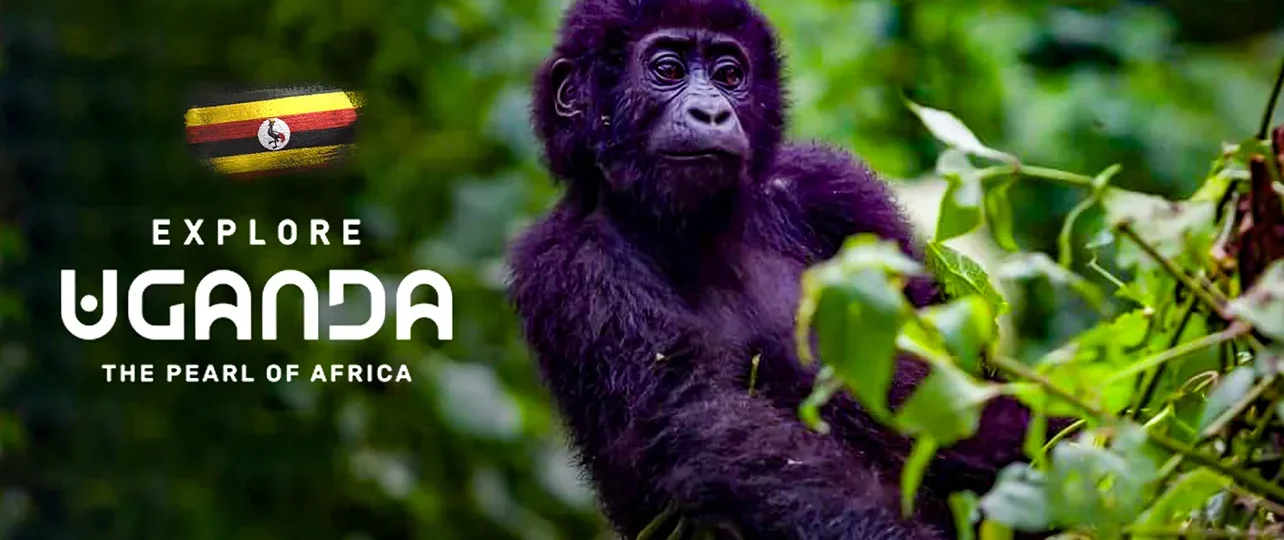

UGANDA’S latest “Explore Uganda, The Pearl of Africa” campaign has turned buses in France into moving billboards, the latest step in the country’s push to attract tourists, investment, and business from Europe and beyond.
The campaign reflects a wider shift across Africa, where governments are investing as much in selling their national brands as they are in selling their destinations, bringing together tourism, trade, culture, sport, exports, and diaspora engagement to compete for global attention.
According to Doreen Ruth Amule, Uganda’s ambassador to France, “the summer-long campaign is intended to showcase Uganda’s tourism attractions, cultural heritage, and investment opportunities to new audiences across France and Europe.”
The initiative, launched by the Ugandan Embassy in Paris alongside members of the Ugandan diaspora, forms part of a broader effort to position Uganda beyond a tourism destination and as a destination for business and investment.
The strategy is already showing signs of gaining traction. According to Ugandan officials, more than 7,400 French tourists have visited Uganda since 2024, compared with about 1,800 previously. The embassy is now targeting 10,000 visitors from France, Spain, and Portugal as it seeks to diversify visitor markets beyond traditional sources such as the United Kingdom, Germany, and the United States.
Tourism remains one of Uganda’s largest economic sectors. According to official figures, the industry generated about US$1.7 billion in earnings in 2025, supported more than 876,000 jobs, and contributed nearly 6% of gross domestic product, giving the government a strong commercial incentive to invest more aggressively in its international brand.
The Paris buses are only one piece of Uganda’s expanding international branding campaign.
In June 2026 alone, the Uganda Tourism Board launched the country’s inaugural Cultural and Tourism Festival in Munich, bringing together diaspora communities, tourism stakeholders, and investors to showcase Uganda’s cultural heritage and investment opportunities in Germany and the wider European market.
The East African country also unveiled a new international campaign, produced with CNN Create and George the Poet, using film and digital platforms to present Uganda’s tourism story to global audiences.
Uganda is also extending its national brand beyond tourism. At the World of Coffee exhibition in Brussels, exporters promoted the country’s premium Arabica and Robusta coffees to more than 4,000 international industry players while launching the country’s first national coffee brand, ‘Uganda Coffee: It’s in Our Nature,’ linking destination branding with exports and trade.
Notably, Uganda exported more than 650,000 60-kilogram bags of coffee during the period, surpassing Ethiopia in export volumes.
A spot check of the Ministry of Foreign Affairs’ website also shows brand promotional initiatives across Belgium, Germany, France, Turkey, China, Russia, and other international markets in June 2026 alone.
Uganda is also widening its branding playbook.
State Minister for Tourism Susan Nakawuki recently confirmed that Uganda is in advanced discussions with several English Premier League clubs to feature the “Visit Uganda” brand on match jerseys, according to a shore.africa report.
The proposal seeks to convert the league’s global audience into tourism growth while attracting investors and international business, following a destination marketing model pioneered on the continent through Rwanda’s high-profile football partnerships.
Uganda is far from alone.
Across Africa, governments are increasingly treating national brands as economic assets rather than tourism slogans, using them to attract visitors, investment, exports, talent, and international partnerships.
Kenya is pursuing a similar strategy through a different proposition. In March, the Kenya Tourism Board unveiled its “Experience Wonder” campaign at ITB Berlin, marking the biggest repositioning of the Magical Kenya brand in more than two decades.
“We are diversifying the Kenyan experience to include adventure, sports tourism, wellness, cultural heritage, conservation and luxury travel. We are enhancing the visitor journey through innovation,” according to Principal Secretary for Tourism John Ololtuaa.
Morocco is also raising the stakes as it prepares to co-host the 2030 FIFA World Cup.
Through its “Kingdom of Light” campaign, the Moroccan National Tourist Office has expanded promotion across Europe’s largest outbound travel markets while aligning destination branding with aviation expansion and tourism infrastructure.
The investment is producing measurable returns. Morocco welcomed 19.8 million international visitors in 2025, up 14% from the previous year, according to the Ministry of Tourism.
First-quarter arrivals in 2026 reached 4.3 million, a further 7% increase year on year, while tourism revenues continued to grow, reinforcing Morocco’s long-term investment in destination branding.
Rwanda has built its international profile through global sport.
Through the ‘Visit Rwanda’ brand, the country has secured partnerships with clubs including Arsenal, Paris Saint-Germain, and Bayern Munich, placing Rwanda before hundreds of millions of football fans while promoting tourism, conference business, and foreign investment.
South Africa is taking the same thinking into government policy.
Speaking during the World Economic Forum in Davos in January, Tourism Minister Patricia de Lille said the government was aligning the work of Brand South Africa and South African Tourism to present a more consistent international message across tourism, trade, and investment.
Tourism contributes about 8.8% of South Africa’s GDP and supports around 1.6 million jobs, making the sector central to the country’s economic growth strategy.
Benin, meanwhile, is linking national branding with diaspora engagement.
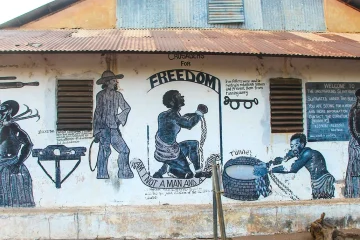
Earlier this year, the government launched the “My Afro Origins” programme, allowing eligible descendants of enslaved Africans to apply for Beninese citizenship. Officials say the initiative is intended to strengthen ties with the African diaspora while encouraging heritage tourism, investment, and cultural exchange.
Different countries are using different tools, but the objective is becoming remarkably similar.
Tourism boards are working alongside embassies, investment agencies, export promotion authorities, diaspora institutions, sports organisations, and cultural agencies to market countries under a single national brand capable of attracting visitors, capital, talent, and business.
The shift comes as Africa’s tourism economy continues to strengthen.
International arrivals to Africa increased by 4% year on year during the first quarter of 2026, outperforming the global average and supporting more than 31.5 million jobs, according to the World Travel and Tourism Council.
The momentum is expected to continue. According to the WTTC’s latest Economic Impact Research, sponsored by Chase Travel, travel and tourism contributed US$228 billion to Africa’s economy in 2025, representing 7% of regional GDP while growing faster than both the wider African economy and the global tourism average.
Kenya illustrates the scale of the opportunity. Travel and tourism contributed US$12.7 billion to the country’s economy in 2025, representing 9.3% of GDP and supporting 1.8 million jobs, equivalent to 8.3% of total employment, according to the same report.
The WTTC projects Africa’s travel and tourism sector will contribute US$241 billion in 2026, making the continent one of the world’s fastest-growing tourism regions.