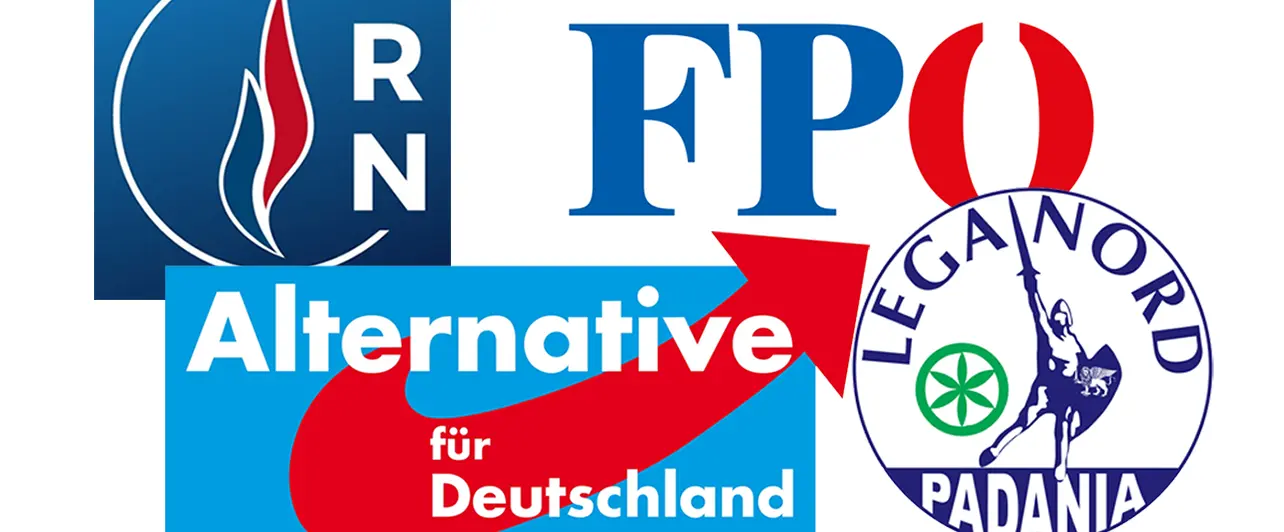

FAR-RIGHT political parties with anti-immigration platforms have secured significant influence across Europe and Asia, moving from peripheral movements to mainstream political forces that are reshaping national policies and governance structures.
Anti-immigration parties now lead or support ruling coalitions in Hungary, Italy, Finland, Slovakia, the Netherlands, and Sweden. In major European states, including Poland and France, these parties have established themselves as dominant opposition forces.
Recent electoral victories demonstrate the scope of this shift. Conservative nationalist candidates have won presidential elections in Poland, while coalition governments in the Netherlands have been formed with strong anti-immigrant platforms. The trend has forced centrist parties to adopt stricter immigration rhetoric and policies to maintain electoral viability.
The European Union faces internal strain as member states increasingly prioritise national sovereignty over collective action on immigration and integration policies. Funding for refugee resettlement programs has been reduced, and border controls have been strengthened across multiple nations.
Japan’s Political Disruption
Japan’s traditionally stable political system has been disrupted by the emergence of the Sanseito (Japanese First) party. Founded through social media campaigns, the party has leveraged anti-foreigner sentiment and concerns about cultural preservation to gain projected seats in the upper house of parliament.
The party’s platform centres on rejecting immigration and multiculturalism while promoting traditional Japanese values. Political analysts project the party could secure 10-15 seats in the upper house, insufficient for majority control but enough to pressure mainstream parties to adopt more restrictive immigration policies.
The Liberal Democratic Party and other established parties have already begun shifting their rhetoric to address voter concerns about foreign influence and cultural change. Visa processing has become more restrictive, and public discourse around immigration has hardened.
Similar movements have gained ground across Southeast Asia, with right-wing populist parties in Indonesia, Thailand, and the Philippines deploying anti-minority rhetoric while promising national revival. These movements have contributed to democratic backsliding in the region, with weakened checks and balances and increased surveillance of dissent.
Political scientists describe this as the end of the liberal democratic wave that characterised the late 20th century in Southeast Asia, replaced by authoritarian drift and majority-focused governance.
The political shift has produced measurable economic impacts. Countries that have implemented stricter immigration policies report difficulty attracting skilled workers and international talent. Innovation sectors that previously benefited from diverse workforces have experienced reduced productivity and competitiveness.
Social cohesion has deteriorated in multiple countries. Minorities report increased discrimination and exclusion, while public discourse around multiculturalism has become increasingly polarised. Educational institutions have noted changes in how diversity is perceived and discussed among younger populations.
International Implications
The rise of nationalist parties has affected international cooperation on global challenges. Climate change negotiations have stalled as countries prioritise domestic concerns. Trade relationships have become more contentious as economic nationalism gains political support.
International organisations report decreased effectiveness in coordinating responses to refugee crises and public health emergencies as member states become more reluctant to participate in multilateral solutions.
Governments across affected regions have implemented similar policy changes:
- Stricter visa requirements and reduced refugee acceptance quotas
- Enhanced border security and immigration enforcement
- Reduced funding for integration and multiculturalism programs
- Increased emphasis on national identity in education curricula
- Restrictions on foreign ownership and investment in certain sectors
Reciprocal Radicalisation
Political scientists have identified a pattern of “reciprocal radicalisation” where the rise of far-right movements has contributed to reactive extremism among some minority communities. This dynamic has led to increased polarisation and isolated incidents of violence that further fuel anti-immigration sentiment.
The phenomenon has been particularly noted in Southeast Asia, where tensions between far-right groups and Islamist extremists have created what researchers describe as a “vicious circle” of escalating rhetoric and occasional violence.
Future Projections
Political analysts predict the trend will continue to influence electoral outcomes across both regions. Mainstream parties are expected to adopt increasingly restrictive immigration policies to compete for voters, regardless of their traditional ideological positions.
The long-term implications include potential economic stagnation in countries that restrict skilled immigration, increased social fragmentation, and reduced international cooperation on global challenges requiring multilateral solutions.
The transformation represents a fundamental shift from the globalisation and multiculturalism that characterised the late 20th and early 21st centuries toward more nationalist and isolationist governance models. The ultimate consequences for democratic institutions, economic development, and international stability remain to be determined as these movements continue to gain political influence.