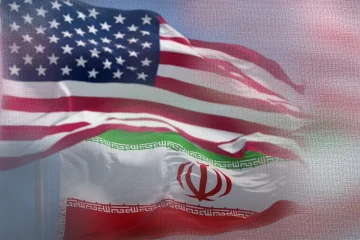

FIVE months after the United States and Israel opened a war on Iran, the search for a durable peace over the Strait of Hormuz has effectively collapsed. In its place has come a rolling exchange of missiles, air strikes and tanker attacks that on Tuesday pushed oil prices to their highest level in a month and left the world’s most important energy chokepoint balanced between war and an uneasy, temporary calm.
Iranian forces fired ballistic missiles at a United States air base in Jordan on Tuesday, a strike Jordan’s military said it largely repelled by shooting down four incoming projectiles before they could do damage. The attack came hours after United States Central Command completed a third consecutive night of strikes on Iranian territory, a five-hour operation targeting coastal defence systems, missile and drone sites, and other maritime strike capabilities that Washington says Tehran has been using to menace commercial shipping.
A CEASEFIRE IN RUINS
The current escalation marks the unravelling of an interim understanding reached between Washington and Tehran only last month, one meant to reopen Hormuz to commercial traffic and buy sixty days of negotiating space. That understanding held, unevenly, for barely a few weeks. Iranian forces resumed firing on commercial vessels transiting the strait in early July, and by the weekend, Tehran had declared the waterway closed outright, citing what it called an unauthorised transit route.
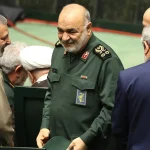
United States President Donald Trump responded by reinstating a naval blockade of Iranian shipping and floating a twenty percent transit fee on all cargo moving through Hormuz, a toll his own administration had dismissed as unworkable only weeks earlier. Tehran’s rebuttal was swift. Iran’s Foreign Minister Abbas Araqchi wrote on social media that his country would remain the strait’s guardian permanently, dismissing Washington’s proposed levy as excessive while insisting Iran alone would decide what is fair.
The rhetoric has hardened on both sides even as each insists it is not seeking a wider war. Trump told a radio interviewer that Iranian targets would be hit hard again, framing the strikes as punishment for what he described as Tehran’s failure to honour the interim agreement. Iran’s Revolutionary Guard Corps, for its part, has cast its campaign as retaliation against what it calls repeated American aggression, striking a base in Kuwait with drones and hitting commercial tankers it accuses of using an illegal route through the strait.
TANKERS CAUGHT IN THE CROSSFIRE
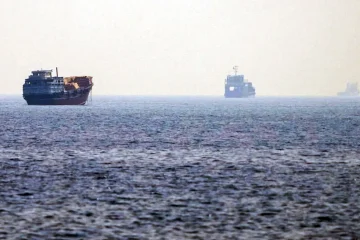
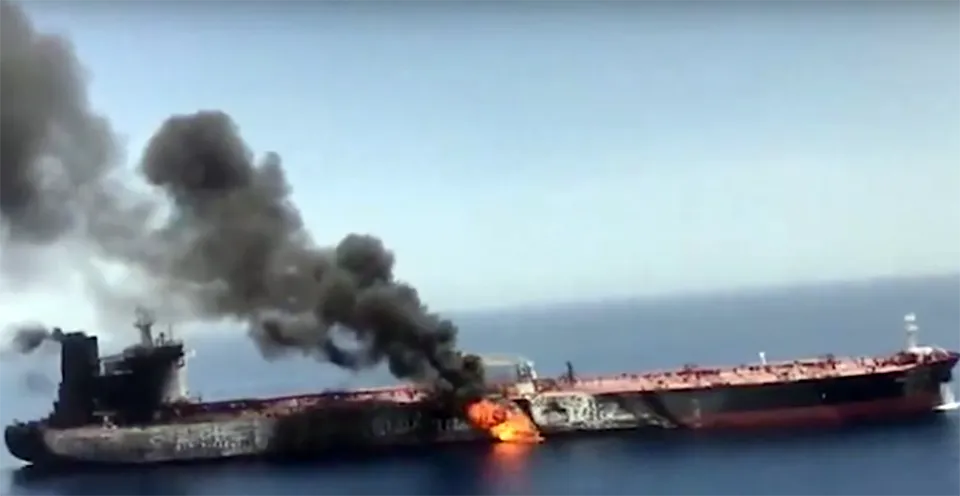
The human and commercial cost is mounting away from the battlefield. The United Arab Emirates said Iranian cruise missiles struck two of its oil tankers, the Mombasa and the Al Bahiyah, in the strait’s southern shipping lane inside Omani territorial waters, killing one Indian crew member and wounding eight others. Bahrain, home to the United States Navy’s Fifth Fleet, sounded missile-alert sirens as Iran retaliated against American strikes elsewhere in the region.
“We doubt the two sides will resume a full war… though there is also a distinct possibility that the Iranians will overplay their hand. That is true of Trump too.”
Yezid Sayigh, Senior Fellow, Carnegie Middle East Centre
Shipping data now tells its own story of a waterway in retreat. Tanker crossings through Hormuz fell by roughly half over the past week alone, according to maritime intelligence firm Kpler, as owners and charterers again deferred transit decisions and reverted to defensive routing around the Gulf. War-risk insurance premiums are climbing sharply in response, according to Lloyd’s List Intelligence, a cost that will ultimately be borne by fuel consumers thousands of kilometres from the conflict.
WHY THIS MATTERS FOR AFRICA
Before the war began in February, roughly a fifth of the world’s seaborne oil and gas moved through Hormuz each day, more than fifteen million barrels worth over a billion dollars. A sustained closure, or Washington’s proposed twenty percent toll, would ripple directly into fuel prices across a continent that imports the overwhelming majority of its refined petroleum. Brent crude has already climbed toward the mid-eighties per barrel, a level that, if sustained, threatens to reopen the same inflationary wound that battered African economies during the last major oil shock.
African net fuel importers, many still labouring under high debt-service burdens and currency pressure, have the least capacity to absorb another sustained spike in landed fuel costs. Higher freight and insurance premiums on Gulf-origin cargo will compound the problem, and African carriers and importers, who hold little leverage over Gulf shipping lanes or Washington’s naval calculus, will once again be price-takers in a crisis authored elsewhere.
The African Union and Global South blocs, including BRICS, have repeatedly called for de-escalation and warned against the weaponisation of global chokepoints, but neither Washington nor Tehran has shown any inclination to let outside diplomacy set the terms of this fight. The United Nations’ shipping agency has objected to the very premise of Washington’s proposed transit fee, arguing there is no legal basis for imposing mandatory tolls on straits used for international navigation, a position that carries moral weight but little enforcement power against two nuclear-shadowed states locked in open conflict.
A PEACE DEFERRED
What remains of the diplomatic track looks thin. Talks between Lebanon and Israel resumed in Rome this week, aimed at securing an Israeli withdrawal from southern Lebanon, but the broader Iran-United States track that produced last month’s now-broken interim deal shows no sign of being revived. Analysts continue to describe the fighting as bounded rather than total, with both Washington and Tehran calibrating strikes to preserve leverage for an eventual settlement rather than seeking outright victory.
That calibration is a thin reed to hang a global economy on. Congressional elections loom in the United States in November, and rising fuel prices at home have made the war increasingly unpopular even as Trump escalates it. Iran, for its part, has shown no willingness to cede its claim over Hormuz, a waterway it regards as central to its sovereignty and its only remaining point of leverage against a blockade that has strangled its own oil exports since the war’s opening weeks.
Until one side blinks, or an outside power forces a genuine truce, the strait will remain what it has become since February: not a channel of commerce but a front line, with bombs, not negotiators, deciding who gets to move oil, and at what price, through one of the most consequential stretches of water on Earth.