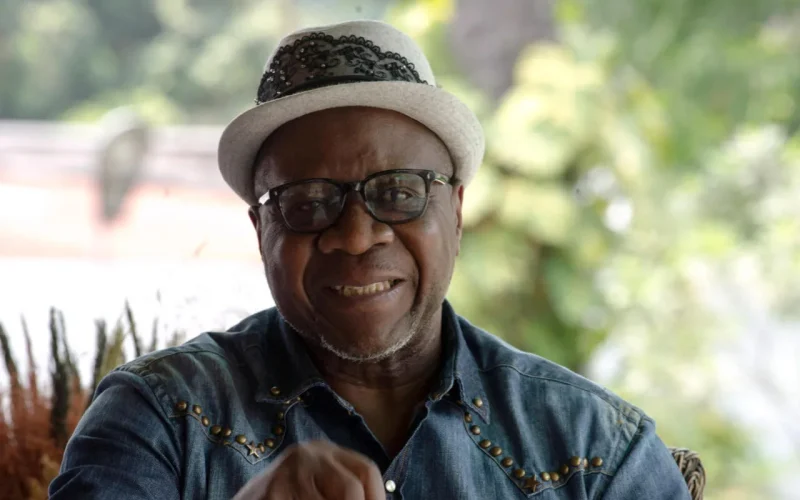
LET us begin with a confession. When Jules Shungu Wembadio Pene Kikumba – the man the world knew simply as Papa Wemba – collapsed on the stage of the Festival des Musiques Urbaines d’Anoumabo in Abidjan on the evening of 24 April 2016, many in the crowd initially assumed it was part of the show. Because with Papa Wemba, you never quite knew. He was that good. He was that theatrical. He was, in the fullest and most literal sense of the word, extra.
Ten years later, the Head of State of the Democratic Republic of Congo, Félix-Antoine Tshisekedi, made a pilgrimage – and let us not use that word loosely – to the Molokaï village in Matonge, Kalamu commune, Kinshasa: the famed headquarters of Viva La Musica, the group Papa Wemba built into a continental institution. Presidents do not typically visit music schools. They visit monuments. Which tells you everything you need to know about what Papa Wemba was, and remains.
He was a monument. In a suit that cost more than your mortgage.
From a Choir Boy to a Continent’s Conscience
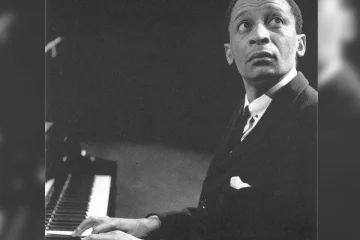
Papa Wemba was born Jules Shungu Wembadio Pene Kikumba on June 14, 1949, in the Kasai region of what was then the Belgian Congo. His biography, even in summary form, reads like a novel someone would reject for being too implausible. He is a descendant of a long line of BaTetela warrior chieftains – a status the clan’s elders later formally conferred on him for his contribution to music and culture. His mother was a pleureuse – a professional mourner, paid to sing at funerals. Wemba counted her among his leading influences; as a child, he spent many days watching her work. “If Mother was still alive,” he once said, “I would be rich in words and rich in melodies. She was my first teacher and my first audience.”
A boy who learns music from grief. Who grows up to make an entire continent dance. If that is not the DRC’s story in a single life, then nothing is.
After his father’s death, Wemba joined the choir of a local Roman Catholic church. He would later abandon the robes but never the vocal discipline. In 1969, a chance visit to a rehearsal changed everything. He sang an original composition, “Désespoir Jules,” impressed the administrators, and the very next day the band Bel Guide National was dissolved – reformed with Wemba as lead vocalist into what would become the iconic rock-rumba group Zaïko Langa Langa. Not invited. Installed. The man walked into a room and the room reorganised itself around him.
Viva La Musica, Viva La Révolution
By 1977, Papa Wemba had founded Viva La Musica – not just a band, but a school, a philosophy, a finishing academy for the continent’s finest musical talent. From Viva La Musica emerged generations of stars: from Koffi Olomide to Fally Ipupa, creating an aesthetic bridge between classic rumba and contemporary urban currents like ndombolo and rap. To have passed through Viva La Musica was a credential. It still is.
Wemba had a very distinctive voice – one that, combined with his rebellious third-generation energy, helped the DRC maintain its extraordinary continental musical dominance. Consider the audacity of that achievement: it was not South Africa and Nigeria – the African countries with the largest economies and populations – that spread their music across Africa between 1945 and 2000. It was the country with the beating heart, le grand tam tam d’Afrique – Zaire, now the Democratic Republic of Congo. Papa Wemba was at the epicentre of that cultural imperialism, the benevolent kind, the kind delivered in Lingala and Yohji Yamamoto.
The Sapeur: Dignity as a Weapon
Now we must talk about the suits.
In 1979, Papa Wemba became the unofficial leader of La Sape – the Société des Ambianceurs et des Personnes d’Élégance, literally the “Society of Atmosphere-setters and Elegant People.” In a country whose political elite had systematically stripped its citizens of economic dignity, here was a man arguing – through couture – that Africans could define luxury on their own terms. He once said: “The Sapeur cult promoted high standards of personal cleanliness, hygiene and smart dress to a whole generation of youth across Zaire.”
After his death, Cameroonian saxophone legend Manu Dibango put it more pointedly: “His whole attitude about dressing well was part of the narrative that we Africans have been denied our humanity for so long.”
There it is. The tuxedo as protest. The pocket square as pamphlet. The Sapeur not as peacock but as revolutionary – making the personal political, one immaculate crease at a time. It was Japanese designer clothing – Issey Miyake, Yohji Yamamoto – that formed a central part of Wemba’s wardrobe as the uncrowned prince of the Sapeurs. Which is its own kind of statement: an African man from Kinshasa, dressed in Tokyo, living in Paris, singing in Lingala, making London and New York stand up and take notice. Postcolonial theory has never looked so sharp.
The World Came to Him. Then He Went to the World.
In 1989, Wemba was onstage in London and New York with Molokai International, and then on a world tour with Peter Gabriel’s landmark WOMAD series. This was not a cameo. This was an arrival. He signed a solo deal with Gabriel’s Real World Records in 1991, producing Le Voyageur (1992), Emotion (1995), and Molokaï (1998).
Emotion in particular was a landmark. Produced under Peter Gabriel’s Real World label, the album propelled the rhythms of the Congo Basin into the global “World Music” sphere, giving Wemba’s voice an audience it richly deserved. He also worked with an international cast that included Eric Clapton, Stevie Wonder, Youssou N’Dour, Lucky Dube, and South African vocalist Brenda Fassie — a roll call that reads less like a discography and more like a summit of African and global musical civilisation.
Wemba understood that the best way to straddle vastly different Western and African markets was to write different music and maintain different bands — one in Paris, one in Kinshasa. He was, in modern parlance, operating two distinct revenue streams simultaneously, decades before anyone invented a business school to teach that strategy. In this respect, he reflected a distinctly Congolese cultural trajectory: the creation of ways of being modern that were not Western.
The Complicated Man
No honest portrait of Papa Wemba can omit the shadow. He pleaded guilty in 2004 to his role in a scheme to smuggle dozens of Africans into Europe, billed as band members or road crew. He served time. He returned. His fans, by and large, absorbed the contradiction — because they understood that a man who had spent decades smuggling African sound into indifferent Western ears perhaps saw no moral distinction in the other kind of smuggling. That is not a defence. It is an observation about how complex greatness tends to be.
He came back. He always came back. He recorded Maître d’école — a work of mature artistry that resonated like a testament, recentred on the essence of rumba, surrounded by collaborators including JB Mpiana, Barbara Kanam, and Jossart Nyoka Longo — affirming his role as mentor and custodian of tradition.
The Last Performance
According to his last interviews, Wemba had said he wished to die on stage. The universe, with its dark sense of irony, obliged. On 24 April 2016, he collapsed during a performance at FEMUA in Abidjan, Côte d’Ivoire, at the age of 66. Videos showed the artist falling on his back mid-song before band members rushed to his side. He died before reaching hospital.
In Kinshasa, his casket lay in state at the parliament building for three days. A steady stream of mourners filed past his white and gold coffin draped in the Congolese flag. It rained after the burial — a sign of blessing in the country.
Cardinal Laurent Monsengwo said it most simply: “For three days, as one man, the Congolese people, Africa and the world mourned the man who came to be known as the father of Congolese rumba.”
The President at Molokaï
Which brings us to this week. Ten years on, President Félix-Antoine Tshisekedi did not send a minister. He did not issue a press release from the comfort of a podium. He went to Matonge. He walked into the Molokaï village — the sanctuary of Papa Wemba’s creativity, and the living symbol of an influence that extends far beyond music into the lifestyle and identity of an entire people.
It is, frankly, the least the Republic could do. Papa Wemba’s death in Abidjan served as a political detonator — forcing the DRC’s leadership to confront its cultural policy, accelerating discussions on the social status of artists and the protection of creative works, compelling the state to regard culture not as mere entertainment but as a pillar of diplomacy and the national economy.
The Congolese rumba now holds UNESCO recognition. That is a direct consequence of the world that Jules Shungu Wembadio Pene Kikumba built, song by song, album by album, suit by impeccable suit.
The King in Perpetuity
Here is what they do not teach in music schools: the truly great ones do not merely leave a legacy. They leave a frequency. Papa Wemba tuned the world to a particular signal — one that combined African beauty, defiant elegance, volcanic voice, and absolute conviction that this continent’s culture was not footnote but headline.
A decade after he fell on that Abidjan stage, the rumba plays on. Fally Ipupa sells out stadiums on three continents. The Sapeur still photographs better than any fashion week runway. And a Congolese president made a pilgrimage to a music village in Matonge, because there are some things only a king can sanctify.
Papa Wemba did not leave the stage.
He simply changed the venue.