
RUSSIA’S intensified long‑range attacks and documented abuses against prisoners of war have deepened civilian suffering in Ukraine and underlined the growing obstacles to any negotiated peace, the UN’s top human rights official has warned.
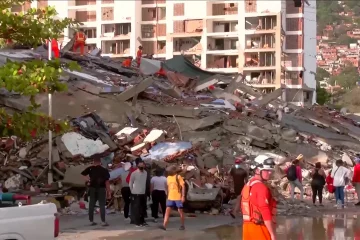
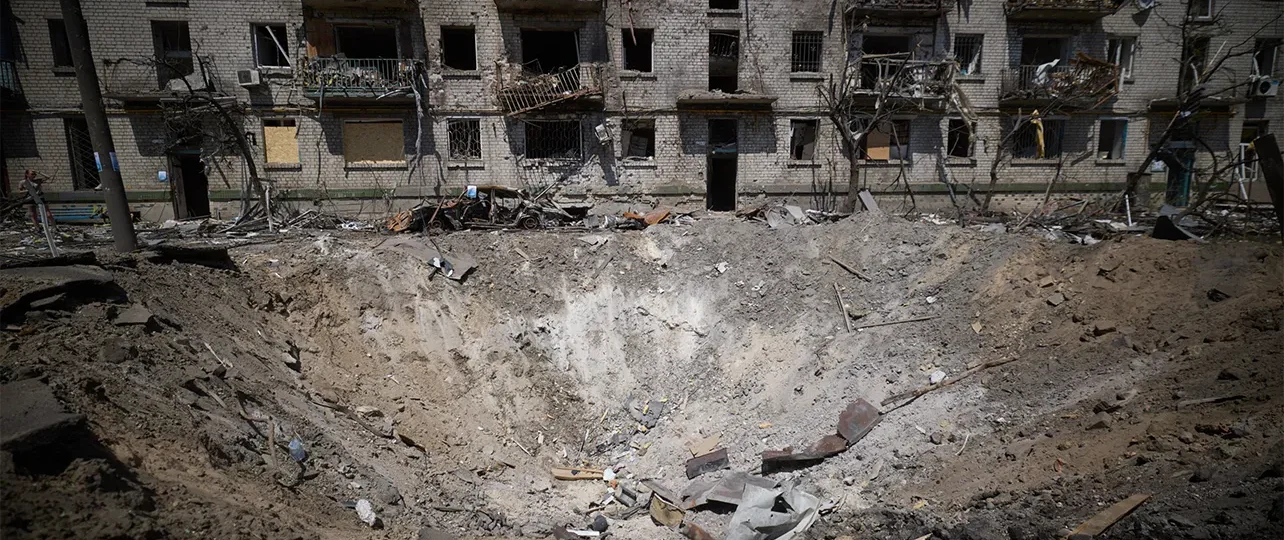
“Today is a day of mourning in Kyiv. Russia’s horrifying attack in the early hours of Thursday killed at least 30 civilians and injured at least 99 more. It is one of the deadliest attacks on Kyiv city since the Russian Federation’s full-scale invasion of Ukraine, and yet another tragic reminder of why this senseless war must end,” UN High Commissioner for Human Rights Volker Türk told the Human Rights Council during an interactive dialogue on the conflict.
Türk’s remarks, delivered amid renewed heavy strikes on cities and critical infrastructure, sketch a conflict that is intensifying in lethality and geographic reach. “Instead of moving closer towards peace, civilians are enduring more destruction, pain and suffering,” he said, summarising data gathered by his office, which points to a sharp rise in civilian harm.
Between 1 December 2025 and 31 May 2026, the Office of the High Commissioner for Human Rights (OHCHR) “verified that at least 1,270 civilians were killed and 6,850 injured in Ukraine. This represents a 40 per cent increase compared to the same period last year. The real toll is likely higher,” Türk said. The claim signals not only heavier targeting of populated areas but also the limits of verification in an active war: the Office repeatedly cautioned that actual figures are likely higher.
Türk singled out a dramatic escalation in the Russian Federation’s use of long‑range weapons and drones. He cited a mid‑May operation in which “on 13 and 14 May, Russian armed forces launched more than 1,500 drones and missiles across eight regions of Ukraine and Kyiv city, killing 27 civilians and injuring at least 83.” Such massed strikes mark a tactical shift toward area denial and infrastructure degradation, analysts say, increasing risks for non‑combatants and complicating the distinction between military and civilian objects required under international humanitarian law.
The High Commissioner also noted civilian deaths in territory under Russian control, underscoring the conflict’s diffuse footprint. He said that “On 22 May, 21 civilians were killed and others injured when an educational complex was struck in occupied Starobilsk in Luhansk region during an attack in the city by Ukrainian armed forces.” That admission highlights how both front‑line and occupied areas are suffering civilian losses, complicating accountability and verification efforts.
Türk pressed Moscow on transparency and access. “Russian authorities have reported that between 1 December 2025 and 31 May 2026, 205 civilians were killed and 1,302 were injured in 27 regions in the Russian Federation. My Office has not been able to verify these casualties. I repeat my call to the Russian authorities to facilitate access by my Office for independent verification,” he said. The appeal underlines a persistent verification gap that hampers independent documentation and could obstruct future legal and diplomatic responses.
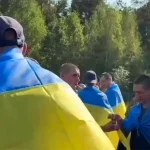
Beyond civilian casualties from strikes, the OHCHR documented grave allegations of mistreatment and summary executions of captured combatants. “Since mid-November 2025, my Office has verified that Russian forces have executed at least 20 captured Ukrainian servicemen. During the reporting period, my Office interviewed 129 released Ukrainian prisoners of war. Virtually all of them provided detailed accounts of torture or other ill-treatment during their captivity, including sexual violence,” Türk said. Those findings, if further substantiated, would amount to serious violations of the laws of armed conflict and could trigger inquiries by international judicial mechanisms.
Türk equally reported abuse by Ukrainian captors. “Around half the prisoners of war captured by Ukraine interviewed by my Office described torture or other ill-treatment, predominantly in transit facilities before transfer to official detention facilities. The prohibition of torture is absolute. The use of torture against prisoners of war must end immediately, and those responsible must be held to account,” he said. The parallel documentation of abuse on both sides complicates any narrative of unilateral culpability and strengthens calls for broad, impartial accountability measures.
Infrastructure attacks are another focal point of concern. Türk condemned strikes on energy systems that have compounded civilian hardship during winter months. Between October 2025 and March 2026, “Russian armed forces systematically and repeatedly targeted Ukrainian energy infrastructure, particularly facilities providing heating for urban areas, as temperatures dropped.” He concluded that “The scale and scope of the Russian Federation’s attacks suggest they were intended to disable Ukraine’s energy network as a whole, rather than strike specific military objectives. Treating Ukraine’s entire energy infrastructure as a military objective is incompatible with international humanitarian law.”
The OHCHR also noted reciprocal strikes on Russian infrastructure. “Ukrainian armed forces also attacked electricity and heating infrastructure in the Belgorod region of the Russian Federation on at least seven occasions so far this year, causing temporary outages, according to Russian authorities. My Office could not fully verify the damage or the impact of these attacks on civilians,” Türk said. His caveat reflects the wider problem of assessing harm amid competing claims and restricted access.
Türk used the platform to press for fresh diplomatic momentum grounded in rights and accountability. “I urge renewed efforts to negotiate a sustainable peace, grounded in human rights and in line with the United Nations Charter, international law, and General Assembly resolutions. Accountability for all these horrific violations is essential. Protecting human rights is key to building the trust and confidence required for any sustainable peace and can provide a vital opening for meaningful dialogue. This war is cutting deep physical and psychological wounds. Human rights need to guide efforts to secure lasting peace,” he said.
Analysts say Türk’s synthesis is significant because it combines verified casualty tallies with allegations of systematic tactics — massed drone and missile barrages, deliberate hits on energy systems, and mistreatment of detainees — framing the conflict not merely as kinetic escalation but as a broader contest that increasingly targets civilian life and infrastructure. The OHCHR’s mixed findings on abuses by both sides bolster arguments for independent, impartial accountability mechanisms and heighten pressure on international actors to push for access, investigation, and negotiated cessation of hostilities.