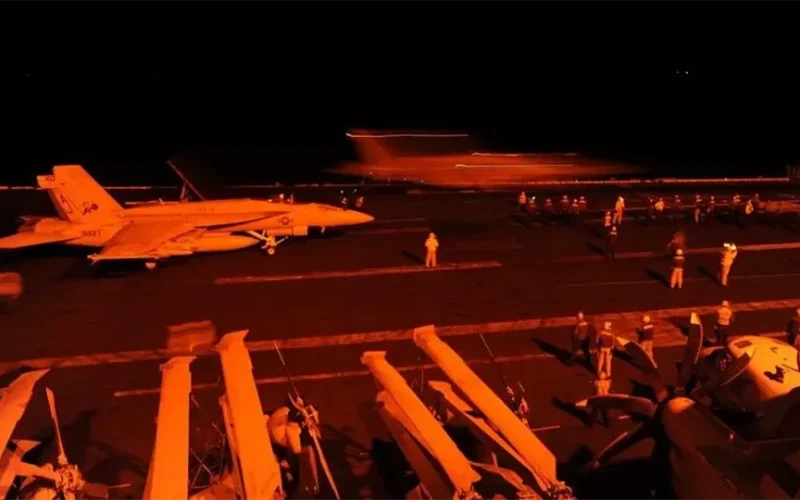
THE United States has renewed air and missile strikes on Iran for an eighth consecutive night, US Central Command confirmed at the weekend, after Tehran-aligned forces killed two American service members and left a third missing in a cross-border attack staged out of Jordan. It is the deadliest single blow to US forces since the current phase of the conflict reignited earlier this month, and it has hardened Washington’s resolve to keep pounding Iranian military infrastructure rather than step back toward the negotiating table.
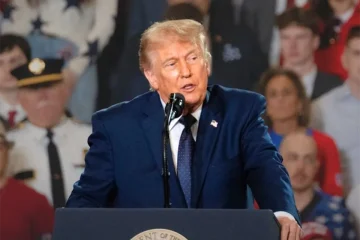
CENTCOM said the fresh wave of strikes, ordered directly by President Donald Trump, began at 6 pm Eastern Time on Saturday and was aimed at further degrading Iran’s capacity to threaten commercial shipping through the Strait of Hormuz, while punishing Islamic Revolutionary Guard Corps units linked to the attack on American personnel in Jordan. Four additional US troops were medically evacuated to hospitals in Jordan and have since been discharged, while others with lighter injuries have returned to duty.
The dead have not yet been named publicly; under US military protocol, their identities will only be released 24 hours after next of kin have been notified. Their deaths mark the first confirmed American combat fatalities from Iranian fire since March, a grim milestone in a war that has now dragged through multiple failed truces, several rounds of shuttle diplomacy, and at least two changes of Iranian supreme leadership since Israeli and American strikes killed Ayatollah Ali Khamenei in February.
A WAR THAT KEEPS REIGNITING
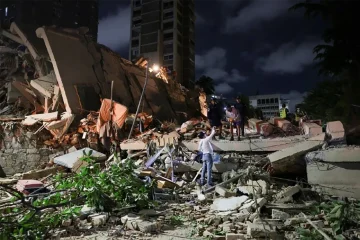
What Washington now frames as retaliation is, on the ground, the latest flare-up in a conflict that has repeatedly slipped its own ceasefire lines since February. Iran has struck at American-aligned interests well beyond its own borders in recent days, hitting a desalination plant in the south that reportedly cut water supplies to twenty villages in Hormozgan province, and battering a major Kuwaiti oil facility, which Kuwait’s state petroleum corporation described as suffering severe material losses and injuries from what it called brutal and repeated Iranian attacks.
Qatar’s foreign ministry condemned the wider pattern of Iranian strikes on Jordan, Bahrain and Kuwait as a flagrant breach of sovereignty and of the United Nations Charter, and singled out attacks on electricity and desalination infrastructure as crossing every conceivable red line. The rhetoric from Tehran, meanwhile, has hardened rather than softened. An adviser to Iran’s Supreme Leader warned this week that if the American campaign continues for another two to three days, Iran would abandon proportionate retaliation altogether in favour of what he termed full-scale confrontation, adding that no political border would then guarantee safety from Iranian offensive forces.
Both diplomacy and negotiations, as well as war, are over — this conflict will never end with Iran’s surrender.
Mohammad Bagher Ghalibaf, Iran’s chief negotiator, on the collapse of the ceasefire framework
THE ELUSIVE PEACE
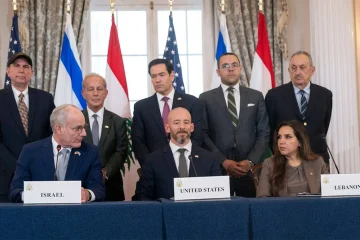
For a conflict that has burned through five months, the paradox is that the machinery of diplomacy has barely stopped running. Oman, the traditional back-channel between Washington and Tehran, has repeatedly insisted that off-ramps remain available even as bombs fell, with its foreign minister declaring in the earliest days of the war that the door to diplomacy was still open. Qatar has hosted successive rounds of technical talks and shuttled its prime minister between Iranian and American delegations, while Pakistan’s Shehbaz Sharif has positioned Islamabad as, in his own words, an honest and sincere mediator, working the phones between Tehran and Doha even as strikes resumed.
Each attempt has produced the same pattern: a tentative understanding, cautious optimism from US officials that talks are going well, and then a collapse over the same unresolved fault line — control of the Strait of Hormuz, through which a substantial share of the world’s seaborne oil passes. Washington and its Gulf partners have rejected any arrangement that would let Tehran unilaterally impose routes, restrictions or payment mechanisms on shipping through the strait. Iran, for its part, continues to assert control over parts of the waterway and has periodically fired on commercial vessels transiting it, prompting fresh US sanctions and, now, fresh strikes.
A Gulf Cooperation Council memorandum signed in June set the terms of what regional leaders now call lasting peace: not merely a ceasefire, but resolution of Iran’s ballistic missile programme, its drone arsenal, and its support for armed proxy groups across the region, alongside guaranteed free passage through Hormuz. Tehran has shown no sign of accepting that framework, and a senior Gulf official cautioned this month that expectations of a diplomatic breakthrough should remain limited.
WHY THIS MATTERS FOR AFRICA
For African economies still recovering from successive oil-price shocks since February, the renewed bombardment is not a distant Middle Eastern quarrel but a direct threat to fuel import bills, shipping insurance premiums and inflation targets from Lagos to Nairobi to Johannesburg. Roughly a fifth of global oil and a substantial share of liquefied natural gas transit Hormuz; disruption there has historically translated within weeks into higher pump prices across import-dependent African economies, undermining currencies already under pressure and complicating central banks’ inflation-fighting mandates.
The conflict also sits inside a broader Global South reckoning over how a war fought overwhelmingly through Western and Gulf military assets, but paid for in African fuel bills and stalled trade, gets resolved without African voices at the table. As BRICS-aligned states push de-dollarisation and alternative payment corridors partly in response to exactly this kind of externally imposed economic shock, the Iran war is fast becoming a case study in why African governments and the African Union have called with growing urgency for reform of a global security architecture that treats the continent as collateral damage rather than a stakeholder.
What is clear, eight nights into the latest bombing campaign, is that neither Washington’s insistence on degrading Iranian capability nor Tehran’s refusal to negotiate from what it regards as a position of surrender has produced anything resembling durable peace. The mediators — Oman, Qatar, Pakistan — keep working the phones. The strikes keep falling. And the elusive peace that regional and global leaders speak of remains, for now, exactly that: elusive.