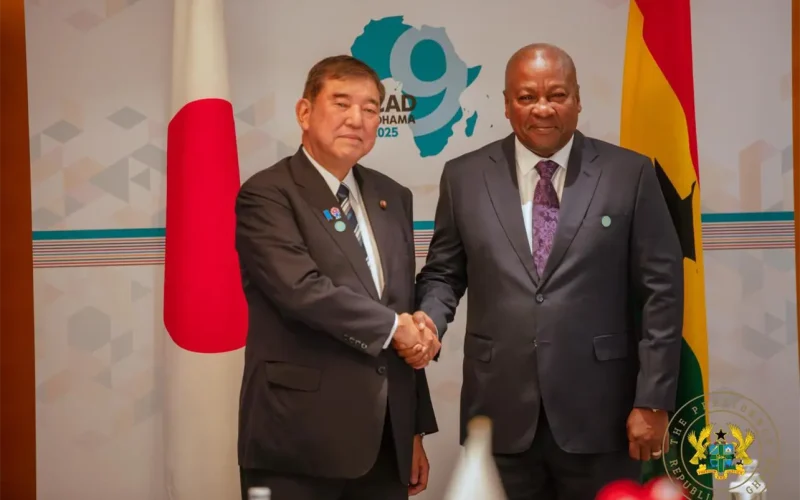
GHANA and Japan committed to expanding economic cooperation and accelerating key infrastructure projects during high-level talks at the Tokyo International Conference on African Development (TICAD 9), with Ghana’s cocoa dominance in Japanese markets taking centre stage in discussions.
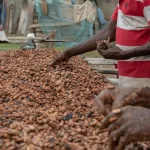
President John Dramani Mahama and Prime Minister Shigeru Ishiba met on the sidelines of the conference in Yokohama, where Ghana’s position as Japan’s primary cocoa supplier emerged as a focal point for deeper investment ties. Ghana supplies approximately 70% of Japan’s cocoa imports, a strategic relationship both leaders acknowledged as fundamental to future cooperation.
Cocoa Value Chain Investment Push
Mahama called on Japanese firms to increase investments in Ghana’s cocoa processing sector, specifically proposing a public-private partnership with the state-owned Cocoa Processing Company to modernise facilities and enhance value-added production. The move signals Ghana’s intent to capture more profit from its cocoa exports rather than shipping raw beans overseas.
“We want to see Japanese companies expand their footprint in our cocoa value chain,” Mahama said, emphasising the potential for joint ventures that could benefit both nations’ economies.
Prime Minister Ishiba acknowledged Japan’s reliance on Ghanaian cocoa, noting that “Japanese chocolate lovers depend largely on Ghanaian cocoa,” and expressed Tokyo’s willingness to explore expanded partnerships in the sector.
Critical Infrastructure Project Faces Funding Shortfall
The leaders also addressed Ghana’s pressing need for infrastructure investment, particularly the stalled Volivo Bridge project over the Volta River. The bridge represents a critical link in Ghana’s Eastern Corridor, connecting the capital Accra and port city Tema to northern regions and neighbouring Burkina Faso and Niger.
Mahama emphasised the bridge’s economic importance for transporting agricultural products, including yams and maize, from Ghana’s northern farming regions to southern markets. However, the project faces a significant funding challenge, with a 64% procurement gap remaining despite Japan’s earlier commitment.
Ghana secured a ¥11.239 billion ($75 million) loan from Japan in December 2016 for the project, but Mahama requested additional support, particularly grants, to bridge the funding shortfall and ensure completion.
Japan Commits to Expedited Solutions
Prime Minister Ishiba assured Ghana that Japan would work to “expedite solutions to funding gaps to ensure the successful completion of key projects,” signalling potential movement on the infrastructure financing challenge.
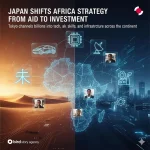
The commitment comes as part of Japan’s broader strategy to strengthen ties with African nations through TICAD, which brings together African leaders, Japanese officials, and international partners to promote sustainable development and investment across the continent.
Diplomatic Exchange
In exchange for infrastructure support, Ishiba sought Ghana’s backing for two Japanese initiatives: support for Masahiko Metoki’s candidacy for Director General of the Universal Postal Union’s International Bureau, and endorsement of Japan’s positions on UN Security Council reforms aimed at making the body more democratic.
The meeting also highlighted upcoming diplomatic milestones, including the centenary of Dr. Hideyo Noguchi’s arrival in Ghana and the 50th anniversary of Japan Overseas Cooperation Volunteers in Ghana, both occurring in 2027.
The bilateral engagement underscores Japan’s continued focus on African partnerships as it seeks to expand its economic influence on the continent while supporting critical infrastructure development in key partner nations.