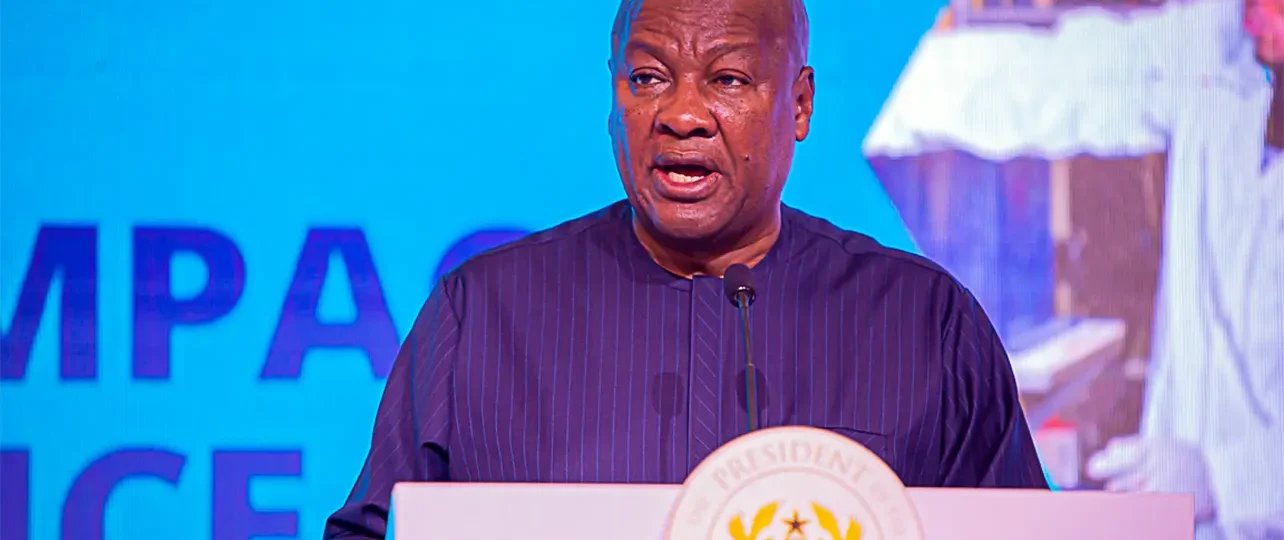

President John Dramani Mahama has fulfilled a major campaign promise by signing into law the repeal of ten controversial pieces of legislation, marking a turning point in Ghana’s economic policy. On Wednesday, April 2, 2025, Mahama officially assented to bills abolishing taxes such as the Electronic Transfer Levy (E-Levy), Betting Tax, and Emissions Levy, among others. This move aligns with his pledge to reduce the financial burden on Ghanaians and stimulate economic growth.
The repealed laws included the E-Levy, which had been widely criticized for stifling digital transactions and disproportionately affecting low-income earners. Introduced in 2022 under the previous administration, the levy imposed a 1% tax on electronic transactions. Its removal is expected to revive digital financial services and ease financial pressures on small businesses and individuals. Similarly, the Betting Tax, which imposed a 10% levy on winnings, was scrapped to address concerns raised by the youth and gaming industry.
Other repealed or amended laws include:
– The Value Added Tax (VAT) Amendment Bill
– Income Tax Amendment Bill 2025
– Petroleum Revenue Management Amendment Bill 2025
– Public Financial Management Amendment Bill
– Earmarked Funds Capping and Realignment Bill
– Energy Sector Levy Act
– Gold Board Bill 2025
– Growth and Sustainability Levy Act.
Mahama’s action fulfills a key promise from his “Resetting Ghana” manifesto, which emphasized the elimination of “nuisance taxes” within his first 100 days in office. These measures were part of his broader vision to rebuild Ghana’s economy by reducing inflation, creating jobs, and alleviating the cost-of-living crisis. During his campaign, Mahama had pledged to make Ghana a “24-hour economy,” offering tax incentives to businesses operating at night and reducing electricity costs.
The repeal of these taxes also reflects Mahama’s commitment to addressing public discontent over policies introduced by the previous administration. For instance, the E-Levy had generated only GH¢246.9 million by the end of 2024 – far below projections – while facing widespread opposition for its impact on ordinary citizens.
The tax reforms have been met with widespread approval from citizens and businesses alike. Small business owners have hailed the removal of the E-Levy as a necessary relief for digital transactions, while the repeal of VAT on motor vehicle insurance policies is expected to make insurance more affordable. Amendments to financial management laws aim to enhance transparency and curb corruption in public spending.
However, some analysts have raised concerns about potential revenue shortfalls resulting from these repeals. The Mahama administration has assured Ghanaians that alternative revenue strategies are being implemented to offset these losses. These include adjustments to tax refund ceilings and improved revenue collection mechanisms.
The response from Ghanaians has been overwhelmingly positive. Many see this as a sign of Mahama’s commitment to delivering on his promises after his resounding electoral victory in December 2024. His decisive win was fueled by public dissatisfaction with the economic hardships under the previous government, including high unemployment rates and inflation.
Speaking at the signing ceremony, President Mahama described the reforms as a bold step toward empowering businesses and boosting consumer confidence. “This is not just about tax cuts; it’s about creating an environment where every Ghanaian can thrive,” he stated.
With these reforms now in place, Mahama’s administration is expected to focus on job creation and industrial growth as part of its broader economic recovery plan. The coming months will be critical in assessing how these changes impact Ghana’s fiscal stability and economic growth.
Mahama’s actions underscore his determination to reset Ghana’s economy while addressing the immediate needs of its citizens – a move that could redefine his legacy as a leader committed to bold solutions for national development.