Our website use cookies to improve and personalize your experience and to display advertisements (if any). Our website may also include cookies from third parties like Google Adsense, Google Analytics, and Youtube. By using the website, you consent to the use of cookies.

Rating agencies don’t treat the Global South fairly: changes South Africa should champion in G20 hot seat

Rating agencies don’t treat the Global South fairly: changes South Africa should champion in G20 hot seat

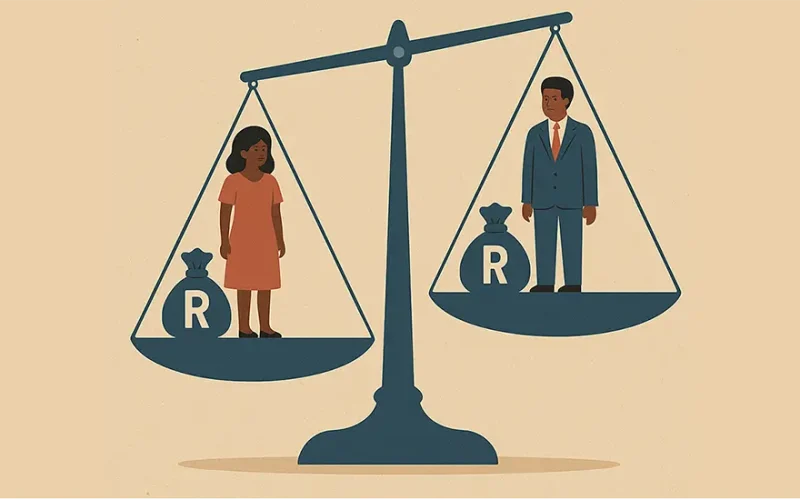
CREDIT rating agencies like S&P Global and Fitch have an outsized influence on the economic fortunes of developing countries. Their assessments shape investor perceptions, influence borrowing costs, and ultimately shape a country’s development path. With many African countries now issuing bonds in global markets amid falling levels of official development assistance (ODA), their role is coming under increasing scrutiny. The major credit rating agencies exist to opine on the likelihood that a debtor (say, a country) will repay their creditors on time and in full. They are rated on a sliding scale. Whenever a rating agency believes that a debtor…
Read More
Planning for death: four things you can do to ease your family’s emotional and financial stress

Planning for death: four things you can do to ease your family’s emotional and financial stress

WHEN someone dies, the people left behind face more than grief. They are often hit with a wave of decisions – emotional, logistical and financial – that must be made quickly and under pressure. You may not be able to control what happens after you’re gone. But you can make the process a lot easier for your family by doing a few simple things now. Financial therapy research shows that financial decisions made under stress or grief are more likely to lead to conflict or regret. Our work as researchers and practitioners in financial planning and financial therapy explores how…
Read More
Chile and South Africa could be green hydrogen exporters – but setting up industries with debt is dangerous

Chile and South Africa could be green hydrogen exporters – but setting up industries with debt is dangerous

VAST amounts of renewable energy are needed to produce green hydrogen, a new form of energy made by splitting water molecules into hydrogen and oxygen using renewable power. Green hydrogen is a type of clean energy that could reduce greenhouse gas emissions by replacing fossil fuels in energy-intensive industries. These industries include cement, fertiliser and steel production. The scale of projected investments globally is huge. The Hydrogen Council, an association of major corporations including the multinational mining company Anglo American, Bosch engineers, the chemicals and engineering giant Linde and many others, lists 1,400 announced projects worldwide and announced investments of…
Read More
Trump’s tariff hikes and South Africa: hunt for new agricultural markets must begin now

Trump’s tariff hikes and South Africa: hunt for new agricultural markets must begin now

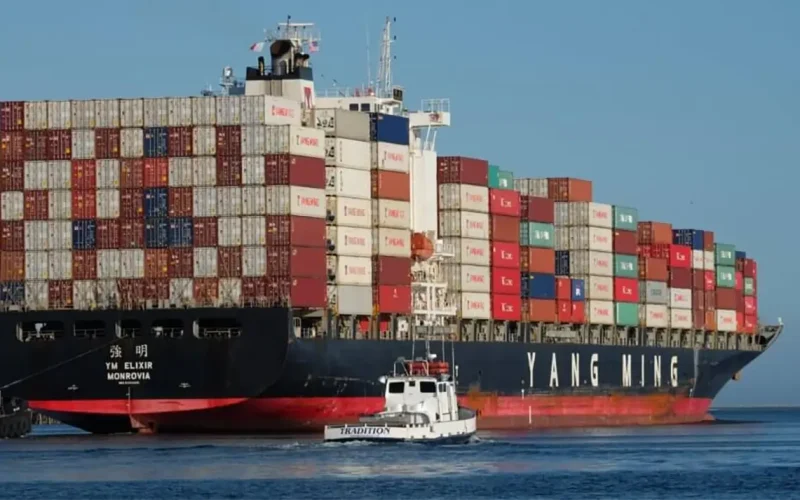
THE South African government has underscored the urgent need to diversify the country’s agricultural exports in the wake of the US decision to increase tariffs on its trading partners. The progress of South Africa’s agricultural sector has relied partly on exports, which now account for roughly half of the production in value terms. South Africa’s agricultural exports reached a new record of US$13.7 billion in 2024, up 3% from the previous year, according to data from Trade Map. South Africa also imports various agricultural products. In 2024, South Africa’s agricultural imports amounted to US$7.6 billion. The US accounts for 4%…
Read More
Africa responds in the wake of Trump tariffs

Africa responds in the wake of Trump tariffs

AFRICAN countries are hinting at diversifying trade relations in reaction to U.S. President Donald Trump’s ‘reciprocal tariffs’ which impose some of the highest import rates on some of the smallest countries in Africa. South Africa, facing a 30% export tax, is advocating for a new trade agreement with the White House as it aims to diversify its trade, looking to engage more with African markets. South African Trade, Industry and Competition Minister, Parks Tau told Journalists on the Sidelines of the Gauteng Investment Conference that the African Continental Free Trade Area (AfCFTA) and regional trading blocs serve as important stepping…
Read More
President Mahama fulfills campaign promise: repeals e-levy, betting tax, and 8 other laws to ease economic burden on Ghanaians

President Mahama fulfills campaign promise: repeals e-levy, betting tax, and 8 other laws to ease economic burden on Ghanaians

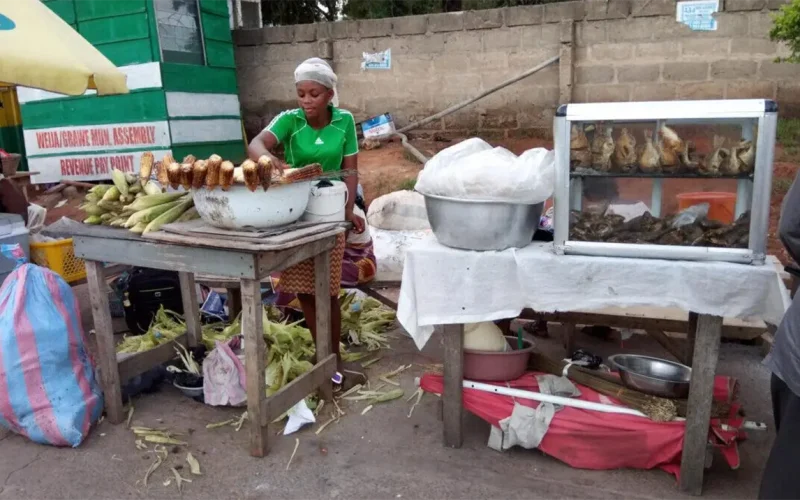
President John Dramani Mahama has fulfilled a major campaign promise by signing into law the repeal of ten controversial pieces of legislation, marking a turning point in Ghana's economic policy. On Wednesday, April 2, 2025, Mahama officially assented to bills abolishing taxes such as the Electronic Transfer Levy (E-Levy), Betting Tax, and Emissions Levy, among others. This move aligns with his pledge to reduce the financial burden on Ghanaians and stimulate economic growth. The repealed laws included the E-Levy, which had been widely criticized for stifling digital transactions and disproportionately affecting low-income earners. Introduced in 2022 under the previous administration,…
Read More
Uganda’s electricity distribution is changing hands – what’s at stake

Uganda’s electricity distribution is changing hands – what’s at stake

UGANDA’S electricity sector is at a turning point, as Umeme Limited’s 20-year concession draws to a close. Umeme was the first private distribution operator in Anglophone Africa. For nearly two decades, the listed company was the dominant distributor of electricity to the country’s 2.3 million clients. However, Uganda decided in 2022 not to renew the licence on expiry, citing high power tariffs and low electricity access rates. Umeme’s departure and the transfer of distribution assets back to the state-owned Uganda Electricity Distribution Company (UEDCL) has sparked controversy. It centres on a US$235 million compensation claim by Umeme. The final settlement…
Read More
Zimbabwe’s economy crashed – so how do citizens still cling to myths of urban and economic success?

Zimbabwe’s economy crashed – so how do citizens still cling to myths of urban and economic success?

IT is common for nations to have myths or narratives, that form the basis of their nationalism, or their ideas of themselves as a political community. Such popular narratives are often rooted in a romanticised or idealised view of the past. This is certainly the case in Zimbabwe, where national myths about its urban modernity and economic exceptionalism have stood the test of time in contrast with reality. The idea of urban modernity has its roots in colonial times. At the time of independence in 1980, following a liberation war from 1965 to 1979, Zimbabwe’s economy was looking strong. Urban…
Read More
Ghana’s e-levy: 3 lessons from the abolished mobile money tax

Ghana’s e-levy: 3 lessons from the abolished mobile money tax

THE first budget speech of Ghana’s new government on 11 March painted a picture of an economy in crisis, facing high debt and fiscal mismanagement. The finance minister, Cassiel Ato Forson, acknowledged that key International Monetary Fund performance targets would be missed and announced drastic spending cuts. However, most Ghanaians just wanted to know whether the minister would announce the scrapping of the country’s electronic transfer levy (or e-tax), as he’d indicated he would. He did, a decision parliament endorsed unanimously the next day. The e-levy, a fee on mobile money transactions, was introduced in 2022. Ghanaians immediately united around…
Read More
New Opportunities come knocking in Africa’s innovative digital payments space

New Opportunities come knocking in Africa’s innovative digital payments space

A new partnership between flydubai and Network International, announced on March 25, will allow travellers in East Africa to pay for bookings and other airline-related services using a range of digital payment options including mobile money transactions. The announcement shows how Africa’s digital payments ecosystem is rapidly evolving beyond traditional retail and fintech, integrating into new sectors like aviation. “With East Africa being a leader in mobile money adoption, integrating this payment option into an international airline underscores the power of strategic collaborations in advancing localized digital payments… We are bridging global travel with familiar, seamless payment solutions,” said Judy…
Read More