Our website use cookies to improve and personalize your experience and to display advertisements (if any). Our website may also include cookies from third parties like Google Adsense, Google Analytics, and Youtube. By using the website, you consent to the use of cookies.

Alcohol may help you fall asleep faster, but it leads to a worse night’s rest overall – here’s why

Alcohol may help you fall asleep faster, but it leads to a worse night’s rest overall – here’s why

ALCOHOL is often used as a sleep aid – with some people crediting a “nightcap” to help them fall asleep more easily. But while it might be nice to unwind after a long day with a glass of wine or a beer, alcohol may not be as beneficial for sleep as some think. In fact, it may actually lead to a worse night’s sleep overall. If alcohol is consumed before bed, it can initially have a sedative effect – making you fall asleep more quickly. But while we may think a nightcap shortens the time it takes to fall asleep,…
Read More
Conscious breathing can reduce anxiety and depression – tips for how to do it

Conscious breathing can reduce anxiety and depression – tips for how to do it

BREATHING is a thing we do without thinking; it keeps us alive. But there is far more to this most basic of biological functions. Conscious breathing can reduce stress, anxiety and depression and prevent insomnia. Christiane Brems, author and clinical professor in psychiatry and behavioural sciences, describes where to start if you’d like to develop a practice of conscious breathing. How far back does the practice of conscious breathing go? The art and science of breathwork has been an important part of human life for more than two millennia. Grounded in ancient histories and a variety of human contexts (from…
Read More
Ebola: how a vaccine turned a terrifying virus into a preventable disease

Ebola: how a vaccine turned a terrifying virus into a preventable disease

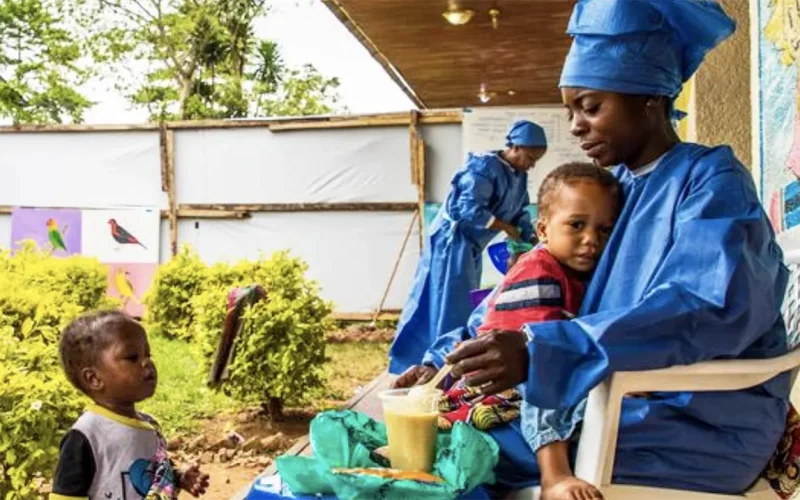
THE Ebola virus devastated West Africa in 2014, claiming over 11,000 lives in Sierra Leone, Liberia and Guinea. It was the largest Ebola outbreak since the virus was first discovered in the Democratic Republic of Congo in 1976. Ebola is a terrifying virus which, if left untreated, causes bleeding inside the body and through the eyes, nose, mouth and rectum. Case fatality rates have varied from 25% to 90% in past outbreaks, depending on circumstances and the response. The 2014 outbreak in West Africa exposed a critical gap in global preparedness for infectious diseases: the absence of effective vaccines. There…
Read More
Maternity care in Ghana is meant to be free, but it’s not – and many can’t afford it

Maternity care in Ghana is meant to be free, but it’s not – and many can’t afford it

GLOBALLY, over a quarter of a million women a year die during pregnancy or childbirth. Sub-Saharan Africa accounts for about 70% of these deaths. In Ghana, the rate of maternal deaths is 263 per 100,000 births. Although this maternal mortality rate is much lower than the average for African countries (532 per 100,000 births), progress is being threatened by the financial difficulties mothers face accessing maternal healthcare services in the country. Ghana’s health system has offered free maternal healthcare since 2008 under the Ghana National Health Insurance Scheme. But many families are still compelled to pay for these services. As…
Read More
African men most at risk of prostate cancer – new study flags genetic causes

African men most at risk of prostate cancer – new study flags genetic causes

A breakthrough study has identified the genetic risk factors that contribute to increased prostate cancer in African men. The study, the largest of its kind, recruited 7,500 men from eastern, southern and western Africa. The study is especially important because African men have a high risk of prostate cancer. Medical scientist Wenlong Carl Chen explains why the findings are significant and the promise they hold for future treatment. What did your research look into and why? Prostate cancer disproportionately affects men of African descent. Studies from the US and African countries report a higher occurrence of prostate cancer in men…
Read More
Mental health and motherhood: South Africa now has treatment guidelines, the trick will be to make them work

Mental health and motherhood: South Africa now has treatment guidelines, the trick will be to make them work

MOTHERS and pregnant women suffer from high levels of mental health problems in South Africa About one in three women in the country experience depression and/or anxiety during pregnancy and the postnatal period up to one year after the birth. For the first time, maternal mental health is now formally recognised in the country’s official blueprint for all matters relating to pregnancy. The fifth edition of the Integrated Maternal and Perinatal Care Guidelines for South Africa, released by the health department in October 2024, now includes a chapter on mental health. Doctors, nurses and midwives will now be able to…
Read More
HIV: there’s hope for a cure – where we stand now

HIV: there’s hope for a cure – where we stand now

WITH the help of new scientific and technological developments, the HIV/Aids research community is increasingly turning to an ambitious goal: finding a cure for HIV/Aids. If the world is to get close to meeting the UN Sustainable Development Goal of reducing HIV infections and AIDS-related deaths by 90% between 2010 and 2030, a cure for HIV/Aids would be a game changer. Much progress has been made during the 30 years in the fight against HIV/Aids. An HIV diagnosis is no longer the death sentence it was in the 1990s. Antiretroviral treatment – which targets and suppresses the replication of the…
Read More
HIV infections can be prevented – why some people act to protect themselves, and others don’t

HIV infections can be prevented – why some people act to protect themselves, and others don’t

THE number of new HIV infections has fallen over the years – it declined by 39% from 2010 to 2023. But HIV’s devastating impact on global health persists. In 2023, 1.3 million people acquired HIV – three times more than the 370,000 target set by UNAids. In sub-Saharan Africa, HIV incidence among young women aged 15-24 is decreasing – but they accounted for 27% of all new infections in 2023, and were three times more likely to acquire HIV than male counterparts. There are a variety of effective, user-centred HIV prevention options. They include oral pre-exposure prophylaxis (PrEp (a daily…
Read More
Respect for everyone’s human rights is essential to ending HIV, says UNAIDS

Respect for everyone’s human rights is essential to ending HIV, says UNAIDS

DESPITR huge progress, the world is not yet on track to end AIDS as a public health threat, the UN agency said on Tuesday. Of the 39.9 million people living with HIV, 9.3 million people are still not accessing life-saving treatment. Last year, 630,000 people died of AIDS-related illnesses, and 1.3 million people around the world newly acquired HIV. In at least 28 countries, the number of new HIV infections is on the rise. To bring down the trajectory of the pandemic, it is imperative that lifesaving programmes can be reached without fear by all who need them. When girls are denied education;…
Read More
Why is it so difficult to make a new antibiotic?

Why is it so difficult to make a new antibiotic?

THE discovery of antibiotics is one of the greatest medical breakthroughs of the 20th century. Before antibiotics, childbirth, a urinary tract infection, or a simple cut could lead to death from infection. Antibiotics, a type of antimicrobial, have made many modern medical procedures possible, and now the global healthcare system relies on them. Due to increasing antimicrobial use, microbes – such as bacteria, fungi and parasites – have developed the ability to resist the action of these medicines. The result is that common infections that were once easily treatable are becoming more difficult to cure and in some cases can…
Read More