Our website use cookies to improve and personalize your experience and to display advertisements (if any). Our website may also include cookies from third parties like Google Adsense, Google Analytics, and Youtube. By using the website, you consent to the use of cookies.

S.A. plans to share vaccine

S.A. plans to share vaccine

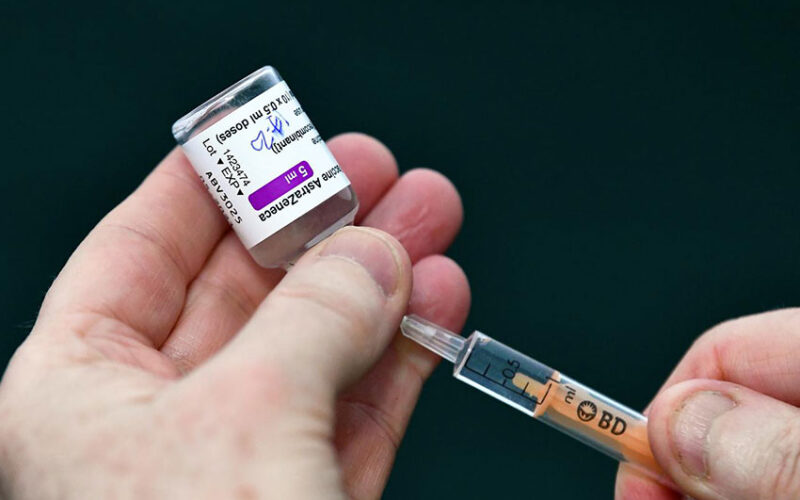
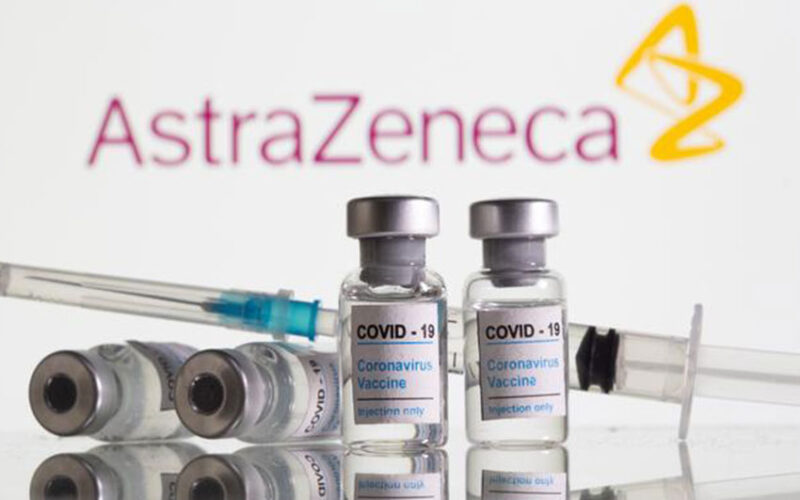
ALEXANDER WINNING and WENDELL ROELF SOUTH Africa plans to share 1 million AstraZeneca COVID-19 vaccine doses with other African countries, a senior official said, as a medical association said the first shots from rival Johnson & Johnson was expected to arrive. The country paused the rollout of AstraZeneca doses this month, after preliminary trial data showed they offered minimal protection against mild to moderate illness from the country's dominant coronavirus variant. It has been consulting with scientists about what to do with the AstraZeneca vaccine, switching to a plan to start inoculating healthcare workers with J&J's alternative in a research…
Read More
Inside Britain’s quarantine hotels

Inside Britain’s quarantine hotels

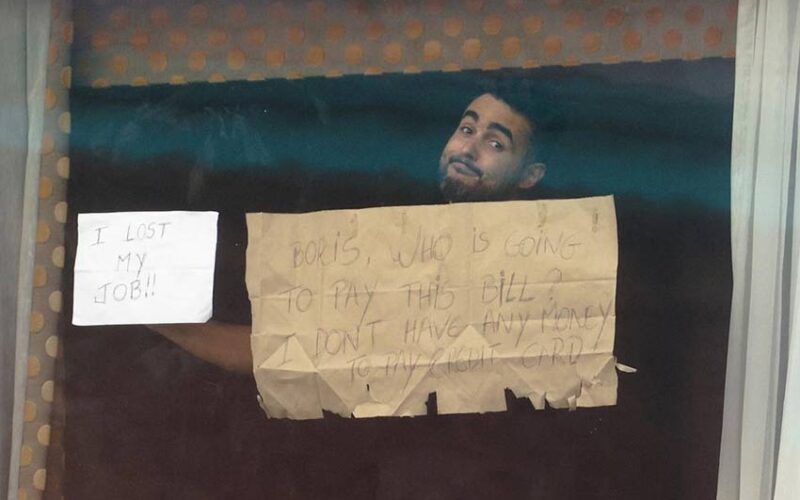
HANNAH McKAY and SARAH YOUNG MOHAMED Noor faces 10 days in COVID-19 quarantine in a hotel room near London's Heathrow Airport after falling foul of new border controls because of a flight delay. "I don't have a book. I don't have a Koran. I don't have nothing here," Noor, a 55-year-old Muslim, said by phone after his arrival on Monday, a day later than planned, landed him with a 1,750-pound ($2,400) bill. In another hotel nearby, 61-year-old Sole, who declined to give her surname, said she realised too late that the new rules would kick in before she returned from…
Read More
Long COVID: symptoms experienced during infection may predict lasting illness

Long COVID: symptoms experienced during infection may predict lasting illness

EARLIER in the pandemic, it appeared that the majority of people infected with the coronavirus experienced mild-to-moderate symptoms and generally recovered within two to three weeks, depending on the severity of their illness. However, as time has passed, it’s become clear that some people, regardless of the severity of their disease, continue to experience symptoms beyond the acute phase of infection. This has become known as “long COVID”. OLALEKAN LEE AIYEGBUSI, Research Fellow, Institute of Applied Health Research, University of Birmingham SHAMIL HAROON, Academic Clinical Lecturer, Institute of Applied Health Research, University of Birmingham Emerging evidence suggests that these patients…
Read More
SA unveils R38-billion relief for COVID-19, unrest

SA unveils R38-billion relief for COVID-19, unrest

ALEXANDER WINNING and WENDELL ROELF SOUTH Africa plans about R38-billion of relief measures to support businesses and individuals affected by recent unrest and COVID-19 restrictions, the finance ministry has announced. The interventions would be funded by better government revenues and by shifting around some spending, senior officials told a news conference, expanding on measures announced by President Cyril Ramaphosa on Sunday. Ramaphosa tightened lockdown restrictions at the end of June as coronavirus cases spiked, but he eased them on Sunday as the peak of a "third wave" appeared to have passed. His government's economic recovery drive was dealt a major…
Read More
How the coronavirus mutates and what this means for the future of COVID-19

How the coronavirus mutates and what this means for the future of COVID-19

THE recent appearance of new variants of SARS-CoV-2 (the coronavirus causing COVID-19 infections), that may be associated with increased transmission of the virus and disease severity, has raised questions about the nature and rates of mutations in viruses. The answers to these questions will potentially guide public health decisions. However, it is also important for individuals to understand them so as to prevent potential panic. ED RYBICKI, Director, Biopharming Research Unit; and Member, Institute of infectious Disease and Molecular Medicine, University of Cape Town ANNA-LISE WILLIAMSON, Professor in Vaccinology, Institute of Infectious Disease and Molecular Medicine, University of Cape Town…
Read More
Nigeria expects 29 million doses of J&J vaccines

Nigeria expects 29 million doses of J&J vaccines

NIGERIA expects to take delivery of 29 million doses of Johnson & Johnson COVID-19 vaccine in August, allowing it to ramp up its vaccination programme just as a third wave of infections takes hold, the health minister said. Africa's most populous country has recorded close to 171,000 cases of the virus and 2,132 deaths since the start of the pandemic, according to official data, although the real figures are likely to be much higher as testing is patchy. The government had announced in March it was hoping to secure 70 million doses of Johnson and Johnson vaccine this year through…
Read More
Ultra-cold vaccine storage to be built

Ultra-cold vaccine storage to be built

SOUTH African natural gas and helium producer Renergen will start production of its helium powered ultra-cold mobile freezer in the next few days and has started discussions to sell the units to logistics companies, it said yesterday. Companies and governments around the world are working on ways to establish cold-chain storage and delivery systems for vaccines such as the Pfizer Inc and BioNTech shot, which must be shipped and stored at ultra-cold temperatures and can only last at standard fridge temperatures for up to five days. As a solution, Renergen on Monday launched its prototype cold-chain storage called Cryo-Vacc, which…
Read More
WHO lists vaccine for emergency use

WHO lists vaccine for emergency use

THE World Health Organization (WHO) yesterday listed AstraZeneca and Oxford University's COVID-19 vaccine for emergency use, widening access to the relatively inexpensive shot in the developing world. A WHO statement said it had approved the vaccine as produced by AstraZeneca-SKBio (Republic of Korea) and the Serum Institute of India. "We now have all the pieces in place for the rapid distribution of vaccines. But we still need to scale up production," said Tedros Adhanom Ghebreyesus, WHO Director-General. The listing by the UN health agency comes days after a WHO panel provided interim recommendations on the vaccine, saying two doses with…
Read More
Botswana gives AstraZeneca the nod

Botswana gives AstraZeneca the nod

BOTSWANA will move ahead with plans to use AstraZeneca's COVID-19 vaccine, the southern African country's health minister said yesterday, despite neighbour South Africa pausing the rollout of the shots. South Africa's decision to suspend use of the AstraZeneca vaccine was based on preliminary data showing it offered minimal protection against mild to moderate illness caused by the dominant coronavirus variant there. That more contagious variant - called 501Y.V2 - has been detected in Botswana too. Asked whether Botswana would be using the AstraZeneca vaccine, Health Minister Edwin Dikoloti said in parliament: "Our intended outcome is well-covered by what AstraZeneca offers."…
Read More
This is no time to neglect hepatitis – 70 million Africans are infected

This is no time to neglect hepatitis – 70 million Africans are infected

IN 2016, the World Health Organisation (WHO) set an ambitious target to eliminate viral hepatitis by 2030. This was followed by commitments from governments – including African countries – to develop national strategic plans for viral hepatitis and earmark resources to eliminate the disease. PAULINE BAKIBINGA, Associate Research Scientist, African Population and Health Research Center Hepatitis results in the inflammation of the liver. There are different forms of hepatitis – A, B, C, D and E – each attributed to a different type of virus. Unfortunately, most people who have the most serious forms of the disease, particularly the B…
Read More