Our website use cookies to improve and personalize your experience and to display advertisements (if any). Our website may also include cookies from third parties like Google Adsense, Google Analytics, and Youtube. By using the website, you consent to the use of cookies.

Namibia commended in HIV and Hepatitis B battle

Namibia commended in HIV and Hepatitis B battle

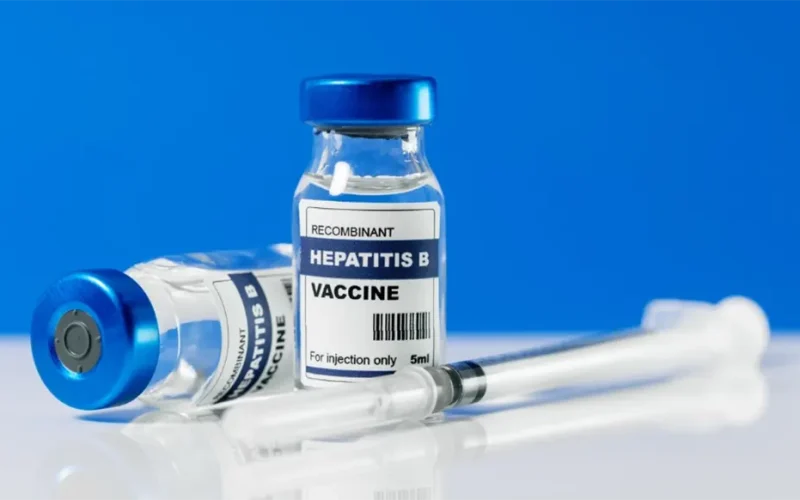
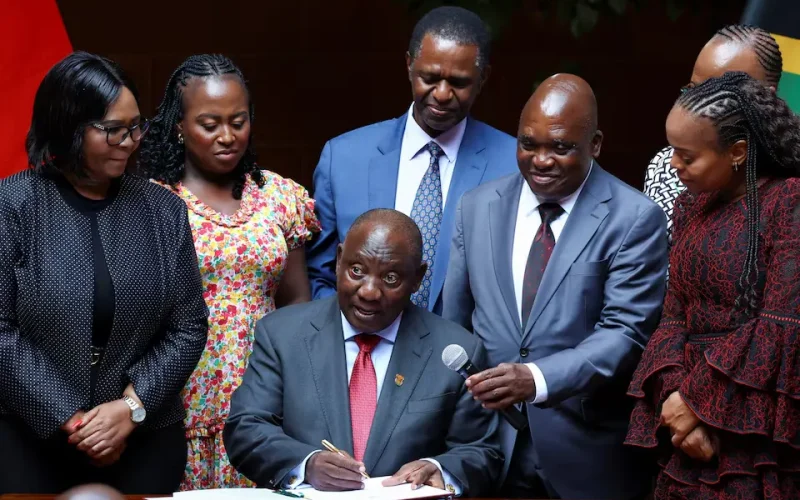
NAMIBIA is making significant strides in combating the transmission of HIV and Hepatitis B from mother to child, showcasing the effectiveness of government-led initiatives in addressing these two global health challenges, according to the World Health Organisation (WHO). On Monday (May 6), the WHO awarded Namibia with “silver tier” and “bronze tier” certifications for its progressive trends towards reducing hepatitis B and HIV, respectively. According to Matshidiso Moeti, WHO’s regional director for Africa, this achievement highlights the growing ability of African states to achieve vital health milestones through “committed political leadership and effective implementation of public health priorities.” “With concerted…
Read More
At least 42 die from measles outbreak in northeast Nigeria

At least 42 die from measles outbreak in northeast Nigeria

AT least 42 deaths have been recorded from a measles outbreak in just over a week in Nigeria's northeastern state of Adamawa, the state's health commissioner said. Measles is a highly contagious, airborne virus that mostly affects children under the age of 5. It can be prevented by two doses of vaccine and more than 50 million deaths have been averted since 2000, according to the World Health Organisation. Felix Tangwami, the Adamawa health commissioner, said the measles outbreak had mostly affected two local government areas where 42 deaths were recorded out of nearly 200 suspected cases. "Measles vaccines have…
Read More
Nigeria is pioneering a new vaccine to fight meningitis – why this matters

Nigeria is pioneering a new vaccine to fight meningitis – why this matters

NIGERIA recently became the first country to roll out a new vaccine (called Men5CV) recommended by the World Health Organization (WHO), which protects people against five strains of meningococcus bacteria. The Conversation Africa asked Idris Mohammed, a professor of infectious diseases and immunology and former board chair of Nigeria’s National Programme on Immunisation, to explain the new vaccine and its likely impact. What is meningitis? Meningitis is the inflammation of the tissues surrounding the brain and spinal cord, usually caused by infection. It can be fatal. Meningitis can be caused by several species of bacteria, viruses, fungi and parasites. The…
Read More
Safeguarding our future: Protect communities from vaccine-preventable diseases

Safeguarding our future: Protect communities from vaccine-preventable diseases

AFRICAN Vaccination Week took place from 24 to 30 April, and this year marks the 50th anniversary of the Expanded Program on Immunization (EPI) launched by the Department of Health which aims to provide life-saving vaccines to every child, regardless of their location or socioeconomic status. Since its inception, the EPI has made outstanding achievements, including eradicating smallpox in 1978 and the current drive to eradicate poliomyelitis. Through immunisation campaigns, there have been significant reductions in morbidity and mortality, particularly in children, due to vaccine-preventable diseases like tuberculosis, poliomyelitis, hepatitis, influenza, measles, rubella, yellow fever, tetanus, diphtheria, and pertussis (whooping…
Read More
West Africa’s Benin, Liberia and Sierra Leone launch malaria vaccination

West Africa’s Benin, Liberia and Sierra Leone launch malaria vaccination

BENIN, Liberia and Sierra Leone launched large-scale malaria vaccine programmes on Thursday under an Africa-focused initiative that hopes to save tens of thousands of children's lives per year across the continent. The three West African countries are the latest to participate after successful rollouts of routine malaria immunization for children in Burkina Faso, Cameroon, Ghana, Kenya and Malawi, the global vaccine alliance GAVI said in a statement. The World Health Organization-approved vaccine is meant to work alongside existing tools such as bed nets to combat malaria, which in Africa kills nearly half a million children under the age of 5 each year.…
Read More
Sugar in baby food: why Nestlé needs to be held to account in Africa

Sugar in baby food: why Nestlé needs to be held to account in Africa

NESTLÉ has been criticised for adding sugar and honey to infant milk and cereal products sold in many poorer countries. The Swiss food giant controls 20% of the baby food market, valued at nearly US$70 billion. Nadine Dreyer asked public health academic Susan Goldstein why extra sugar is particularly bad for babies and how multinationals targeting low-income countries with sweeter products get away with it. Why has Nestlé been criticised? Public Eye, a Swiss investigative organisation, sent samples of Nestlé baby-food products sold in Asia, Africa and Latin America to a Belgian laboratory for testing. The laboratory found in many…
Read More
Congo Republic declares mpox epidemic

Congo Republic declares mpox epidemic

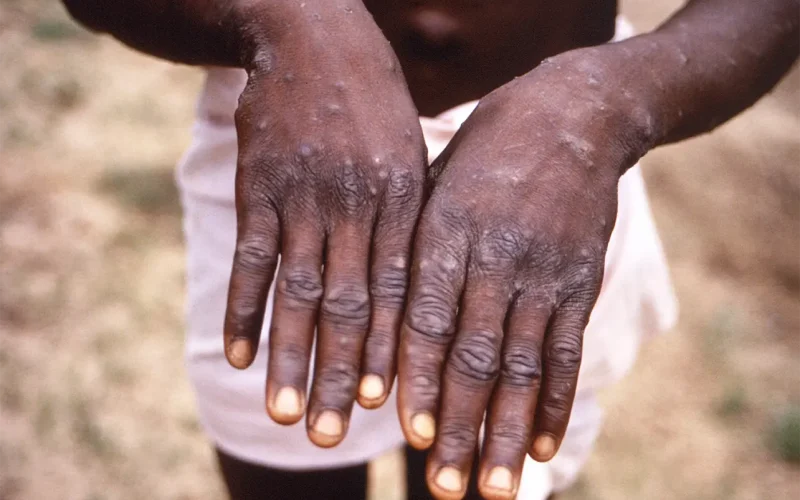
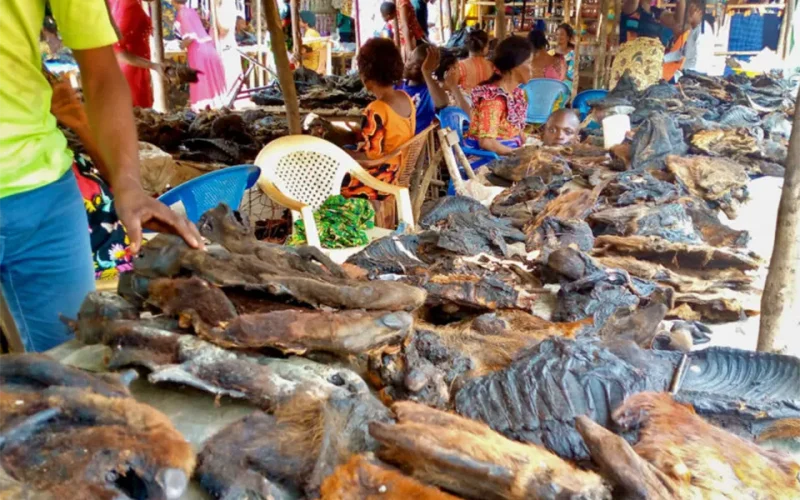
THE Republic of the Congo has declared an epidemic of mpox after 19 cases were confirmed across five departments, including the capital Brazzaville. No deaths have yet been recorded, Health Minister Gilbert Mokoki said in a statement on Tuesday. He called on the public to take precautions including avoiding close contact with suspected cases, avoiding contact with animals and avoiding handling game meat with bare hands. The World Health Organization (WHO) has named the virus mpox to replace the older term monkeypox, citing concerns of stigma and racism associated with the name. Mpox was first detected in humans in the…
Read More
Read, sing, dance and funny faces: expert tips on how you can help your baby’s development through play

Read, sing, dance and funny faces: expert tips on how you can help your baby’s development through play

PLAY is how children learn about the world, explore their environments, and engage in physical activity. It’s also essential in nurturing children’s social, emotional and cognitive capabilities and is an important component of bonding with caregivers. Playtime for children is as important for their development as exercise is for adult health. Guidelines have been developed in South Africa, which closely follow international guidelines, for how much sleep, physical activity and sedentary time children should get each day from when they are born. Children under the age of two should spend as much tummy time – time spent on their tummies…
Read More
Nigeria becomes first country to roll out new meningitis vaccine, WHO says

Nigeria becomes first country to roll out new meningitis vaccine, WHO says

NIGERIA has become the first country in the world to roll out the "revolutionary" new Men5CV vaccine against meningitis, the World Health Organization (WHO) said. Nigeria is one of the hotspots of the deadly disease in Africa. Last year, a 50% rise in annual cases was reported across 26 African countries regarded as meningitis hyperendemic countries, according to the WHO. “Nigeria's rollout brings us one step closer to our goal to eliminate meningitis by 2030," Tedros Ghebreyesus, WHO Director-General, was quoted as saying in a statement. Between last October and mid-March this year, 1,742 cases were suspected in the country,…
Read More
Diet and nutrition: how well Tanzanians eat depends largely on where they live

Diet and nutrition: how well Tanzanians eat depends largely on where they live

CITIES are growing faster in sub-Saharan Africa than elsewhere, with an annual urban population growth rate of around 4% compared to the world average of 1.5%. Across the continent, the urban share of the total population is projected to increase to 50% by 2030 and 60% by 2050. Urbanisation is associated with lifestyle changes such as less physical activity and less labour-intensive work. This is often accompanied by an increased intake of high-calorie fast foods, snacks, and sugar-sweetened beverages. This combination has contributed to rising obesity in cities in low- and middle-income countries. At the same time, undernourishment and micronutrient…
Read More