Our website use cookies to improve and personalize your experience and to display advertisements (if any). Our website may also include cookies from third parties like Google Adsense, Google Analytics, and Youtube. By using the website, you consent to the use of cookies.

What is burnout and how to prevent it in the workplace – insights from a clinical psychologist

What is burnout and how to prevent it in the workplace – insights from a clinical psychologist

AS the year begins, managing our stress levels is one thing we should all keep in mind as we move forward. The definition of stress is the bodily, psychological, and social-spiritual reaction to a demand or stressor. The stressor could be a deficiency (like unemployment), a danger to one’s physical or mental health, or a deadline at work. A certain amount of stress is necessary for performance and is even pleasurable at times, according to Hans Seyle, the “father” of stress research. Author SHAHIEDA JANSEN, Clinical Psychologist and Acting Regional Director, University of South Africa As social beings at our…
Read More
Child nutrition programmes can feed inequality: model from South Africa shows how context shapes lives

Child nutrition programmes can feed inequality: model from South Africa shows how context shapes lives

INTERVENTIONS to improve nutrition, especially for children and pregnant women, can be critical for health, physical growth and cognitive development, enabling better lives and futures. Reams of policy papers will attest to the fact that if a government or a donor spends substantially on nutrition, the return on their investments – in lives improved or saved – will be high. Less well known is that the full rewards of nutrition support for the neediest children don’t always materialise. Nutrition interventions on their own are not fulfilling their full potential for all who receive them. Authors CHRIS DESMOND, Researcher, SAMRC/Centre for…
Read More
Festive bulge: scientists offer advice on how to beat overeating

Festive bulge: scientists offer advice on how to beat overeating

CHRISTMAS and New Year are holidays with dietary excesses that many of us cannot control. This often leads to the “festive bulge”. As the holidays approach, could there be a recipe to contain this weight gain and pave the way to sustainable nutrition-based health at the same time? There’s a lot of focus on what we eat and how much we eat – but what about when we eat? Chrononutrition is the science of how timing affects our responses to nutrients. Scientific insights into when we eat suggest it may be worth exploring for better health. Authors THOMAS C. ERREN,…
Read More
Africa sees progress in its war on malaria

Africa sees progress in its war on malaria

NAIROBI, DECEMBER 13 (BIRD STORY AGENCY) CABO VERDE has reported zero indigenous malaria cases and deaths for three consecutive years, ending the epidemic in the West African island nation, according to a World Health Organization (WHO) report. The country is now on track to obtain certification as the fourth malaria-free African country, joining Mauritius, Morocco and Algeria. Botswana, Comoros, Eritrea, Eswatini and Sao Tome and Principe also reported fewer than 10 malaria deaths in 2021, the health agency said in its just-released World Malaria Report 2022. And while malaria cases increased to 234 million in 2021 compared to 232 million…
Read More
HIV prevention: new injection could boost the fight, but some hurdles remain

HIV prevention: new injection could boost the fight, but some hurdles remain

WHILE the world has focused on the COVID pandemic for nearly three years, less and less attention is being paid to HIV. However, HIV is still a global problem. In 2021, according to the United Nations, 38.4 million people were living with HIV, over 650,000 died from AIDS-related illnesses, and 1.5 million became newly infected. Nearly 70% of infections occur in key groups: sex workers and their clients, men who have sex with men, people who inject drugs, and transgender people and their sexual partners. Adolescent girls and young women in sub-Saharan Africa are another important group, with nearly 5,000…
Read More
Rural residents get COVID jab

Rural residents get COVID jab

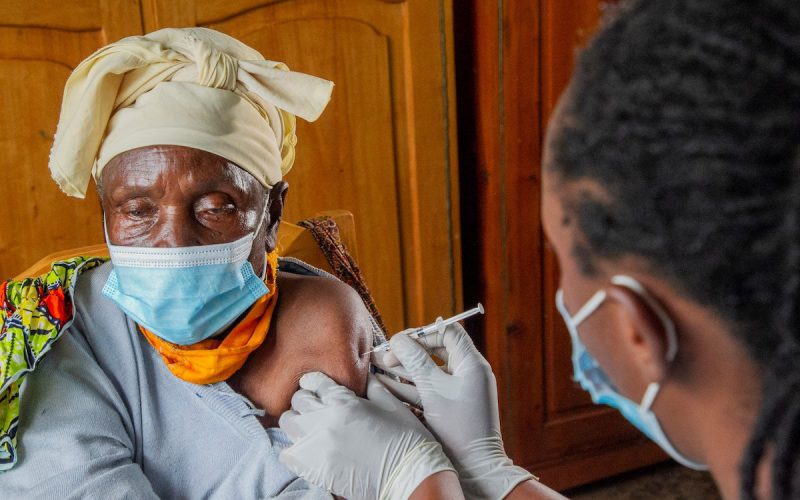
BARRY CHRISTIANSON FOR the month of July, the rural village of Mbotyi in the Ingquza Hill Municipality in the Eastern Cape has been home to the non-profit Right to Care’s (RTC) rural vaccination team. The team of about 35 consists of drivers, nurses, project managers, data capturers, IT specialists, pharmacists and an emergency medicine specialist. After helping the Eastern Cape Department of Health with vaccinations during the Sisonke Study period, RTC has focused its efforts on vaccinating the deep rural areas of the Eastern Cape. Wendy Ovens, who is running the pilot project, chose the Ingquza Hill Municipality as its…
Read More
How COVID-19 lockdown measures — and their outcomes — varied in cities around the world

How COVID-19 lockdown measures — and their outcomes — varied in cities around the world

DURING the COVID-19 pandemic, Chinese cities have repeatedly imposed lockdowns following their central government’s stubborn pursuit of Zero-COVID. But lockdowns weren’t limited to authoritarian regimes such as China. Many democracies also imposed some form of lockdowns to curb virus transmission. How effective were they? Was it worth it? And who was the most adversely affected? Authors ROGER KEIL, Professor, Faculty of Environmental and Urban Change, York University, Canada PHILIP HARRISON, Professor School of Architecture and Planning, University of the Witwatersrand XUEFEI REN, Professor, Sociology and Global Urban Studies, Michigan State University These are meaningful questions to reflect on, especially as…
Read More
Women have always trailed men in research output: how COVID made the situation worse

Women have always trailed men in research output: how COVID made the situation worse

THE under-representation of women in research is well documented. Emerging evidence suggests that the COVID-19 pandemic has exacerbated this inequality and disrupted the research enterprise globally. But none of these studies, mainly from the global north, provide detailed explanations for the scale of this decline. Our research offers the first comprehensive study to shed light on the complex reasons for the decline in research during the pandemic-enforced lockdown. Authors CYRILL WALTERS, Research fellow, Stellenbosch University ARMAND BAM, Head of Social Impact and Senior Lecturer, Business School, Stellenbosch University PATRIZIO PIRAINO, Economist, University of Notre Dame We surveyed 2,029 women academics…
Read More
South Africa reports first death causally linked to COVID vaccine

South Africa reports first death causally linked to COVID vaccine

SOUTH Africa's health regulator reported a causal link between the death of an individual and Johnson & Johnson's (J&J) COVID-19 vaccine, the first time such a direct link has been made in the country. The person presented with rare neurological disorder Guillain-Barre Syndrome soon after being given J&J's Janssen vaccine, after which the person was put on a ventilator and later died, senior scientists told a news conference. "At the time of illness no other cause for the Guillain-Barre Syndrome (GBS) could be identified," Professor Hannelie Meyer said. The person's age and other personal details were not disclosed for confidentiality reasons.…
Read More
Centaurus: what we know about the new COVID variant and why there’s no cause for alarm

Centaurus: what we know about the new COVID variant and why there’s no cause for alarm

A new COVID variant has recently been detected in several countries including the UK, US, India, Australia and Germany. Called BA.2.75, it’s a subvariant of omicron. You might have also heard it called “Centaurus”, the name of a constellation and given to BA.2.75 by a Twitter user. The World Health Organization has classified BA.2.75 as a variant of interest, rather than a variant of concern. This means it’s being monitored but there’s not yet evidence it will cause problems. The numbers of BA.2.75 infections are still relatively low. Most infections in the UK remain driven by the omicron subvariants BA.4…
Read More