Our website use cookies to improve and personalize your experience and to display advertisements (if any). Our website may also include cookies from third parties like Google Adsense, Google Analytics, and Youtube. By using the website, you consent to the use of cookies.

South Africa can get COVID-19 under control if it blocks the routes that enable transmission

South Africa can get COVID-19 under control if it blocks the routes that enable transmission

As the lockdown is relaxed, South Africa’s focus should now be on how best to suppress the spread of the SARS-CoV-2 virus using other strategies. Policy should be informed by understanding the spread of the virus both in terms of the main mechanism of transmission (respiratory particles) as well as in terms of the connections that result in spread between communities. Crucially, not all spreaders are equal, and understanding this is important for policy. South Africa introduced a lockdown early. It couldn’t afford, or adequately implement, a lockdown for long enough and effectively enough to contain the virus. Unfortunately, the…
Read More
Global poverty: coronavirus could drive it up for the first time since the 1990s

Global poverty: coronavirus could drive it up for the first time since the 1990s

ANDY SUMNER, CHRISTOPHER HOY and EDUARDO ORTIZ-JUAREZ AS COVID-19 slows in developed countries, the virus’s spread is speeding up in the developing world. Three-quarters of new cases detected each day are now in developing countries. And as the pandemic spreads, governments face juggling the health consequences with economic ones as this shifts to becoming an economic crisis. Our research shows that the poverty impact of the crisis will soon be felt in three key ways. There is likely to be more poverty. It is likely to become more severe. And as a consequence, the location of global poverty will also…
Read More
COVID-19 recovery is a chance to improve the African food system

COVID-19 recovery is a chance to improve the African food system

THE WORLD Food Programme has warned that the COVID-19 pandemic could cause one of the worst food crises since World War II. It predicts a doubling of the number of people going hungry – more than half of them in sub-Saharan Africa. While wealthier people stay inside and practise physical distancing, the economically marginalised populations risk going out in search of food. They take decisions between livelihoods and life in the most extreme cases. Such food inequities show the need for system-level action. So far, the global food system has proven to be resilient to the COVID-19 pandemic. Food is…
Read More

Six ways COVID-19 is changing South Africa

Six ways COVID-19 is changing South Africa GUY OLIVER NO COUNTRY escapes coronavirus unscathed, but South Africa seems to have done better than most – despite dire predictions that African countries are a “ticking time bomb” of COVID-19 devastation. President Cyril Ramaphosa has won international praise for a generally sure-footed response, and, after years of bad news, the country is experiencing a tentative feel-good bloom over its ability to pull together. South Africa has recorded over 80 412 positive coronavirus cases, with over 1674 deaths. On 1 June, the government eased what have been fierce lockdown measures, despite some criticism this…
Read More
Periods in a pandemic: women and girls in low-income settlements need more support

Periods in a pandemic: women and girls in low-income settlements need more support

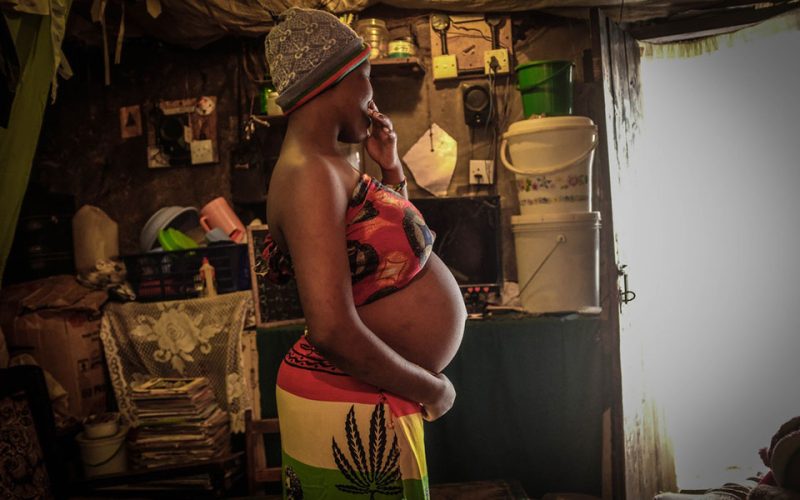
CAROLINE KABIRUSenior Research Scientist, African Population and Health Research Center WE CONDUCTED research eight years ago on menstrual health and hygiene in an informal settlement in Nairobi, Kenya’s capital. We found that women and girls grappled with many challenges, predominantly because they lacked resources, and this meant that they couldn’t manage their periods safely or with dignity. They had limited access to sanitary products, clean water, and safe and private toilet facilities. Many of them suffered from stigma and embarrassment as a result. Today, nearly a decade later, little has changed. Many women and girls living in low-income areas in…
Read More
DOUBLE TROUBLE: Lockdown and flooding raise the risk of a spike in mosquito-borne diseases in Kenya

DOUBLE TROUBLE: Lockdown and flooding raise the risk of a spike in mosquito-borne diseases in Kenya

EUNICE ANYANGO OWINO AS SOON as the first case of COVID-19 was confirmed in Kenya, the government banned public gatherings of more than 15 people. Schools, colleges and universities were closed . Within two weeks, the whole country was placed under a dusk to dawn curfew. Movement in and out of the cities of Mombasa and Nairobi was restricted. Those not in essential services were encouraged to work from home and international flights were banned. Many of these measures could affect the country’s ability to keep mosquito-borne diseases under control. And the restrictions have coincided with the long rainy season…
Read More
COVID-19 shows the world needs physicians who can look beyond medical charts

COVID-19 shows the world needs physicians who can look beyond medical charts

ADEBE BEKELEDean of the School of Medicine, University of Global Health Equity AGNES BINAGWAHO Vice-Chancellor, University of Global Health Equity AS MODERN medicine has advanced, so too has our understanding of what affects health. Over recent decades this has generated a number of new fields in medicine. One of the most important that has been born out of the latest generation is social medicine. It studies how social and economic factors help determine our health, specifically inequalities within societies that negatively influence health outcomes. Similar to primary health care, social medicine prioritises health equity and promotes a broad view of…
Read More

Steps to inoculate African economies against the impact of coronavirus

FUMIGATE: A member of the Nigerian Health Task Force fumigates a building in Abuja, Nigeria, as the city struggles to curb the spread of coronavirus. Photo by Kola Sulaimon/AFP via Getty Images   Chuku Chuku The curve of the coronavirus pandemic started to bend upwards in Africa only recently – just as the curve in the 10 most-affected countries around the world was flattening. Policymakers in Africa must now absorb lessons from the experiences of other countries and avoid policy mistakes. Most importantly they need to implement a COVID-19 policy manifesto that is capable of inoculating African economies from the…
Read More

Strategies Africa’s tourism requires to manage blow from Coronavirus

ISSAHAKU ADAM Senior Lecturer, Hospitality and Tourism Management, University of Cape Coast ALBERT N. KIMBU Senior Lecturer in Hospitality & Tourism, University of Surrey TOURISM has become an important economic sector for most African countries in the last two decades. There has been increased investments in product development and enhancement, aggressive marketing, coupled with appropriate business-friendly socio-political reforms. The World Bank reports that one in 20 jobs in sub-Saharan Africa is in the travel and tourism sector. The United World Tourism Organisation estimated that about 67 million international tourists visited Africa in 2018, generating about US$38 billion for the continent. The…
Read More
Africa’s unsung army of women wage war on COVID-19

Africa’s unsung army of women wage war on COVID-19

NITA BHALLA AND EMELINE WUILBERCQ ARMED with a face mask, notebook and pen, Everlyne Akinyi Omondi sets out each morning from her one-room home in Nairobi's informal settlement of Kawangware to do a job few others would contemplate in a pandemic. As cases of the new coronavirus climb and Kenyans are told to stay home and avoid human contact, 38-year-old Omondi moves house to house through Kawangware's maze of narrow lanes. Standing at the doorways of the cramped, corrugated houses, she talks about COVID-19, shows residents how to wash hands or don a mask, patiently answering their questions. "I know…
Read More