Our website use cookies to improve and personalize your experience and to display advertisements (if any). Our website may also include cookies from third parties like Google Adsense, Google Analytics, and Youtube. By using the website, you consent to the use of cookies.

WHO says children aged 12 and over should wear masks like adults

WHO says children aged 12 and over should wear masks like adults

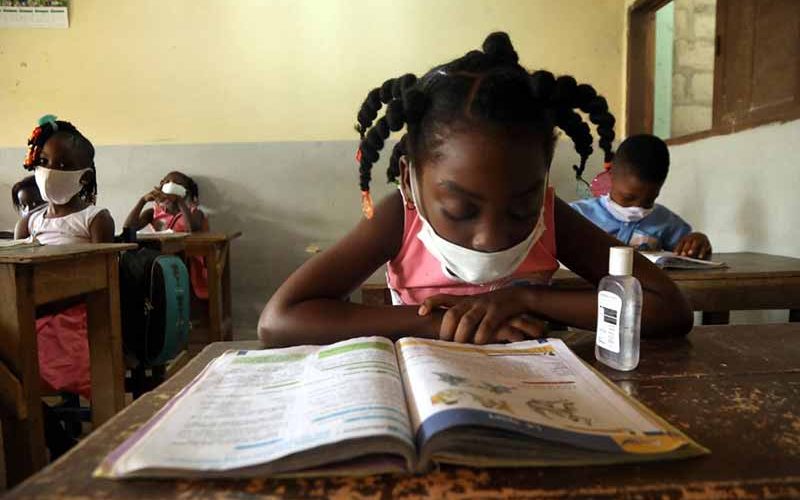
THE World Health Organization (WHO) said children aged 12 and over should wear masks to help tackle the COVID-19 pandemic under the same conditions as adults, while children between six and 11 should wear them on a risk-based approach. Children aged 12 and over should particularly wear a mask when a one-metre distance from others cannot be guaranteed and there is widespread transmission in the area, the WHO and the United Nations Children's Fund (UNICEF) said in a document on the WHO website dated August 21. Whether children between six and 11 should wear masks depends on a number of…
Read More
African leaders’ concerned with one million COVID-19 cases but happy with high recoveries

African leaders’ concerned with one million COVID-19 cases but happy with high recoveries

AFRICAN MIRROR REPORTER AFRICAN leaders have expressed concern over the number of COVID-19 cases across the continent has reached a million, with 26 000 recorded deaths. The worry of Africa’s heads of states and governments was communicated after an extraordinary meeting of the African Union (AU), convened by its chairperson, President Cyril Ramaphosa of South Africa. Ramaphosa chaired the third teleconference Meeting of the Bureau of the Assembly of AU Heads of State and Government with Chairpersons of the AU Regional Economic Communities (RECs). Although concerned about the levels of COVID-19 on the African continent, the leaders welcomed the hight…
Read More
Lessons from a diabetes clinic in Malawi: why everyone should follow a healthy diet

Lessons from a diabetes clinic in Malawi: why everyone should follow a healthy diet

CHIMWEMWE KWANJO BANDA, PhD fellow at University of Malawi College of Medicine School of Public Health and Family Medicine and part-time lecturer in Medical and Surgical Nursing, University of Malawi ADAMSON S. MUULA, Professor of Epidemiology and Public Health, University of Malawi Diabetes mellitus is common in Malawi: over 268,000 adults live with the disease, and the number is expected to double in the next 20 years. It’s a noncommunicable disease which occurs when the body can’t turn food into energy properly. Although the cause of diabetes is not well understood, it’s linked to a combination of environmental and genetic…
Read More
Climate fund for poor nations vows to drive green COVID recovery

Climate fund for poor nations vows to drive green COVID recovery

MEGAN ROWLING THE Green Climate Fund has promised developing nations it will ramp up efforts to help them tackle climate challenges as they strive to recover from the coronavirus pandemic, approving $879 million in backing for 15 new projects around the world. At a four-day virtual board meeting ending late Friday, the fund added Afghanistan and Sudan to a list of more than 100 countries receiving a total of $6.2 billion to reduce planet-heating emissions and enhance climate resilience. The Green Climate Fund (GCF) was set up under U.N. climate talks in 2010 to help developing nations tackle global warming,…
Read More
Zambia’s COVID-19 home-based care relieves health facilities

Zambia’s COVID-19 home-based care relieves health facilities

SHORTLY after Zambia reported its first cases of COVID-19 in March 2020, the country’s National Public Health Institute launched intensive, targeted screenings for cases in high-risk populations and locations. In Nakonde, a town on the border with Tanzania, the screenings revealed a huge number of infections. “We recorded 400 cases in three days and knew hospital capacity in the area would not be able to handle so many patients at a time,” says Dr Paul Zulu, an infectious disease specialist and the national Incident Manager for COVID-19. “We had to take immediate measures or face severe overstretching of our hospitals.…
Read More
Tunisia imposes curfew in two southern towns to counter coronavirus

Tunisia imposes curfew in two southern towns to counter coronavirus

TUNISIA has imposed a 5 p.m. to 5 a.m. curfew in two southern towns to help contain a renewed coronavirus outbreak, the state news agency TAP said. The North African nation is seeking to counter a second spread of COVID-19 evident since it reopened its borders on June 27 as part of steps to ease a lockdown and revive the economy, particularly the vital tourist industry. Since then, however, Tunisia has recorded a major resurgence of infections, exceeding 100 per day over the last two weeks. The curfew in the towns of Hamma and Hamma Gharbia will remain in effect…
Read More
Morocco may reimpose full lockdown as COVID-19 cases surge – King

Morocco may reimpose full lockdown as COVID-19 cases surge – King

MORROCO could return to a complete coronavirus lockdown as cases continue to spike, Moroccan King Mohammed VI said, warning of severe economic repercussions. The warning came as a jump in infections in the once-bustling tourist hub of Marrakech strained health services and led to protests by medical staff in recent days. New cases nationally have surged to more than 1,000 a day since Morocco lifted a strict three-month-long lockdown in late June and hit a record high of 1,766 on August 15. "If figures continue to increase, the COVID-19 Scientific Committee may recommend another lockdown, perhaps with even tighter restrictions,"…
Read More
Doctors strike in Nairobi over pay, lack of COVID protection

Doctors strike in Nairobi over pay, lack of COVID protection

GEORGE OBULUTSA and BAZ RATNER DOCTORS in most public hospitals in Kenya's capital have gone on strike to protest against delayed salaries and a lack of protective equipment when handling patients who may have COVID-19. The strike began at midnight, said Thuranira Kaugiria, secretary-general for the Kenya Medical Practitioners, Pharmacists and Dentists Union. He said 320 doctors employed by the Nairobi County government were taking part in the strike because they had inadequate health insurance, poor quality protective gear and too few isolation wards to treat COVID-19 patients. The strike will not affect private hospitals and public hospitals within Nairobi…
Read More
Schools to reopen in Nigeria’s Lagos as COVID-19 cases decline

Schools to reopen in Nigeria’s Lagos as COVID-19 cases decline

SCHOOLS will reopen in Nigeria's commercial hub of Lagos next month as part of plans to revive the economy as COVID-19 cases decline, the state governor has announced.  Lagos, the epicentre of the pandemic in Nigeria, plans to reopen colleges on September 14, and primary and secondary school schools on September 21, Babajide Sanwo-Olu said. "The gradual easing doesn't mean the pandemic is over," he said in a tweet. "It is not an invitation to carelessness or nonchalance." The Lagos governor said restaurants, social clubs and recreational centers would also be allowed to reopen as long as they followed safety…
Read More
How Nigeria can break the culture of silence around women’s reproductive illnesses

How Nigeria can break the culture of silence around women’s reproductive illnesses

OLUDOYINMOLA OMOBOLADE OJIFINNI, University of the Witwatersrand TALKING about the reproductive system has always been difficult among women in low- and middle-income countries of Asia and sub-Saharan Africa. There appears to be an unwritten code, a culture of silence that says reproductive issues mustn't be talked about. As a result, many women suffer in silence with some form of reproductive morbidity or illness. Reproductive morbidity refers to “any morbidity or dysfunction of the reproductive behaviour including pregnancy, abortion, childbirth, or sexual behaviour and may include those of a psychological nature.” It covers gynaecology, obstetrics and contraceptive use. Research has shown…
Read More