Our website use cookies to improve and personalize your experience and to display advertisements (if any). Our website may also include cookies from third parties like Google Adsense, Google Analytics, and Youtube. By using the website, you consent to the use of cookies.

Kenyan lawyer brings boxing and justice to the slums

Kenyan lawyer brings boxing and justice to the slums

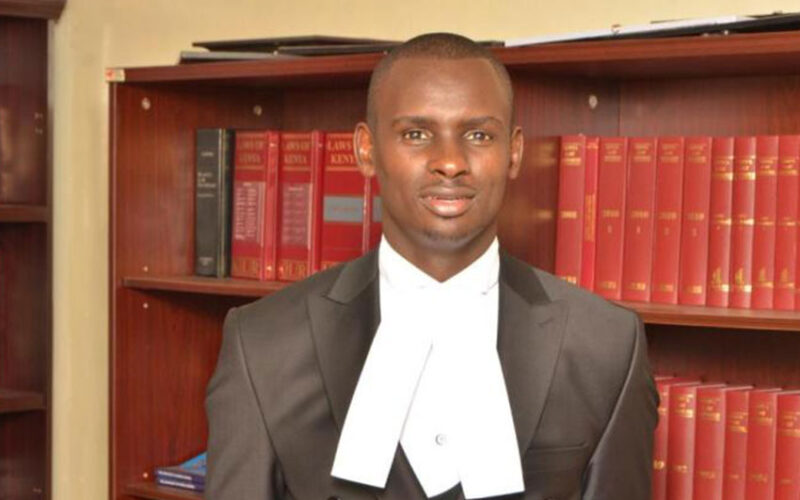
MONICAH MWANGI WHEN lawyer Shadrack Wambui was growing up in one of Nairobi's slums, he vented his frustration at abusive police through boxing, cultivating discipline that helped him avoid confrontations that could have derailed his studies. Now the 29-year-old is turning to the sport again to help young people in poor Nairobi neighbourhoods, combining his passion for the sport with informal lessons on the law and legal clinics to resolve marital disputes. Wambui says he hopes his boxing sessions will help young people believe in themselves despite the challenges they face. "We want to use boxing to advance other causes…
Read More
Peril at sea, danger on shore for migrants trapped in Libya

Peril at sea, danger on shore for migrants trapped in Libya

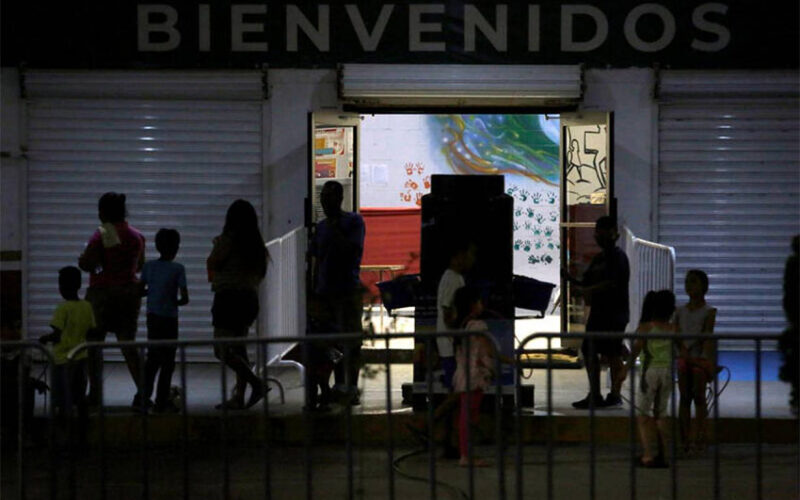
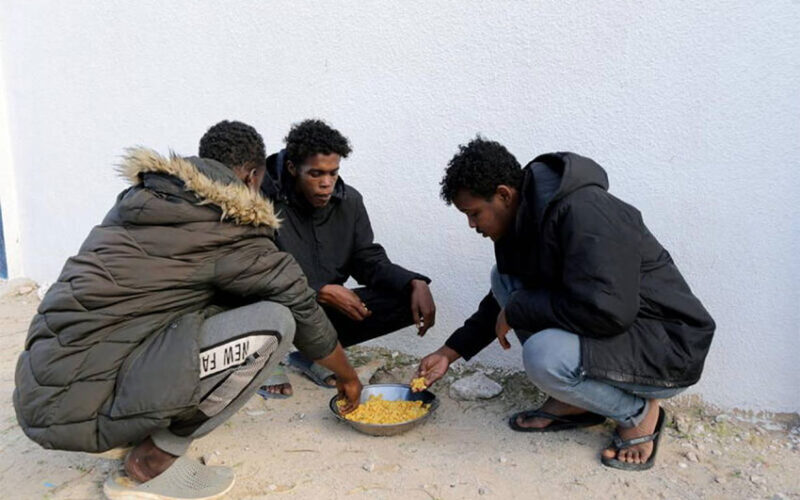
WHEN Abdullah boarded an inflatable boat crammed with fellow migrants in February he thought he would finally reach Europe after braving the dangers of a Sahara crossing and Libya's civil war. The 27-year-old from Niger knew the voyage ahead was risky. The Mediterranean waters between Libya and Italy have claimed thousands of lives in recent years as people sought a better life in richer, safer countries. After only two hours at sea, naval vessels turned back the small flotilla of smuggling boats, returning Abdullah to the Libyan mainland where he had faced violence and abuse. "I cried and cried ...…
Read More
‘We had to get our land back’: Tunisian date farm proves revolutionary bright spot

‘We had to get our land back’: Tunisian date farm proves revolutionary bright spot

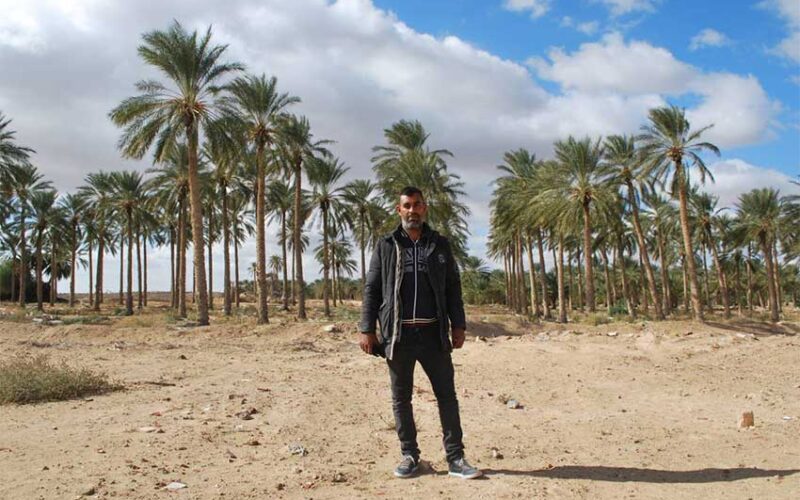
LAYLI FOROUDI AS revolution swept Tunisia 10 years ago, the people of Jemna saw their chance to settle a colonial-era score - seizing a 185-hectare (460-acre) date plantation just outside the oasis town. "We had to get our land back, we should be the ones using it," said Mohsen Ezzine, 40, who was among those who occupied the farm - claiming it as ancestral land - two days before then-President Zine El-Abidine Ben Ali fled abroad in January 2011. A wave of land occupations took place during the revolt against Ben Ali's authoritarian rule, but a decade later much of…
Read More
Invisible crimes like human trafficking rise during COVID-19

Invisible crimes like human trafficking rise during COVID-19

VILIANT RICHEY  WHEN the violence she was suffering at home escalated during the lockdown, Maria (not her real name) decided to make the gut-wrenching decision to leave. But instead of finding freedom, she ended up in the hands of traffickers, isolated and with no documents, in a factory of a foreign country. This case, recently reported to my team by a Ukrainian NGO, is but one example of the hidden consequences that COVID-19 has had on human trafficking. Since the outbreak of the pandemic and the worldwide onset of lockdown measures, numerous countries reported a sharp decline in ‘traditional' crimes…
Read More
Victims of Habré’s rule haven’t been paid a cent of the compensation due to them

Victims of Habré’s rule haven’t been paid a cent of the compensation due to them

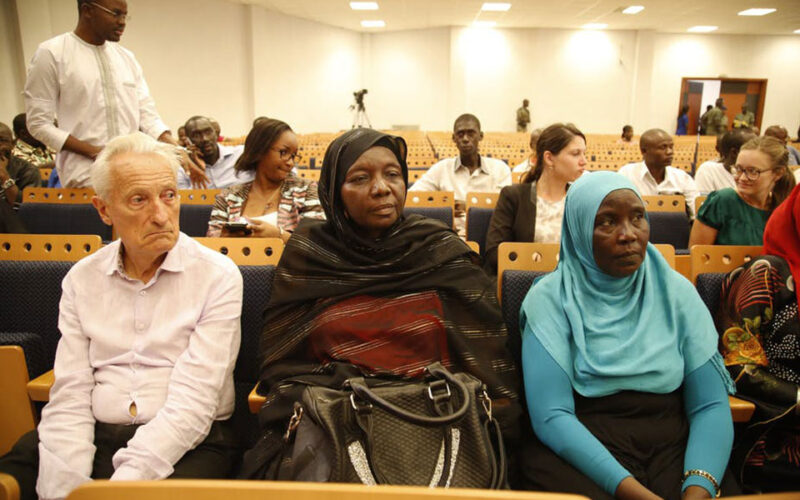
WHAT happens when survivors of atrocities are granted a large sum of reparations but the court which ordered the reparations has disappeared and the person responsible for paying the reparations has died? CHRISTOPH SPERFELDT, Honorary Fellow, Melbourne Law School, The University of Melbourne This is the question victims of the regime of former Chadian dictator Hissène Habré are facing. Habré, who ruled Chad from 1982 to 1990, died in late August this year from COVID-19 complications while serving a life sentence in Senegal for war crimes and crimes against humanity. His prison sentence was delivered in 2016, by the Extraordinary…
Read More
Rural South Africans fight for Zulu king to return their land

Rural South Africans fight for Zulu king to return their land

KIM HARRISBERG RURAL South Africans took a trust controlled by the Zulu king to court on Wednesday, seeking to cancel agreements which they say forced them to pay rent as tenants on their ancestral lands. The case pits seven informal landholders against the Ingonyama Trust, which manages nearly 3 million hectares (7,413,161 acres) of communally-owned land, and is effectively controlled by Zulu King Goodwill Zwelithini. Zulu King Goodwill Zwelithini. Picture: Flickr The Ingonyama Trust could not be reached for comment via phone or email and its lawyers asked for questions to be sent to them via email, which they did…
Read More
Pounded by pandemic ‘storm’, poor nations need climate finance more than ever

Pounded by pandemic ‘storm’, poor nations need climate finance more than ever

MEGAN ROWLING Many developing nations are under huge financial stress from the COVID-19 crisis, making it more important than ever that they receive the funding promised by rich nations to help them tackle climate change, said the head of the Green Climate Fund. Yannick Glemarec said the poorer countries the fund supports lack the financial means to jumpstart their economies and are struggling to access capital, while their revenues from taxes, commodity exports and remittances have plunged. "For a number of developing countries, it's a perfect storm," the executive director of the multi-billion-dollar Green Climate Fund (GCF) told the Thomson…
Read More
What happens to sexual abuse survivors after the headlines fade?

What happens to sexual abuse survivors after the headlines fade?

TITILOPE AJAYI It’s a scourge that never seems to stay out of the headlines for long: UN peacekeepers and aid workers accused of sexually abusing and exploiting women and children. Despite so-called “zero tolerance” policies and pledges from the UN and aid organisations to root out perpetrators, harrowing accounts from survivors keep surfacing, as we discovered in our recent investigation about how 50 women described being lured into sex-for-work schemes by aid workers during the Ebola outbreak in the Democratic Republic of Congo.     But what happens to survivors after the headlines fade?  For many, justice has remained elusive, with cases either dismissed…
Read More
UN criticised for holding back review of troubled Congo Ebola response

UN criticised for holding back review of troubled Congo Ebola response

PHILIP KLEINFELD and BEN PARKER A review by leading aid agencies of Ebola operations in the Democratic Republic of Congo was not widely circulated to organisations involved in the response until several months after the epidemic was declared over, despite containing details of mismanagement, sexual abuse and exploitation, and coordination problems during the deadly outbreak. The internal report from the Inter-Agency Standing Committee (IASC), a grouping of major UN agencies and NGOs, is one of the clearest acknowledgements – by humanitarian agencies themselves – of mistakes made during the Ebola crisis, which claimed more than 2,200 lives between August 2018 and June 2020.…
Read More
Nigerians refer to violence as ‘intergroup conflict’: what’s actually at play is xenophobia

Nigerians refer to violence as ‘intergroup conflict’: what’s actually at play is xenophobia

NIGERIA, a country of over 208 million people, is made up of more than 250 ethnic groups. Its history is littered with ethnic rivalry and competition. TOSIN OLONISAKIN, Social Psychologist, Ekiti State University Throughout history, preference and preservation of one’s kin or kind has been evident. The sense of ‘weness’ and ‘theyness’ has been behind devastating wars and conflicts. These conflicts have different names, including racism, xenophobia, nationalism or ethnocentrism. Nigeria has experienced such conflicts in the past and still does. But different terms are used to describe the violence. Sometimes it is called prejudice or discrimination or sometimes ethnocentrism…
Read More