Our website use cookies to improve and personalize your experience and to display advertisements (if any). Our website may also include cookies from third parties like Google Adsense, Google Analytics, and Youtube. By using the website, you consent to the use of cookies.

Fish once labeled a ‘living fossil’ surprises scientists again

Fish once labeled a ‘living fossil’ surprises scientists again

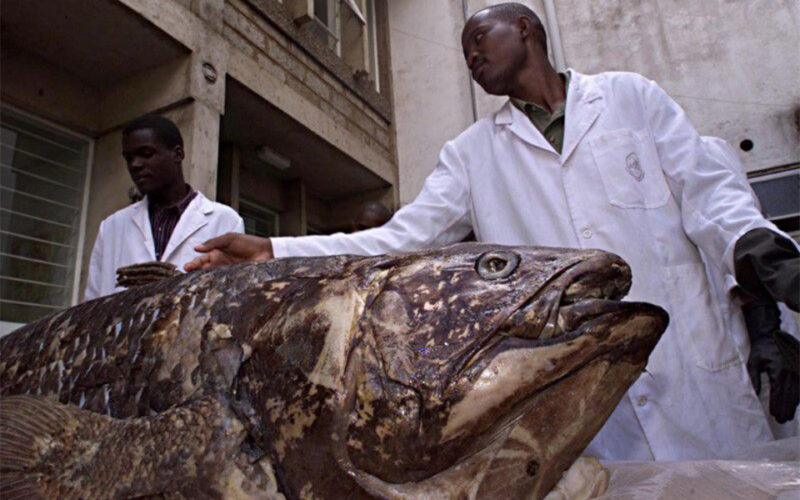
WIL DUNHAM THE coelacanth - a wondrous fish that was thought to have gone extinct along with the dinosaurs 66 million years ago before unexpectedly being found alive and well in 1938 off South Africa's east coast - is offering up even more surprises. Scientists said a new study of these large and nocturnal deep-sea denizens shows that they boast a lifespan about five times longer than previously believed - roughly a century - and that females carry their young for five years, the longest-known gestation period of any animal. Focusing on one of the two living species of coelacanth…
Read More
Medical oxygen should not be a luxury – we’re trying to develop a cheaper way to produce it

Medical oxygen should not be a luxury – we’re trying to develop a cheaper way to produce it

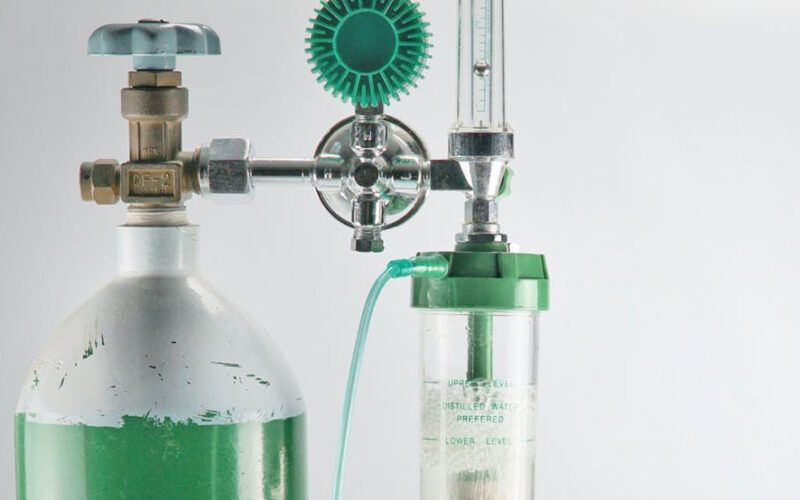
PEOPLE might once have considered oxygen a human right. But the pandemic has revealed that access to oxygen – in a pure form, for medical use – is a luxury in most low and middle-income countries. DAVID FAIREN-JIMENEZ, Reader in Molecular Engineering, University of Cambridge Getting access to pure oxygen for medical treatments is a complicated, expensive and often very dangerous business. The current situation in India is a harsh reminder of this issue. The second wave of COVID-19 has hit the country hard, the total number of deaths has just passed the 200,000 mark. Oxygen is in short supply.…
Read More
Denmark sees surge in ‘heart runners’ after Eriksen’s cardiac arrest

Denmark sees surge in ‘heart runners’ after Eriksen’s cardiac arrest

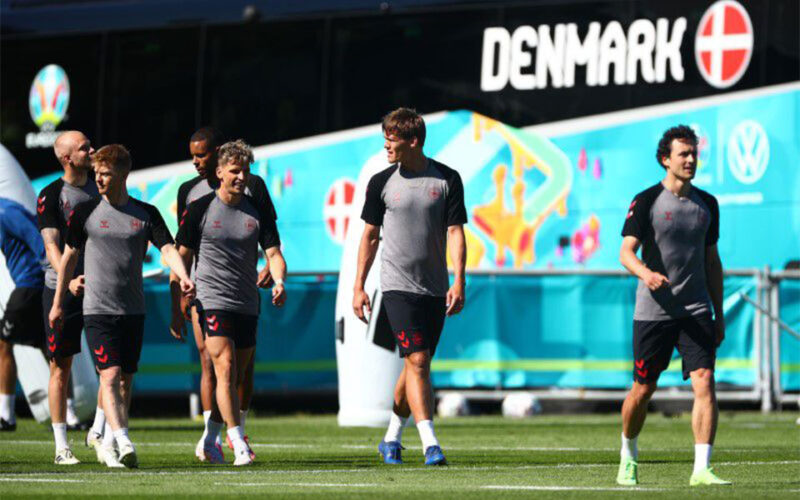
PHILLIP O’CONNOR  THE cardiac arrest suffered by Denmark midfielder Christian Eriksen during a Euro 2020 match has seen a seven-fold increase in sign-ups for the "heart runner" app, which allows emergency services to quickly direct citizen responders to assist heart attack victims. Eriksen's life was saved when CPR was administered to him on the pitch and his heart was re-started with a defibrillator before he was taken to hospital, where he is recovering. The incident shocked millions of TV viewers around the world and prompted hundreds of Danes to sign up for the app as volunteers who will make themselves…
Read More
From vroom to Zoom, F1 sees virtual hospitality taking off

From vroom to Zoom, F1 sees virtual hospitality taking off

ALAN BALDWIN Formula One's 'Paddock Club' hospitality has gone from vroom to Zoom in the age of COVID-19 and it looks like the virtual version is here to stay with the sport excited by the revenue potential. The regular Paddock Club is an exclusive and expensive world of champagne, fine dining and corporate networking along with star speakers and some of the best seats in the house for the track action. The next two races, Portugal this weekend and then Spain, will have none of that. Circuits are closed to spectators, sponsors and guests due to restrictions on mass gatherings…
Read More
Why southern Africa’s interior is an ideal place to generate solar energy

Why southern Africa’s interior is an ideal place to generate solar energy

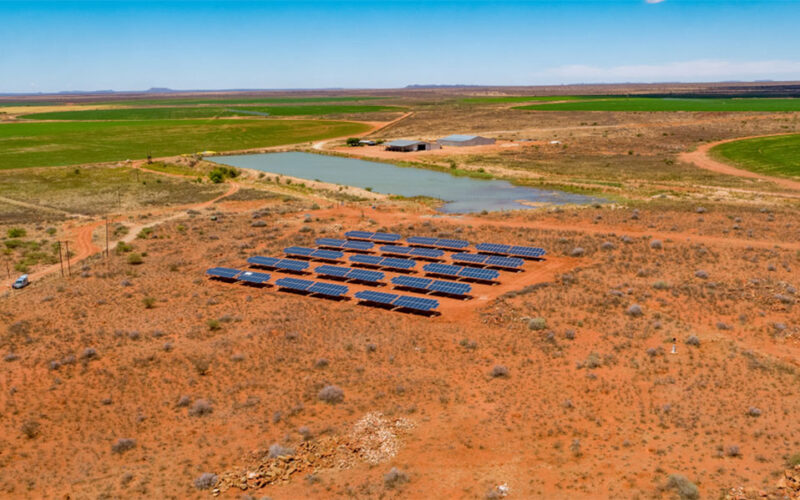
SOUTHERN Africa is popularly associated with sunshine. Does that make the region exceptionally suited to solar energy generation? HARTMUT WINKLER, Professor of Physics, University of Johannesburg With electricity shortages plaguing all parts of the sub-continent, a plentiful energy source that is becoming increasingly affordable to tap into seems like an ideal solution. Yet the rollout of solar power generating facilities has been very slow in the region. Most solar power developments in the sub-continent have been in South Africa. But even in the country, solar farms account for only 2.5% of the total electricity generated. Compare that to some European…
Read More
AI is taking over job hiring, but can it be racist?

AI is taking over job hiring, but can it be racist?

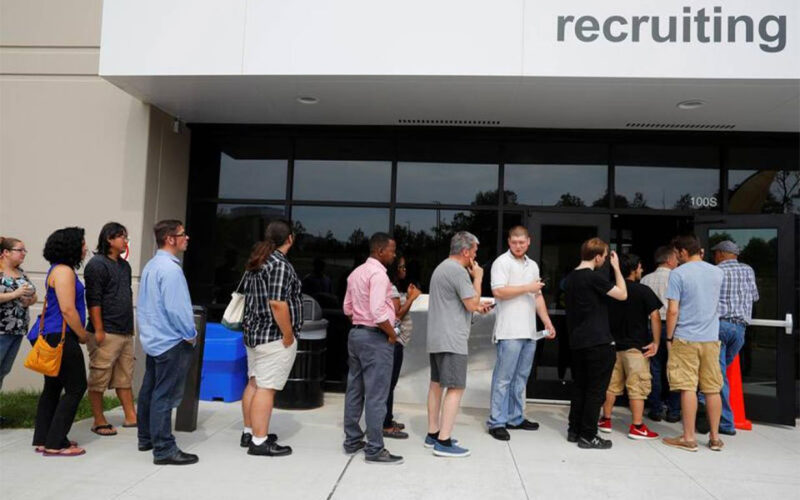
AVI ASHER-SCHAPIRO SINCE graduating from a U.S. university four years ago, Kevin Carballo has lost count of the number of times he has applied for a job only to receive a swift, automated rejection email - sometimes just hours after applying. Like many job seekers around the world, Carballo's applications are increasingly being screened by algorithms built to automatically flag attractive applicants to hiring managers. "There's no way to apply for a job these days without being analyzed by some sort of automated system," said Carballo, 27, who is Latino and the first member of his family to go to…
Read More
Spotting hoaxes: how young people in Africa use cues to spot misinformation online

Spotting hoaxes: how young people in Africa use cues to spot misinformation online

INACCURATE information on social media has become a problem in many countries around the world. Researchers know a fair deal about “fake news” in the global North, but much less about what is happening in the global South, particularly in Africa. CHIKEZIE E. UZUEGBUNAM, Postdoctoral research fellow, University of Cape Town DANI MADRID-MORALES, Assistant Professor in Journalism at the Jack J. Valenti School of Communication, University of Houston DR. EMEKA UMEJEI, Lecturer, Communication Studies, University of Ghana ETSE SIKANKU, Senior Lecturer, Ghana Institute of Journalism GREGORY GONDWE, PhD Media Research and Practice, University of Colorado Boulder HERMAN WASSERMAN, Professor of…
Read More
Your phone and your brain – what we know so far

Your phone and your brain – what we know so far

A defining characteristic of the way many people live today is persistent online connectedness. Since the introduction of smartphones about 15 years ago, the rapid and broad adoption of these devices has had an impact on people’s behaviour at all hours of the day. Forecasts suggest that the number of smartphone connections in sub-Saharan Africa will reach 678 million by the end of 2025, representing an adoption rate of 65%. DANIEL B. LE ROUX, Senior Lecturer, Stellenbosch University Many people check their phones when they wake up, use them while travelling to work and constantly keep an eye on them…
Read More
How we proved a Rembrandt painting owned by the University of Pretoria was a fake

How we proved a Rembrandt painting owned by the University of Pretoria was a fake

THE paintings of Dutch master Rembrandt van Rijn are displayed in prestigious art galleries in capital cities around the world. GERARD DE KAMPER, Chief Curator Collections, lecturer, PhD candidate, University of Pretoria ISABELLE MCGINN, Lecturer and conservator, University of Pretoria One – a small oil painting on a wood panel depicting the profile of an old man in a hat and cloak – made its way to South Africa in the late 1950s. It was part of an extensive collection belonging to a Dutch businessman, JA van Tilburg, who emigrated to the country. In 1976 the work was donated to…
Read More
We’re a step closer to figuring out why mosquitoes bite some people and not others

We’re a step closer to figuring out why mosquitoes bite some people and not others

MOSQUITOES contribute to the transmission of life-threatening diseases that include Zika, dengue, chikungunya, Rift Valley fever and malaria. Of these, malaria carries the most risk accounting for 229 million cases and more than 400,000 deaths in 2019. Africa accounted for 67% (274 000) of all malaria deaths worldwide. MADELIEN WOODING, Chromatographic Officer and Researcher, University of Pretoria YVETTE NAUDÉ, Manager: Chromatography Mass Spectrometry, University of Pretoria Malaria is caused by parasites that are transmitted to people through the bites of infected female Anopheles mosquitoes. Vector control strategies such as indoor residual spraying and long-lasting insecticidal net programmes have played a…
Read More