Our website use cookies to improve and personalize your experience and to display advertisements (if any). Our website may also include cookies from third parties like Google Adsense, Google Analytics, and Youtube. By using the website, you consent to the use of cookies.

From ecocide to resource-stripping: War’s collateral damage on the planet

From ecocide to resource-stripping: War’s collateral damage on the planet

This story was originally published by The New Humanitarian. By Obi Anyadike THE death and destruction that conflicts cause are visible and immediate tragedies, but often overlooked are the long-term environmental consequences of that violence – insidious, poisonous legacies. Even before a shot is fired, standing armies are climate-hostile. Voraciously energy-hungry and wasteful, military establishments are believed to account for 5.5% of all global greenhouse gas emissions. The globe-spanning US Armed Forces, with their fleets of ships, tanks, and high-performance aircraft, are the world’s largest institutional users of petrol. As a result, their carbon footprint is greater than most countries,…
Read More
Sudan’s catastrophe: farmers could offer quick post-war recovery, if peace is found

Sudan’s catastrophe: farmers could offer quick post-war recovery, if peace is found

MORE than a year of conflict between the Sudanese Armed Forces and the Rapid Support Forces has weakened the country’s fragile economy. This is in addition to triggering a humanitarian crisis, loss of lives, property destruction and income disruptions. Even before the current conflict, Sudan ranked among the poorest countries in the world. The proportion of those without access to basic necessities such as education, healthcare and proper living conditions was estimated at 52.3% of the population. The economy heavily depends on agriculture. The sector’s productivity has been low because of traditional pastoral systems and limited mechanisation. The armed conflict has damaged infrastructure and disrupted agricultural services…
Read More
Automechanika Johannesburg Road Show concludes successfull six African countries tour

Automechanika Johannesburg Road Show concludes successfull six African countries tour

THE Automechanika Johannesburg team has wrapped up a successful road show across six key African countries, aimed at engaging automotive aftermarket buyers and promoting the upcoming Automechanika Johannesburg trade show slated for 19th to 21st November 2024 at NASREC Johannesburg. The road show, strategically planned based on exhibitor feedback, covered the most requested destinations for automotive trade engagement: Lagos, Nigeria; Accra, Ghana; Nairobi, Kenya; Kigali, Rwanda; Lusaka, Zambia; and Harare, Zimbabwe. This initiative was driven by exhibitor demand to strengthen connections across the continent.  In Lagos, Nigeria, the team was warmly received at the ASPAMDA Auto Parts Market, guided by…
Read More
GWM launches South Africa’s first full hybrid bakkie

GWM launches South Africa’s first full hybrid bakkie

IN a first for South Africa, GWM has launched a full Petrol Electric Hybrid Bakkie. The all-new P-Series P500 Double-Cab bakkie is the first bakkie to have a 325-volt electric motor in South Africa, and the second most powerful double cab bakkie in the segment. First revealed at the 2024 NAMPO trade show in May, the all-new GWM P500 is part of GWM’s consolidated brand portfolio. GWM P500 is the latest product in GWM’s rapidly expanding portfolio which now includes the Tank 300 and 500 SUVs, ORA fully electric models, H6 HEV and the new Jolion SUV PRO. The new…
Read More
Ethiopia’s deadly landslides are caused by both nature and man – a geophysicist explains

Ethiopia’s deadly landslides are caused by both nature and man – a geophysicist explains

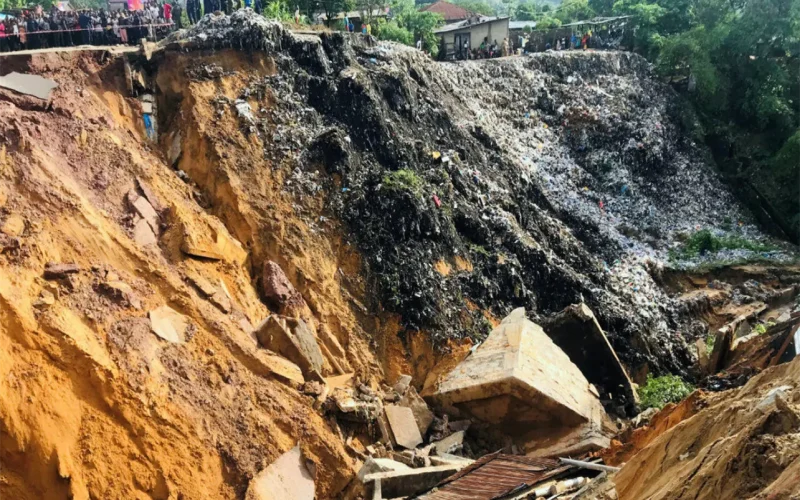
AS many as 300 people were killed in landslides triggered by higher than normal rainfall in south-western Ethiopia in July 2024. More than 15,000 were also forced to leave their homes. Another less deadly landslide that occurred two weeks later killed a dozen. Getnet Mewa, a geophysicist who studies landslides and associated landmass movements, explains where and how landslides occur in Ethiopia. Where do landslides occur in Ethiopia? Ethiopia is situated in a region dissected by the East African Rift System, which is one of the Earth’s geologically active rift systems. A rift valley is a lowland region that forms…
Read More
African communities have a lot of knowledge to share: researchers offer alternatives to Eurocentric ways of doing things

African communities have a lot of knowledge to share: researchers offer alternatives to Eurocentric ways of doing things

THE dominance of Western methodology in research conducted in Africa continues to preoccupy academics. The result, they argue, has been the silencing of Indigenous knowledge. Indigenous ways of knowing are not making the contribution they could to the knowledge ecosystem. Samuel Ojo Oloruntoba and Zainab Monisola Olaitan have researched the impact of this skewed approach on various topics. They answer questions aimed at unpacking the problem and explaining what’s at stake. What is knowledge generation? Knowledge generation is the process of using different methods to collect, synthesise and analyse data to produce information which is then processed, analysed, and interpreted…
Read More
Women’s boxing in Olympic storm: who is Algeria’s Imane Khelif and what are the issues she’s facing?

Women’s boxing in Olympic storm: who is Algeria’s Imane Khelif and what are the issues she’s facing?

IMANE Khelif from Algeria is one of two women boxers at the 2024 Paris Olympics making the news – as ugly issues of gender testing and testosterone levels once again raise their heads, as they did in the case of South African runner Caster Semenya. Khelif and Taiwanese boxer Lin Yu-ting failed a questionable gender test allegedly administered by the International Boxing Association (IBA) in 2023 but were declared fit for entry by the International Olympic Committee. Both are female and identify as such, yet one of Khelif’s opponents has fuelled a public outcry that she has an unfair advantage,…
Read More
DRC ceasefire for humanitarian aid is a small step forward – what must happen next for peace

DRC ceasefire for humanitarian aid is a small step forward – what must happen next for peace

THE United States has negotiated a truce so humanitarian assistance can be given to more than seven million people, including children, caught in the grip of the conflict in the eastern part of the Democratic Republic of the Congo. The initial cessation of hostilities was for two weeks. It was extended by a further two weeks. Armed conflicts and other forms of violence have triggered wave after wave of internal refugees in the Democratic Republic of the Congo (DRC). More recently, fighting between government troops and the M23 rebels has trapped millions in and around Goma, the main eastern city.…
Read More
Nigeria’s chronic power shortages: mini-grids were going to crack the problem for rural people, but they haven’t. Here’s why

Nigeria’s chronic power shortages: mini-grids were going to crack the problem for rural people, but they haven’t. Here’s why

ELECTRICITY is a scarce commodity in Nigeria. With just over 4,000 megawatts supplying nearly 220 million people, the electricity access deficit stands at about 40% nationwide. The picture looks even darker in rural areas. There, 73% of the population is off the power grid. Rural electrification is crucial to achieving Sustainable Development Goal 7: “access to affordable, reliable, sustainable and modern energy for all.” Enter mini-grids: community-scale electricity generation and distribution systems, typically under 100 kilowatts in size. Mini-grids have emerged in the last decade as a cost-effective solution for many rural parts of Africa. According to one estimate, the…
Read More
Wildfires in South Africa are set to increase: how legal action can help the country adapt better to climate change

Wildfires in South Africa are set to increase: how legal action can help the country adapt better to climate change

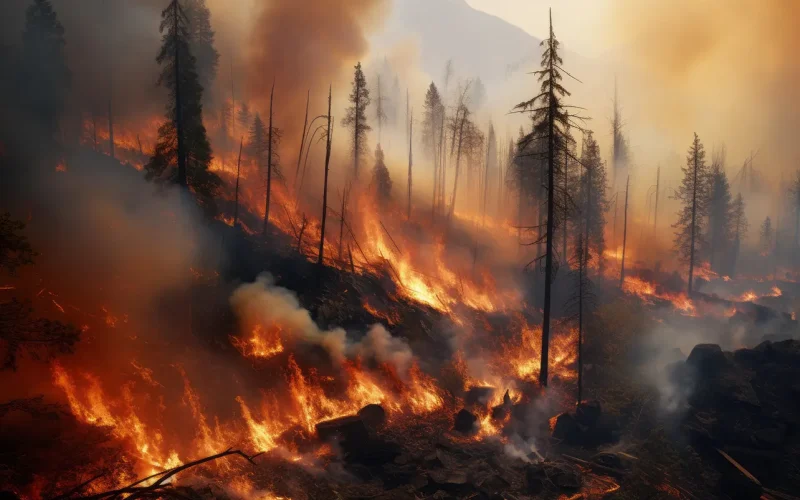
AS climate change drives temperature increases and lower precipitation in southern Africa, research has found that there is likely to be an increase in the number of wildfires in regions that are already hot, dry and water-scarce. Massive wildfires broke out in South Africa’s KwaZulu-Natal province on 12 and 13 July 2024, killing six firefighters who were trapped in a blaze and seven other people. The same fires killed 1,600 livestock animals and burnt 14,000 hectares of land. About 84% of all human settlements in South Africa are located in fire-dependent ecosystems – places in which natural fires can contribute…
Read More