Our website use cookies to improve and personalize your experience and to display advertisements (if any). Our website may also include cookies from third parties like Google Adsense, Google Analytics, and Youtube. By using the website, you consent to the use of cookies.
THERE has been severe flooding in Nigeria – the worst in a decade. Earlier this month, Nigeria’s National Emergency Management Agency warned of catastrophic flooding for states located along the courses of the Niger and Benue rivers. It noted that three of Nigeria’s reservoirs were expected to overflow. The agency said the release of excess water from a dam in neighbouring Cameroon had contributed to the flooding. Olayinka Ogunkoya unpacks Nigeria’s mismanagement of its dams. Author OLAYINKA OLATOKUNBO OGUNKOYA, Professor of Geomorphology, Obafemi Awolowo University What impact does poor dam management have on flooding in Nigeria? The operations management of…
ORLANDO East, a working-class community on the periphery of Johannesburg in South Africa, has turned 90 years old. Orlando was one of the first municipal locations – called townships under apartheid – established in 1932 for Africans under the 1923 Native Urban Areas Act. It was renamed Orlando East when Orlando West was established in the 1940s. Author NOOR NIEFTAGODIEN, Head of the History Workshop, University of the Witwatersrand Several new townships were created, especially in the 1950s, in the same region. They were eventually amalgamated into Soweto, the country’s largest township. Soweto was the primary dormitory township for African…
GHANA is a religious country. According to the 2021 census, about 71% of the population is Christian and 18% Muslim. Followers of indigenous or animistic religious beliefs make up another 5%, and 6% are members of other religious groups or don’t have religious beliefs. Many Ghanaians regard Ghana as a “nation of Christians.” The New Patriotic Party’s electoral slogan in 2016 and 2020 was: “For the battle is the Lord’s.” These are words David is said to have uttered when confronting Goliath in their biblical combat. The party’s electoral slogan referenced the Christian god and implied the party was fighting…
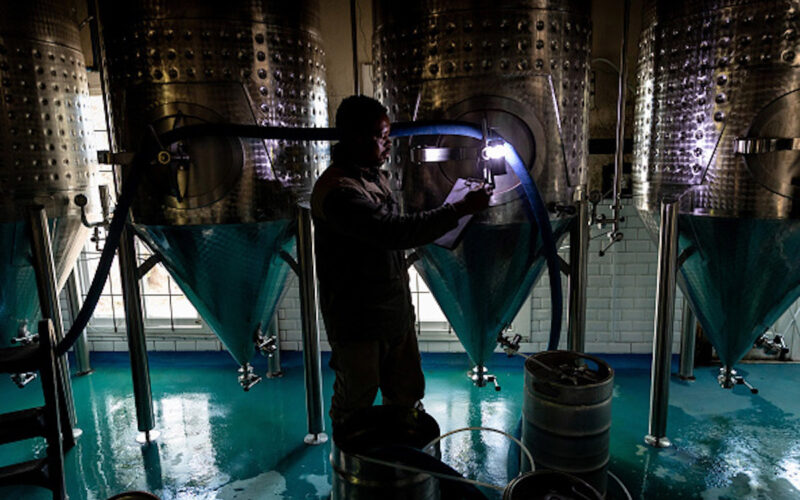
AZU ISHIEKWENE FOR BIRD STORY AGENCY WHEN Africa’s richest man, Aliko Dangote, was dealt a bad hand in a failed transaction, he didn’t give up. Instead – slowly, steadily – he exacted his revenge. His reward? Not a pound of flesh, but millions of barrels of liquid black gold. In 2007 Bluestar, a Dangote-led consortium paid US$721 million for the moribund Port Harcourt and Kaduna Refineries. Months later President Umaru Musa Yar’Adua’s government decided to reverse the sale. The decision was driven by a labour strike and labour groups’ insistence that the refineries (which were only producing at about 20% of their…
THE decomposed bodies of six women, four of whom were identified as sex workers, were recently discovered at a panel beating factory in Johannesburg. A 20-year-old man has been charged with six counts of murder. The case highlights, again, the risks of sex work for women in South Africa. It also puts the spotlight on the regulation of sex work. As a commissioner for the Commission for Gender Equality, I was involved in drafting its 2013 position paper on sex work: Decriminalising Sex Work in South Africa. Author AMANDA GOUWS, Professor of Political Science and Chair of the South African…
SOUTH Africa’s major cities in the Gauteng Province – the country’s economic heartland – are experiencing major water shortages. In Johannesburg and Tshwane taps have run dry, with numerous areas experiencing intermittent supply while some areas have no water at all. The province has metropolitan areas – the City of Johannesburg, Tshwane and Ekurhuleni. All are affected. Rand Water, the water authority for the region, has imposed restrictions of 30%. This will be revisited when the system recovers. Author ANJA DU PLESSIS, Associate Professor and Research Specialist in Integrated Water Resource Management, University of South Africa The last water shutdown…
OVER the last three decades, there has been a proliferation of social protection programmes across the global south in what some have dubbed a development revolution. International development agencies across the ideological spectrum have embraced social protection as an effective and efficient instrument to reduce poverty and inequality. The advent of digital technologies has further strengthened support for social protection, including among development agencies sceptical of local state administration. Payments can be delivered electronically directly into the pockets of the poor. This seemingly circumvents networks of patronage and corruption. Author RUTH CASTEL-BRANCO, Research Manager, University of the Witwatersrand This apparent…