Our website use cookies to improve and personalize your experience and to display advertisements (if any). Our website may also include cookies from third parties like Google Adsense, Google Analytics, and Youtube. By using the website, you consent to the use of cookies.

Nigerian farmers talk about how climate change is affecting staple food crops – and what can help

Nigerian farmers talk about how climate change is affecting staple food crops – and what can help

IN Nigeria, agriculture contributes about 40% to the national gross domestic product and supports the livelihoods of about 60% of the population. Finding ways to farm through climate change is vital for national development and poverty reduction. Climate change remains one of the most critical challenges confronting Nigeria’s farming sector. The country’s agriculture is mainly rain-fed (not irrigated). This makes it highly vulnerable to changes in climate and extreme weather events such as prolonged droughts, erratic rainfall, flooding, and rising temperatures. These climate-induced shocks reduce agricultural productivity, threaten food security through crop losses, damage rural livelihoods, and create economic instability.…
Read More
Africa’s human rights institutions are electing leaders. Why this matters

Africa’s human rights institutions are electing leaders. Why this matters

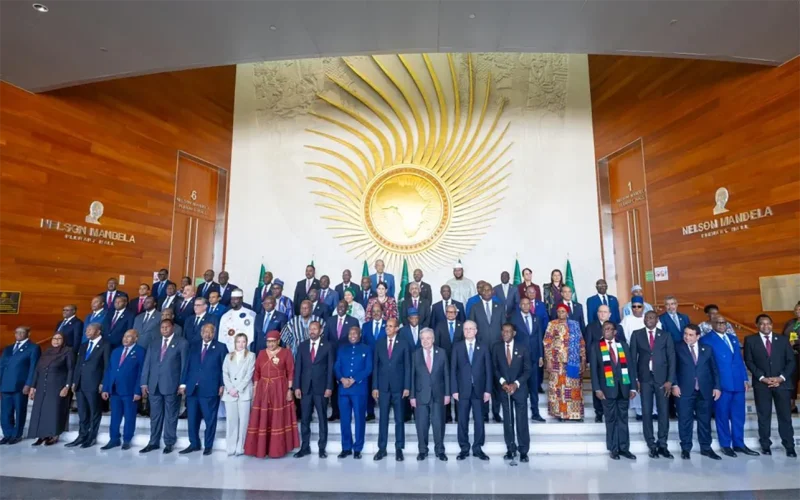
MEMBER states of the African Union (AU) will hold their most consequential election of the year in February 2026, to fill ten vacancies in continental human rights institutions. They will elect three experts to the African Commission on Human and Peoples’ Rights and seven to the African Committee of Experts on the Rights and Welfare of the Child. These individuals will serve on the committee for five years and on the commission for six, alongside 23 peers with unexpired terms. The elections are important because these institutions exist primarily to ensure that the continent’s governments take African lives seriously. They…
Read More
Ivorian biker challenges Africa, Europe to make motorcycling inclusive, safer

Ivorian biker challenges Africa, Europe to make motorcycling inclusive, safer

ON a well-paved road in Cocody, an upmarket suburb of Abidjan, Bamba Édith Christine pulled on her biker gloves, adjusted her helmet over her distinctive blue-rimmed glasses and face mask and hit the start button on her 900 cc Yamaha Tracer. Then she headed out across town from her residence close to the Ébrié Lagoon. The biker, known locally by her social media handle, "Bambina", soon joined a group of fellow bikers, part of a growing community of enthusiasts who have banded together to ensure the voice of motorcyclists is heard over the growing cacophony of road users in Francophone…
Read More
Did the US military strikes in Nigeria hit the right target?

Did the US military strikes in Nigeria hit the right target?

US missile strikes in December on what the Pentagon described as Islamic State (IS) targets mark a significant escalation in Nigeria's insurgent conflict, but they may not have brought a resolution to the crisis any closer. This story was originally published by The New Humanitarian.By Malik Samuel President Donald Trump framed the 25 December strikes on northwestern Sokoto State as part of a broader campaign to degrade IS and its affiliates allegedly operating in the region. He presented the intervention as necessary to protect “primarily, innocent Christians”, and to prevent the further spread of IS-linked violence. This framing, however, sits…
Read More
Land reform in South Africa: how new landholders could prosper from wildlife and not just farming

Land reform in South Africa: how new landholders could prosper from wildlife and not just farming

SOUTH Africa has a thriving wildlife economy – enterprises like trophy and meat hunting, ecotourism, live wildlife sales and game meat production. Over the past few decades, private (predominantly white) farmers have converted millions of hectares once reserved for livestock into game ranches. These enterprises generate profits and jobs while maintaining natural vegetation and conserving indigenous large mammals. Government policy considers the sector key to integrating conservation with rural development. The national 2024 strategy is to grow “sustainable and inclusive eco-tourism-based businesses by 10%” every year. It is also projected that the GDP contribution of game meat will increase from…
Read More
Political policing in Museveni’s Uganda: what it means for the 2026 elections

Political policing in Museveni’s Uganda: what it means for the 2026 elections

UGANDA’S police have long faced criticism for politically charged interventions. These include episodes in which lethal force has been used in ways that observers describe as excessive or indiscriminate. The main targets of restrictive or coercive tactics are supporters of the political opposition. For example, in November 2020, weeks before the 2021 elections, protests at the arrest of the main opposition candidate escalated into nationwide unrest. More than 100 people died. Under President Yoweri Museveni – in power since 1986 – the police have become a central pillar of the ruling party, the National Resistance Movement. In the campaigns for…
Read More
Kenya’s ‘night running’: how a rural ritual with links to witchcraft became an urban staple

Kenya’s ‘night running’: how a rural ritual with links to witchcraft became an urban staple

IN parts of Kenya, Uganda and Tanzania, it is not uncommon to hear of individuals who run naked at night. They cause trouble and instil fear in the neighbourhood. They throw stones on rooftops, make animal noises, bang on windows and doors, and chase night travellers. In Kenya, the practice is called night running, or night dancing in parts of Tanzania and Uganda. It is claimed to be a form of spiritual possession in the communities where it is rampant. Night runners are largely left to their own devices, but there is a sense of stigma attached to the practice.…
Read More
A new way forward is needed for Somalia

A new way forward is needed for Somalia

SOMALIA is at a defining moment. Decades of investment in state-building are threatened by a fragmented political landscape, underfunding of the African Union’s military shield, and a humanitarian system running on fumes. The future of the AU’s peace enforcement mission is a particular worry. The almost two-decade deployment was supposed to transition to Somali ownership of its security future. But recent gains by the insurgent group al-Shabab have exposed a troubling lack of readiness. On 1 January 2025, the AU troops were rehatted as the AU Support and Stabilisation Mission in Somalia (AUSSOM). But the new designation carries the same…
Read More
Sudan’s civil war: A visual guide to the brutal conflict

Sudan’s civil war: A visual guide to the brutal conflict

SUDAN’S brutal civil war has dragged on for more than 2½ years, displacing millions and killing in excess of 150,000 people – making it among the most deadly conflicts in the world today. As of December 2025, the paramilitary Rapid Support Forces appear to be making gains, seizing a key oil field in central Sudan and forcing the retreat of the Sudanese Armed Forces in key cities in the country’s west. But fighting has ebbed and flowed throughout the war, with parts of the country changing hands a number of times. It has left a complicated picture of a nation…
Read More
Malawi’s new government faces its first test, a nationwide state of disaster

Malawi’s new government faces its first test, a nationwide state of disaster

JUSTa few months into his new term, President Peter Mutharika is grappling with a triple crisis – a deep-seated food emergency, diminishing aid, and soaring debt. With over four million Malawians – 22% of the population – facing the threat of acute malnutrition until the next harvest in March, Mutharika last month declared a nationwide state of disaster. But the $119 million humanitarian response is underfunded. Although crucial to staving off the risk of hunger-related deaths, it has so far raised only $26 million from Malawi’s aid partners – roughly 21% of the amount required. The trigger for Malawi’s food…
Read More