Our website use cookies to improve and personalize your experience and to display advertisements (if any). Our website may also include cookies from third parties like Google Adsense, Google Analytics, and Youtube. By using the website, you consent to the use of cookies.

920 million people could face conflict over the world’s rivers by 2050: what our study found in Africa

920 million people could face conflict over the world’s rivers by 2050: what our study found in Africa

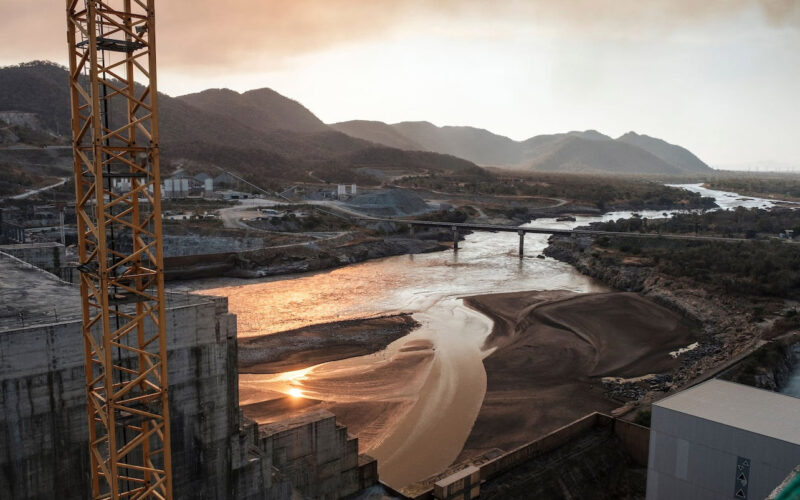
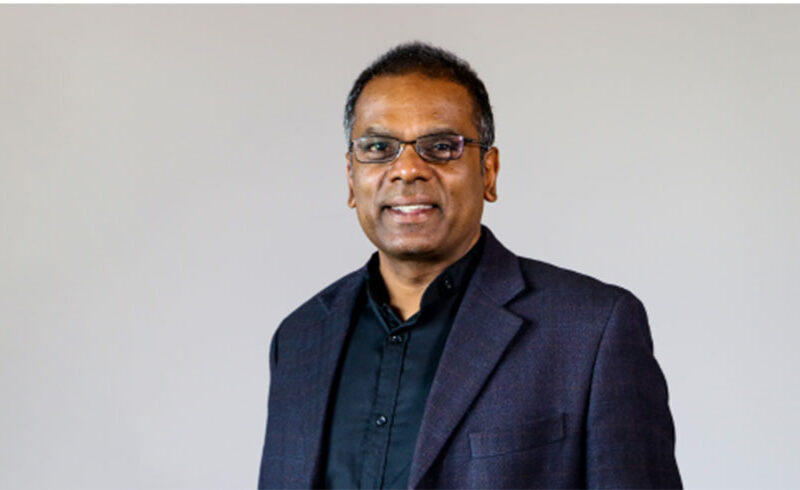
THE Grand Ethiopian Renaissance Dam project on the Nile River started operating in February 2022. It reinforced tensions between Ethiopia, Sudan and Egypt. The three countries rely most heavily on the Nile’s water. Sudan and Egypt consider the US$4.6 billion dam a threat to vital water supplies. Ethiopia sees it as essential for its development. SOPHIE DE BRUIN, Researcher in Environmental Change, Vrije Universiteit Amsterdam This is just one example of how conflicts can arise between states that share river basins. And there’s a real risk that such conflicts will become more common as global temperatures rise. Hundreds of rivers…
Read More
Trans-frontier conservation continues to grow in Southern Africa

Trans-frontier conservation continues to grow in Southern Africa

ZAMBIA and Zimbabwe recently signed a memorandum of understanding to create a trans-frontier conservation area to utilise their shared natural resources. The agreement focuses on the lower Zambezi and Mana Pools National Park areas. The two nations, who jointly share a vast area of more than 18,000 km2, pledged to improve ecological conservation in the area. Governments, local communities, and stakeholders from the two countries will all have a chance to implement sustainable development programs thanks to the collaborative approach. Trans-frontier conservation areas (TFCA) are ecologically-rich regions that border multiple countries and host diverse plant and animal species. The conservation…
Read More
Climate change journalism in South Africa misses the mark by ignoring people’s daily experiences

Climate change journalism in South Africa misses the mark by ignoring people’s daily experiences

SOUTH Africa’s media houses rely too heavily on events like conferences, climate disasters and the release of scientific papers in their reporting on climate change. That’s a problem: it creates the potential for day-to-day issues related to climate change, like ongoing mitigation and adaptation efforts, to go unreported. That’s one of the key findings of a study I recently conducted into how the country’s media cover the climate crisis. ENOCK SITHOLE, Lecturer, University of the Witwatersrand I also identified major shortcomings in overall communication on the climate crisis by key stakeholders in South Africa – policymakers, captains of industry, scientists…
Read More
LPG is a fossil fuel. Experts explain why it’s still Africa’s best option for cleaner, greener cooking (for now)

LPG is a fossil fuel. Experts explain why it’s still Africa’s best option for cleaner, greener cooking (for now)

AFRICA'S growing population desperately needs clean, modern energy in the home. Currently, more than 900 million people, 85% of the region’s population, still rely on solid biomass fuel (like wood and charcoal) and kerosene for cooking. These energy sources are highly polluting, inefficient and unsafe. Authors NIGEL BRUCE, Emeritus Professor of Public Health, University of Liverpool DAN POPE, Professor of Global Public Health, University of Liverpool Many African countries are moving to develop scalable renewable energy resources to fill the gap. These include solar PV, wind, hydro, geothermal, ethanol and biogas resources. The International Energy Agency has identified liquefied petroleum…
Read More
Nigeria needs to take climate action: 4 urgent steps to start with

Nigeria needs to take climate action: 4 urgent steps to start with

CLIMATE change is not just a buzzword or a topic for political debates. It is a real and pressing issue that affects every aspect of our lives. The effects of climate change are already being felt worldwide, from rising sea levels to heatwaves, droughts, floods, loss of biodiversity, food insecurity and more. Author OLASUNKANMI HABEEB OKUNOLA, Visiting Scientist at the United Nations University – Institute for Environment and Human Security (UNU-EHS), United Nations University In Nigeria, climate change has contributed to the country’s mounting economic and social challenges. The country has acknowledged the need to move to a low-carbon future.…
Read More
Old is gold: Here’s why farmers are rediscovering their love for native trees

Old is gold: Here’s why farmers are rediscovering their love for native trees

AT Joan Wandegi Nthiga's family farm in Embu, a county in eastern Kenya, she and a small group of friends have gathered to discuss the weather, a common topic of conversation these days, and its impact on their area. "The geography has changed dramatically since we started cultivating here over 40 years ago," Nthiga said. Like many other parts of the country and region, Embu is now locked in the extreme weather pattern of successive droughts and floods. "It was a whole forest before. We cut down the trees in order to make room to grow food and fruits. But…
Read More
Cleaner air travel in Africa: Will a post-pandemic recovery herald greener skies for Africa’s fleet?

Cleaner air travel in Africa: Will a post-pandemic recovery herald greener skies for Africa’s fleet?

BIRD STORY AGENCY KENYA Airways recently became the first African airline to use Sustainable Aviation Fuel in a commercial long-haul flight between Nairobi and Amsterdam. The national carrier participated in the Sustainable Flight Challenge – a competition among global airlines to test their ability to fly sustainably. According to Allan Kilavuka, the CEO of Kenya Airways, the pilot flight was a collaboration between KQ and energy giant Eni and "will be a significant milestone for Kenya Airways and the broader African aviation industry." The quest to fly sustainably is part of a transformative wave blowing across Africa's aviation sector as…
Read More
Half of Africa’s white rhino population is in private hands – it’s time for a new conservation approach

Half of Africa’s white rhino population is in private hands – it’s time for a new conservation approach

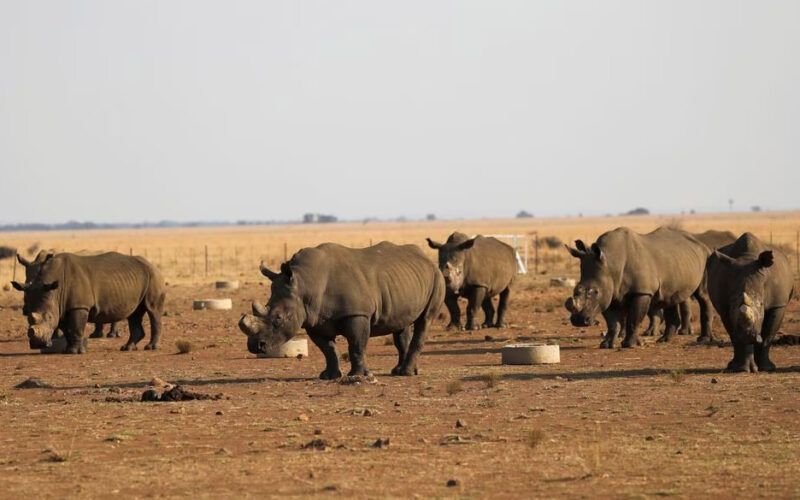
SOUTHERN white rhinos are widely known as a conservation success story. Their population grew from fewer than 100 individuals in the 1920s to 20,000 in 2012, mostly in South Africa. This success was partially due to the inclusion of the private sector, which started in the 1960s when white rhinos were moved from their last remaining population in Hluhluwe-iMfolozi Park and placed in other state reserves as well as on private land. In 1991 the Game Theft Act formalised conditions for private rhino ownership and use. Poaching pressure was low at the time, and the demand for rhinos by ecotourists…
Read More
Nigeria’s street food adds to the plastic problem – green leaves offer a solution

Nigeria’s street food adds to the plastic problem – green leaves offer a solution

STREET food is popular in Nigerian cities. Most of the local food delicacies are sold by vendors whose livelihoods depend on informal subsistence activities such as local food production and street food hawking. They are part of Nigeria’s vast informal sector, which accounts for 57.7% of the country’s economy. But most food prepared by vendors has to be consumed within a short time to avoid spoilage. Refrigeration capacity is limited because of unreliable power supplies in the country. Author OBIORA EZEUDU, Research Associate, University of Nigeria The popularity of food sold by street vendors is part of a global shift…
Read More
Crochet and art bring awareness to anti-poaching efforts in Mozambique’s Niassa Reserve

Crochet and art bring awareness to anti-poaching efforts in Mozambique’s Niassa Reserve

The YAO Crochet Project, a women-empowered knitting venture which trains the community in the Niassa Special Reserve in Mozambique to crochet and create toys and crafts, is creating a life-sized, metal elephant sculpture to heighten awareness and stir emotions around anti-poaching efforts in the reserve. Collaborating on the project’s creative execution are French metal sculptor, Jules Pennel; Zimbabwean metal sculptor and director of Luwire Conservancy, Derek Littleton; Mozambican artists and musicians, Norte and Jose Matola; and Mozambican metal sculptors, Cecília Paulo and Josina Estevão. The project is supported by the Metis Fund, an initiative by Agence Française de Développement. The…
Read More