Our website use cookies to improve and personalize your experience and to display advertisements (if any). Our website may also include cookies from third parties like Google Adsense, Google Analytics, and Youtube. By using the website, you consent to the use of cookies.

African mountains are feeling the heat of climate change

African mountains are feeling the heat of climate change

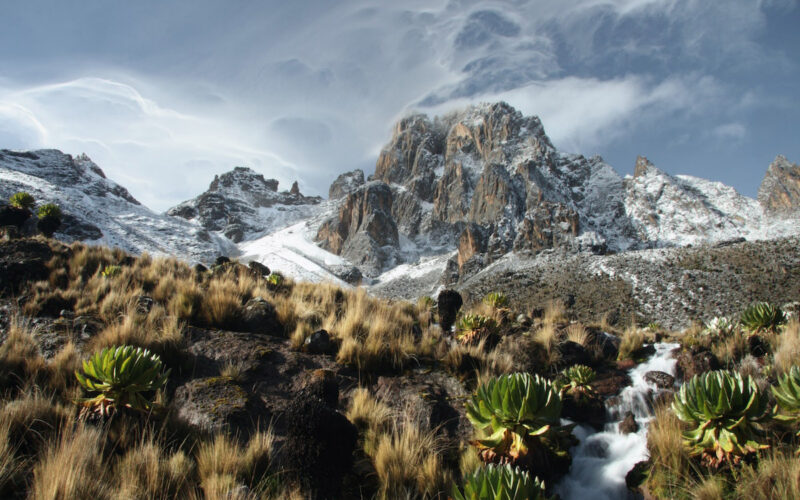
MOUNTAINS are special places. They have distinctive climates that are generally cooler and wetter than surrounding lowlands, and they host plants, animals and landscapes that are uniquely found in these environments. However, mountains are under threat because of climate change, and this has an impact on every single property of mountains, including their climate, weathering and erosion processes, soils, ecosystems, water resources, geological hazards, regional economies, and cultural practices. My work on the impacts of ongoing climate change in mountains highlights the sensitivity of mountain properties and processes to changes in temperature and precipitation – mainly expressed in mountains as…
Read More
‘What am I supposed to do about all this really bad stuff?’ Young people identify 7 ‘superpowers’ to fight climate change

‘What am I supposed to do about all this really bad stuff?’ Young people identify 7 ‘superpowers’ to fight climate change

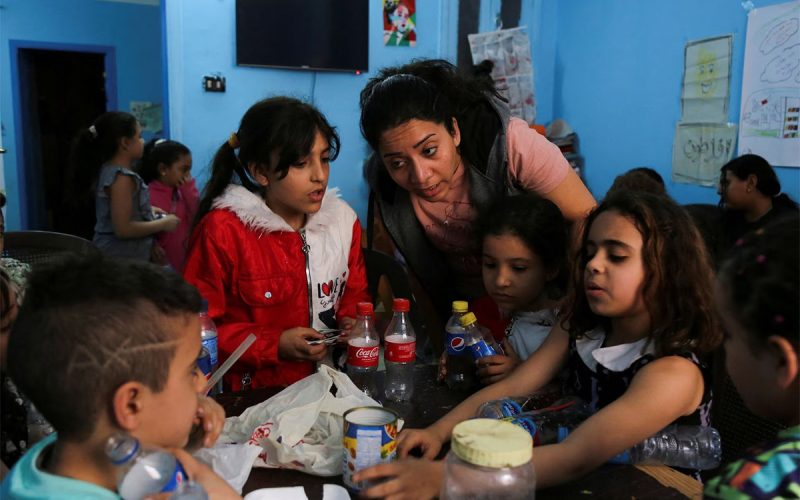
PHOEBE QUINN and KATITZA MARINKOVIC CHAVEZ MANY young people feel anxious, powerless, sad and angry about climate change. Although there are some great resources on children’s eco-anxiety and climate distress, the vast majority are designed for and by adults. So, what resources do children and young people themselves want, to support them in facing climate change? And what strengths do they have when it comes to learning about, coping with and acting on this vast and complex problem? Our study involved young people To find out, we ran a series of workshops with 31 young people aged 12 to 25…
Read More
Saving the world, one coconut tree at a time

Saving the world, one coconut tree at a time

LAYMAH KOLLIE, BIRD STORY AGENCY WHEN Eleazer Barclay, 22, started climate activism in 2018, he visited six schools in Grand Bassa County, Liberia and asked the students to come with coconut seeds. "My objective was to educate the students and teachers to champion environmental conservation by planting trees. To start off, I asked the participants to come along with a symbolic plant, a coconut seedling, and on that first day, we planted 150 coconut trees on six campuses," said Barclay. "The most important thing was that the young students saw themselves as problem solvers. They also learned that trees provide…
Read More
Burning waste must end: African leaders look to recycling for better health and value

Burning waste must end: African leaders look to recycling for better health and value

WHEN African environment ministers met in Senegal in mid-September, they made one of the most important decisions in the history of waste management in Africa. The ministers laid the foundation to end the open dumping and burning of waste. Putting this decision into action will have multiple economic, environmental and social implications. It could save millions of lives on the continent. Author DESTA MEBRATU, Professor and United Nations High Level Champions (UNHLC) Lead on Waste, Stellenbosch University One hundred and eighty million tons of waste, about 9% of the global total, was generated in sub-Saharan Africa in 2016. Only about…
Read More
Armed conflict and climate change: how these two threats play out in Africa

Armed conflict and climate change: how these two threats play out in Africa

THE world is falling miserably short of reducing carbon emissions in line with the Paris Agreement, a 2015 treaty to keep global warming well below 2? The results of this failure are a greater increase in the prevalence and severity of extreme weather events, more rapid sea-level rises and an elevated risk of triggering irreversible climate tipping points, like the collapse of the West Antarctic ice sheet or the loss of the Amazon rainforest. The speed and magnitude of these changes have immediate consequences for ecosystem health and biodiversity. Further, sustained climate change threatens fundamental dimensions of human well-being. Author…
Read More
The 5 biggest threats to West Africa’s oceans – and what to do about them

The 5 biggest threats to West Africa’s oceans – and what to do about them

THE natural resources that form ocean ecosystems can play a significant role in the socio-economic growth and development of nations. West Africa has a variety of marine and coastal ecosystems, found within the Atlantic Ocean. This is one of the most diverse and economically important fishing zones in the world and provides an income for many through fishing, shipping, logistics and mining. But unregulated and unsustainable exploitation has degraded the ecosystems severely. Threats have come from land-based sources of pollution, insecurity and piracy, illegal and harmful fishing practices, and climate change. Author ADERONKE OMOLARA LAWAL-ARE, Professor of Marine Sciences, University…
Read More
Nigeria floods: expert insights into why they’re so devastating and what to do about them

Nigeria floods: expert insights into why they’re so devastating and what to do about them

NIGERIA is experiencing its worst flooding in over a decade. Over 1.4 million people have been displaced, 500 have been reported dead and thousands have been injured. Flooding isn’t a new challenge in Nigeria – it’s one of the country’s most prevalent natural disasters. During the rainy seasons, from March to July and mid-August to mid-October in the south, and July to October in the north, major rivers often burst their banks. Dams burst too. This causes flooding in numerous Nigerian states, among them Delta, Kogi, Anambra, Bayelsa, Adamawa and Niger. Various experts have written for The Conversation Africa on…
Read More
How safe is it to drink rainwater?

How safe is it to drink rainwater?

IN many parts of the world, including Africa, people rely on rainwater as a source of drinking water, as well as for other household and livelihood uses. One of the reasons is water scarcity – sub-Saharan Africa has the largest number of water-scarce countries in the world. But there are concerns about how safe rainwater is to drink. It can be contaminated by dust and ash in the surroundings or by heavy metal from roofing material. Another concern is the presence of manufactured chemicals called perfluoroalkyl and polyfluoroalkyl substances (PFAS), or “forever chemicals”. As environmental scientist Ian Cousins and his…
Read More
We’ve been tracking birds in a small Nigerian forest for 18 years. What we found and why it matters

We’ve been tracking birds in a small Nigerian forest for 18 years. What we found and why it matters

IF you live in Europe, you can find almost any statistic you like about the birds in the environment. How many there are of a species, where you find them, and whether their population is increasing or decreasing. In some countries like the UK, there are comprehensive surveys going back 60 years and they have mapped and counted every single bird species three times already. Author WILLIAM CRESSWELL, Chair professor, University of St Andrews These detailed statistics allow effective monitoring of the environment. This is because birds are an indicator species of how well the ecosystem is functioning to provide…
Read More
How politics has subverted conservation efforts to protect Kenya’s Mau Forest

How politics has subverted conservation efforts to protect Kenya’s Mau Forest

THE Mau Forest Complex is the largest montane tropical forest in East Africa. This is an ecosystem with rich biodiversity and is characterised by high rainfall. Composed of 22 forest sectors, the Mau is located in Kenya’s Rift Valley, the heart of the country’s fertile and rain-fed highlands. The forest plays a pivotal role in feeding a large part of the country’s water network. The Mau Forest’s 380,000 hectares have witnessed a long and tormented history of human habitation. It’s a territory hotly contested. Authors STEFANIA ALBERTAZZI, Postdoctoral fellow, University of Milan FRANCESCA DI MATTEO, Researcher, French Institute for Research…
Read More