Our website use cookies to improve and personalize your experience and to display advertisements (if any). Our website may also include cookies from third parties like Google Adsense, Google Analytics, and Youtube. By using the website, you consent to the use of cookies.

Saving East Africa’s wildlife from recurring drought

Saving East Africa’s wildlife from recurring drought

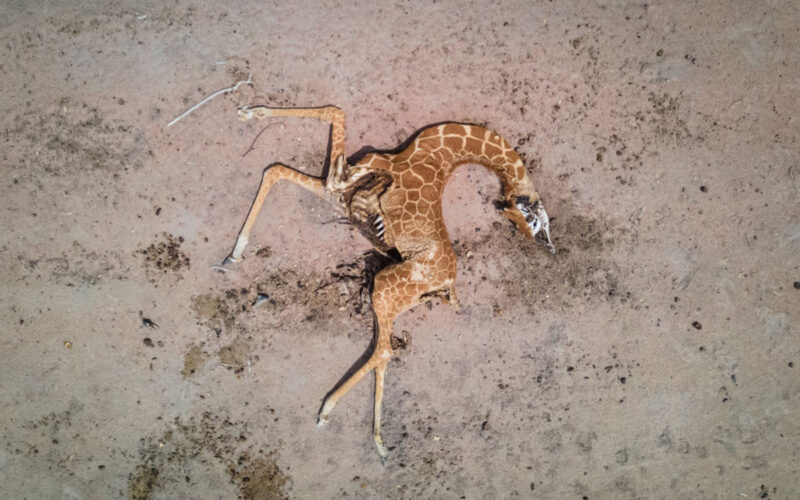
OVER the past two decades, the Horn of Africa – specifically Ethiopia, Somalia and Kenya – has experienced more intense and frequent droughts. The affected areas in the three countries include vast rangelands, home to millions of people, livestock and wildlife. These areas are classified as arid and semi-arid lands. Author ABDULLAHI ALI, Fellow, Zoological Society of London These drylands also constitute a biodiversity hotspot. They harbour endangered species like the hirola antelope, African wild dog, Somali giraffe and Grevy’s zebra. But these species face an uncertain future due to severe and recurring droughts. I’m a Kenyan scientist and conservationist.…
Read More
Senegalese island keeps coastal erosion at bay with stakes in the sand

Senegalese island keeps coastal erosion at bay with stakes in the sand

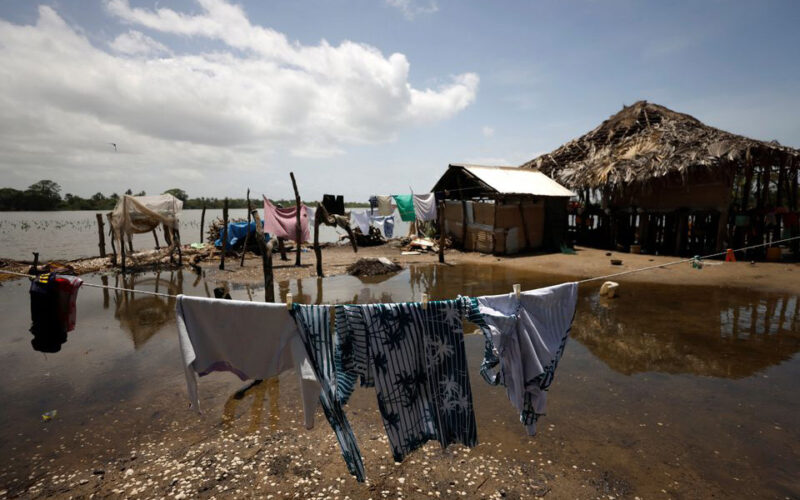
NGOUDA DIONE SIMPLE wooden structures padded with coconut tree fronds are helping residents of Diogue island in southern Senegal to win back stretches of sandy beach from the Atlantic swells that threaten much of the West African coast. In some areas, half-submerged tree stumps and crumbling abandoned buildings show the impact of the waves - and the ongoing degradation of coastline, where 56% of West Africa's economic activity is generated and around a third of its population live, according to the World Bank. "The ocean was so far away that we used to hear it without seeing it," said Angele…
Read More
After 40 years of extinction, rhinos return to Mozambique

After 40 years of extinction, rhinos return to Mozambique

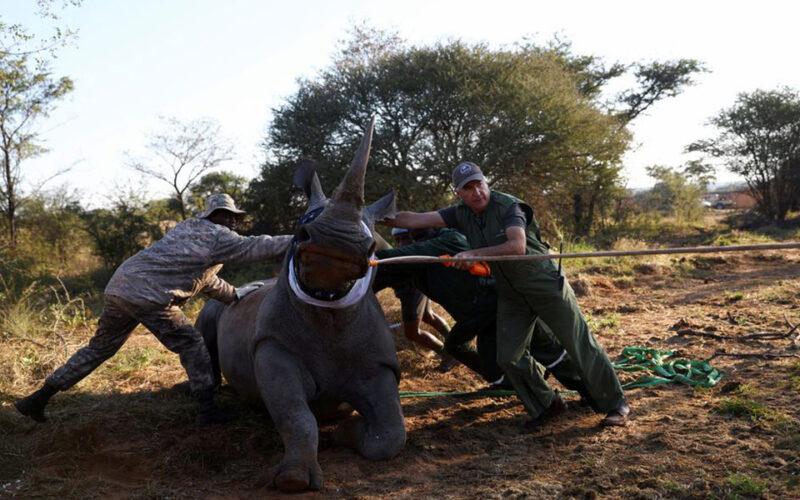
SISIPHO SKWEYIYA OVER four decades after they became extinct locally, rhinos are roaming again the wilds of Mozambique, which is bringing the endangered species from South Africa in efforts to breathe new life into its parks and boost local tourism. A group of rangers captured, sedated and moved black and white rhinos over 1,000 miles (1,610 km) to Mozambique's Zinave National Park, which has over 400,000 hectares and more than 2,300 other reintroduced animals. "Rhinos are important to the ecosystem, which is one of the reasons why we're moving them all this distance and doing all this effort to get…
Read More
Can SA provide a template for Africa’s just energy transition?

Can SA provide a template for Africa’s just energy transition?

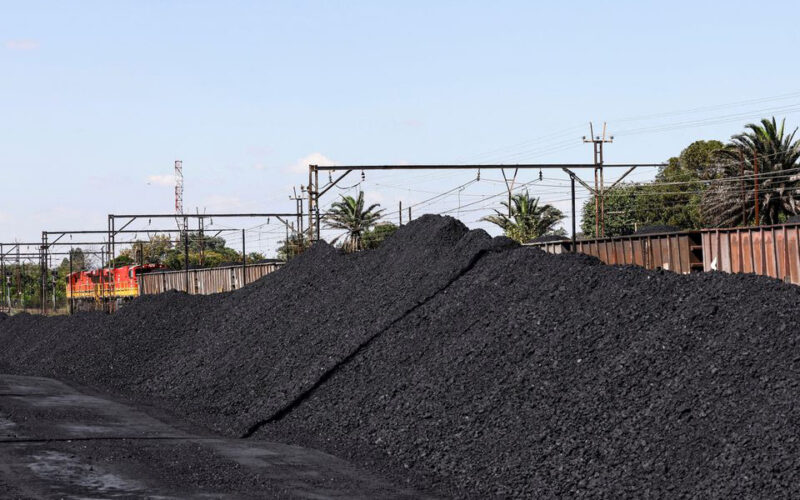
SETH ONYANGO, BIRD STORY AGENCY AT the COP26 climate conference in Glasgow last year, climate experts demonstrated how Africa can contribute to global emission reduction owing to its massive green energy potential. A chorus of how the continent could benefit from the dynamics of the global energy transition reverberated throughout the 12-day conference. But unlike the previous forums where rich nations only paid lip service to Africa's bid to decarbonise, the aforementioned states pledged financial incentives to the vision, starting with South Africa which is still dependent on coal. British Prime Minister Boris Johnson told the meeting in Glasgow that…
Read More
In Nigeria’s disappearing forests, loggers outnumber trees

In Nigeria’s disappearing forests, loggers outnumber trees

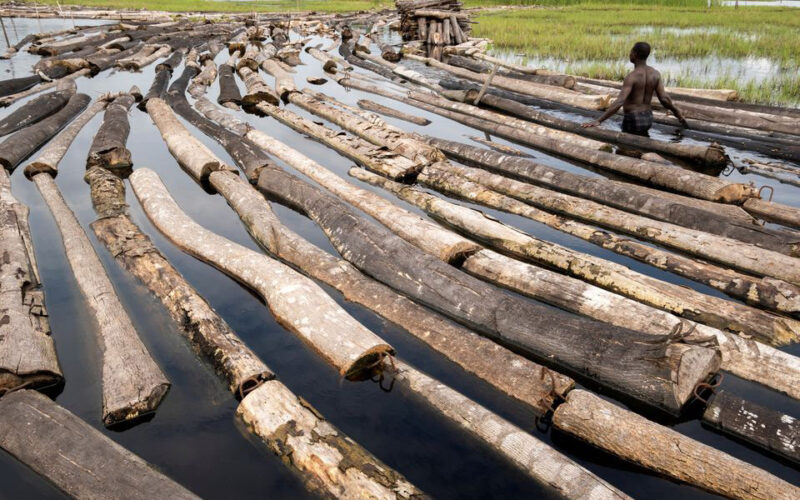
NYANCHO NWA NRI and FIKAYO OWOEYE DEEP in a forest in Nigeria's Ebute Ipare village, Egbontoluwa Marigi sized up a tall mahogany tree, methodically cut it down with his axe and machete, and as it fell with a crackling sound, he surveyed the forest for the next tree. Around him, the stumps dotting the swampy forest were a reminder of trees that once stood tall but are fast disappearing to illegal logging in Ondo state, southwest Nigeria. "We could cut down over 15 trees in one location, but now if we manage to see two trees, it will look like…
Read More
Fruit bats: the winged ‘conservationists’ reforesting parts of Africa

Fruit bats: the winged ‘conservationists’ reforesting parts of Africa

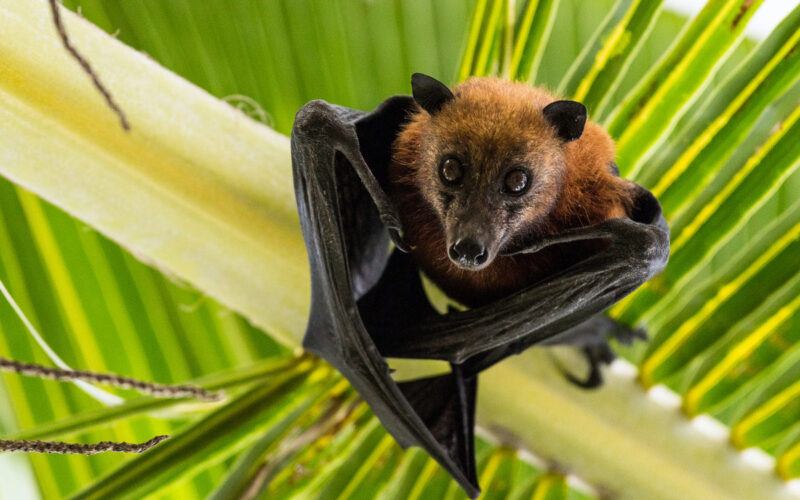
STRAW-COLOURED fruit bats exist throughout most of the African continent. This large fruit bat is one of, if not the most numerous fruit-eating animal (called frugivores) in Africa. They live in colonies of thousands to millions of individuals. Fruit bats sleep during the day, hanging upside down in the crowns of old trees, and become active at sunset when they set off in search of food – specifically nectar and fruit. Authors DINA DECHMANN, Researcher, Max Planck Institute MARIËLLE VAN TOOR, Researcher, Linnaeus University With their wingspan of up to 80cm, they are able to cover vast distances. When the…
Read More
Africa’s $25-billion climate change war chest

Africa’s $25-billion climate change war chest

ZUBAIDA MABUNO ISMAIL, BIRD STORY AGENCY THE African Development Bank plans to commit some 25 billion US dollars (US$) to programmes to mitigate the impact of Climate Change - among them, clean energy and emergency food production - over the next three years. This is just a fraction of the estimated amount - between US$1.3 trillion and US$1.6 trillion - that the continent requires to tackle the threat by 2030. Speaking at the 57th Annual Meeting of the bank in the Ghanaian capital, Accra, the bank's president, Akinwumi Adesina, said Africa needs more resources to combat the effects of climate…
Read More
Tanzania’s huge green energy pivot

Tanzania’s huge green energy pivot

SETH ONYANGO, BIRD STORY AGENCY ON April 29, Tanzania announced it had inked an agreement with exploration firm Equinor and with Exxon Mobil to develop a vast liquefied natural gas (LNG) plant worth 30 billion US dollars (USD). Tanzania has an estimated 57 trillion cubic feet of gas reserves but disagreements with oil corporations over production-sharing had stalled investments in the sector. However, President Samia Suluhu Hassan renewed negotiations with energy firms to revive the construction of offshore natural gas projects in 2023. But while the East African nation looks to prop up its gas industry, its renewable energy sector…
Read More
Pollution kills nine million people, Africa hardest hit

Pollution kills nine million people, Africa hardest hit

GLORIA DICKIE WORSENING outdoor air pollution and toxic lead poisoning have kept global deaths from environmental contamination at an estimated 9 million per year since 2015 – countering modest progress made in tackling pollution elsewhere, a team of scientists reported Tuesday. Air pollution from industrial processes along with urbanization drove a 7% increase in pollution-related deaths from 2015 to 2019, according to the scientists’ analysis of data on global mortality and pollution levels. "We're sitting in the stew pot and slowly burning," said Richard Fuller, a study co-author and head of the global nonprofit Pure Earth. But unlike climate change, malaria, or…
Read More
Evicting people from Tanzania’s Ngorongoro conservation area is a bad idea, there are alternatives

Evicting people from Tanzania’s Ngorongoro conservation area is a bad idea, there are alternatives

THE Ngorongoro Conservation Area in northern Tanzania is a spectacular area made up of expansive plains, forests and savanna. It’s also home to a huge caldera – a depression that forms when a volcano erupts and collapses – known as the Ngorongoro Crater. The Conservation Area, covering about 8,292km2, is special for the large number of wildlife that live there which led to it being declared a World Heritage site in 1979. Authors PABLO MANZANO, Ikerbasque Research fellow, bc3 - Basque Centre for Climate Change LUCAS YAMAT, PhD candidate, bc3 - Basque Centre for Climate Change It’s also special because…
Read More