Our website use cookies to improve and personalize your experience and to display advertisements (if any). Our website may also include cookies from third parties like Google Adsense, Google Analytics, and Youtube. By using the website, you consent to the use of cookies.

Why have South Africans been on a looting rampage? Research offers insights

Why have South Africans been on a looting rampage? Research offers insights

THE looting of businesses, shopping centres and warehouses in South Africa over the past week, particularly in the KwaZulu-Natal and Gauteng provinces, has taken place at an unprecedented scale. It has affected both poor and middle-class areas. Private as well as government property has been damaged and destroyed. People have been injured and lives have been lost. GUY LAMB, Criminologist / Lecturer, Stellenbosch University A variety of narratives have emerged in an effort to explain the looting frenzy. Some have accused die-hard supporters of former president Jacob Zuma of fuelling the unrest. Others have intimated that the looting is a…
Read More
Chaos in South Africa points to failures in the project to build a democracy

Chaos in South Africa points to failures in the project to build a democracy

THE spate of violence that’s engulfed South Africa shows that not all citizens have internalised constitutional democracy and the rule of law as the organising principle of the post-apartheid society. MASHUPYE HERBERT MASERUMULE, Professor of Public Affairs, Tshwane University of Technology Various interventions to institutionalise democracy were more focused on policy interventions and institution-building to safeguard it, but not on ensuring that it was embraced by the entirety of society, appreciating it as the basis of its evolution. The violence started in KwaZulu-Natal following the imprisonment of the former president Jacob Zuma to serve a 15-month sentence for contempt of…
Read More
Tanzania’s Samia Hassan has the chance to heal a polarised nation

Tanzania’s Samia Hassan has the chance to heal a polarised nation

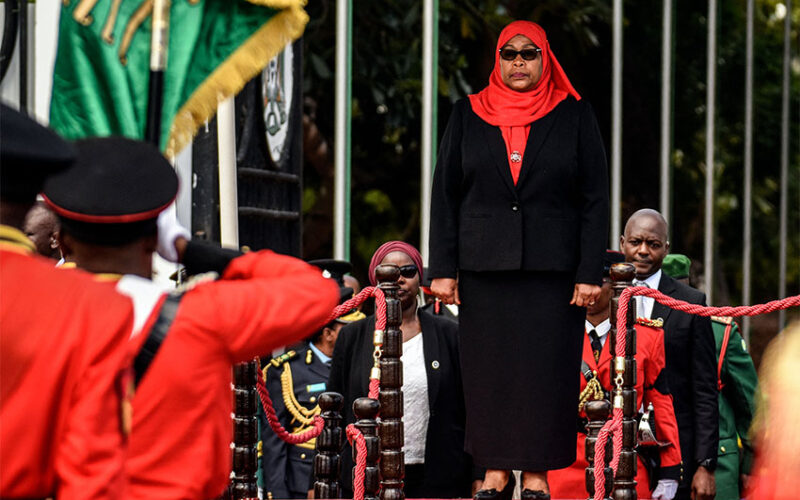
SAMIA Suluhu Hassan becomes the first female president in Tanzania taking over from President John Magufuli who died on 17 March 2021. NICODEMUS MINDE, PhD Fellow, United States International University Born in 1960, she hails from Makunduchi, an old town on Unguja island, in Zanzibar. Her father was a teacher and her mother a housewife. After graduating from high school she studied public administration and later obtained a Masters in community economic development. She began her political career in 2000 when she was elected as a special seat member in the Zanzibar House of Representatives. Special seats are reserved for…
Read More
Seeking the truth about Anton Hammerl

Seeking the truth about Anton Hammerl

JOHN HOGG ANTON Lazarus Hammerl went to Libya as a freelance photographer 10 years ago. It was during the fight for control of the oil-rich country, with foreign powers like Nato, the United States and Canada meddling to “help” dethrone dictator Muammar Gaddafi.  Anton didn’t return home from that assignment. He was shot and killed on 5 April by troops loyal to Gaddafi. The whereabouts of his body remains unknown. Anton was more than a just fine photographer, he was a mensch. It was said at the time that he was doing what he loved and that he was pursuing…
Read More
South African policies go some way to tackling poverty and inequality. But more is needed

South African policies go some way to tackling poverty and inequality. But more is needed

SOUTH Africa is one of the most unequal societies in the world. More than 50% of the population live in poverty. Despite notable gains in poverty reduction post-apartheid, poverty levels have remained consistently highest among women, black South Africans, people with disabilities, and those living in rural areas. SOPHIE PLAGERSON, Senior research fellow at the Centre for Social Development in Africa, University of Johannesburg The government has committed itself to addressing poverty, inequality and social exclusion – understood as a disadvantage by gender, race, disability or place. The mandate is laid out in the constitution and in the government’s National…
Read More
This is not who we are as a people

This is not who we are as a people

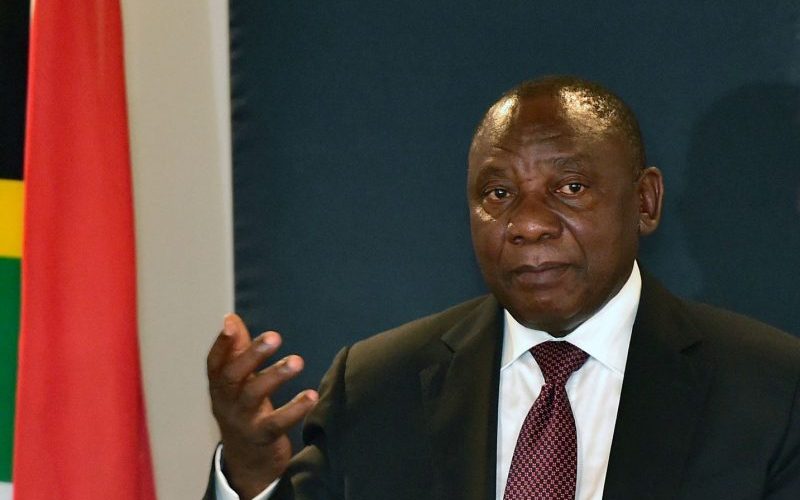
CYRIL RAMAPHOSA OVER the past few days and nights, there have been acts of public violence of a kind rarely seen in the history of our democracy. Property has been vandalised and destroyed. Shops have been looted. Law-abiding citizens have been threatened and intimidated. Workers are scared that they may not be able to return to work. People have died. At this hour, there are several families in our country that are in mourning. I speak of the families of Nkosikhona Chiza, Ndumiso Shezi, Khaya Mkhize, Zethembe Ndwandwe, Lindani Bhengu and Lindokuhle Gumede in Gauteng. I speak of the families…
Read More
Frelimo gambled everything on gas – and lost

Frelimo gambled everything on gas – and lost

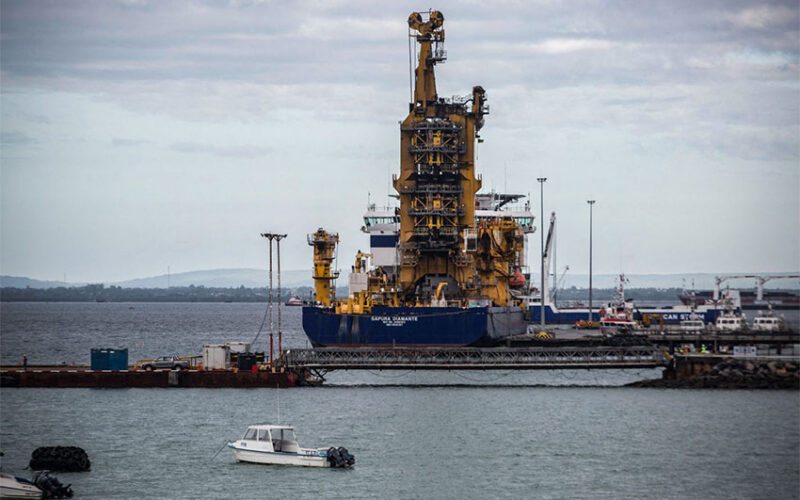
JOSEPH HANLON THE leadership of Mozambique’s ruling party, Frelimo, was dazzled by gas. The discovery of the second-largest gas reserve in Africa in 2010 led the political and business elite to believe Mozambique would be like Abu Dhabi, Qatar or Kuwait. Gas would make them fabulously wealthy and the riches would trickle down to ordinary people.  Poverty and inequality were increasing, but there was no reason to spend money on rural development because the gas bonanza would end poverty. Of course, the elites could take their share early, such as with the $2 billion secret debt in 2012. The gas windfall…
Read More
A woman ahead of her time: The Lesseyton moment

A woman ahead of her time: The Lesseyton moment

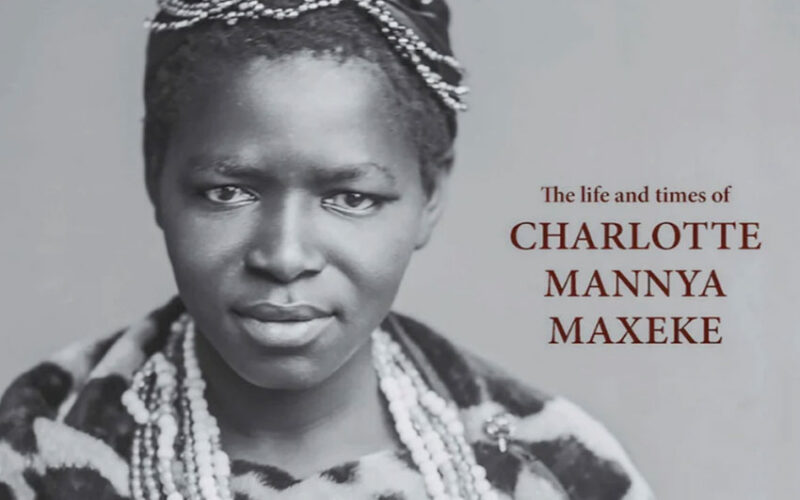
ZUBEIDA JAFFER CHARLOTTE Mannya Maxeke took the unusual step in 1902 to insist on the participation of women in church and political meetings. She had graduated with a BSc Degree in 1901 becoming the first indigenous South African women to achieve this. When she returned home from Ohio in the USA, she found herself stuck at the Cape as the country was plunged in white-on-white violence that became referred to as the Anglo-Boer War. Her plan was to travel to Ramakgopa Village to join her father and start implementing her dream of educating the local people. Nearly eight years had…
Read More
As South Sudan turns 10, questions over the role of the church emerge amid anti-clerical violence

As South Sudan turns 10, questions over the role of the church emerge amid anti-clerical violence

ON July 9, 2021, South Sudan will celebrate its 10th anniversary of independence – but it does so amid concern over violence in the young nation. CHRISTOPHER TOUNSEL, Assistant Professor of History and African Studies, Penn State Recent attacks on two Catholic priests have also put a focus on the role of the church in South Sudan. The country’s freedom was achieved after two lengthy civil wars against its now northern neighbour, Sudan, in which religious identity played a key role. During the second of these wars, from 1983 to 2005, the Sudanese government attempted to fashion the country as…
Read More
‘Rwanda’s story serves as an uplifting symbol of renewal, even beyond our borders’

‘Rwanda’s story serves as an uplifting symbol of renewal, even beyond our borders’

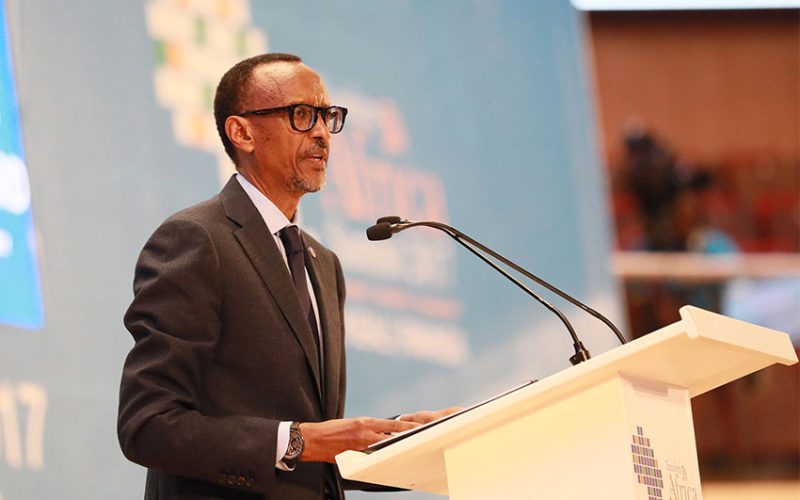
PAUL KAGAME THIS may be the 27th time we have marked commemoration, but the occasion is never ordinary. There are always reminders of what is at stake. New mass graves are regularly discovered. Many perpetrators still roam free. But we cannot allow the weight of our history to crush us. This is also the second Kwibuka during the Covid-19 pandemic. The physical distance only adds to the emotional burden on survivors, whose quiet strength has nourished our nation’s revival. We thank you and we honour the sacrifices you have made for the sake of a better future for us all.…
Read More