Our website use cookies to improve and personalize your experience and to display advertisements (if any). Our website may also include cookies from third parties like Google Adsense, Google Analytics, and Youtube. By using the website, you consent to the use of cookies.

From bondage to Bandung: How centuries of kinship shape South Africa and Malaysia’s shared future

From bondage to Bandung: How centuries of kinship shape South Africa and Malaysia’s shared future

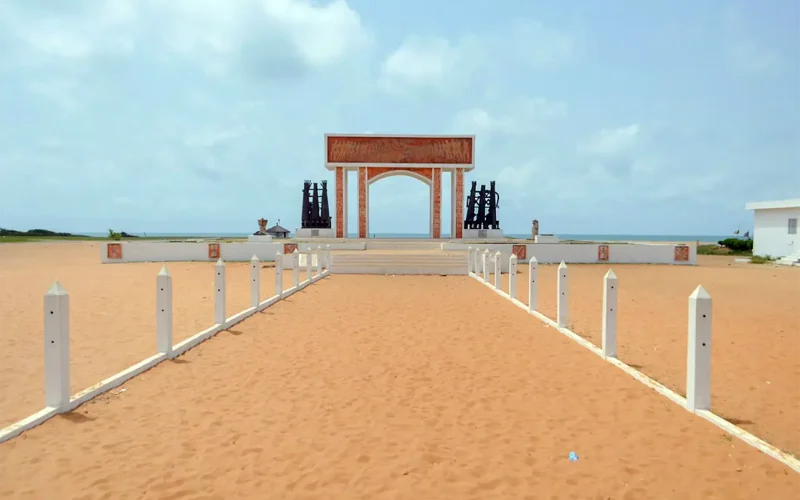
TO fully understand relations between South Africa and Malaysia, one must delve into the historical linkages between our two countries. We need to understand how these connections established a firm foundation for our relationship today, and how they can pave the way for a bright future through South-South diplomacy. The bonds that bind our two nations together are not only bonds of friendship—they are bonds of kinship that go back several hundred years. Today, we pay tribute to the rulers and peoples of the Malay-Indonesian archipelago, whose exiles, workers and scholars helped build the South African nation. The Cape Malay…
Read More
Madagascar coup: why turning a blind eye to an unpopular president weakens regional bodies

Madagascar coup: why turning a blind eye to an unpopular president weakens regional bodies

WHAT began in late September as Madagascar’s student demonstrations over crippling electricity outages and water shortages quickly evolved into broader demands for political reform. It became a call to dismantle a system widely seen as corrupt and unaccountable, and for President Andry Rajoelina to resign. As demonstrations swelled across the country, the embattled president sought to restore order through curfews, the dismissal of his energy minister, and ultimately the dissolution of his government. To no avail. Eventually, the elite CAPSAT unit – the same corps that had propelled Rajoelina to power during the 2009 coup – overthrew him. Once CAPSAT…
Read More
Black Coffee and Enhle ruling sends a clear message: customary and white weddings are equal in South Africa

Black Coffee and Enhle ruling sends a clear message: customary and white weddings are equal in South Africa

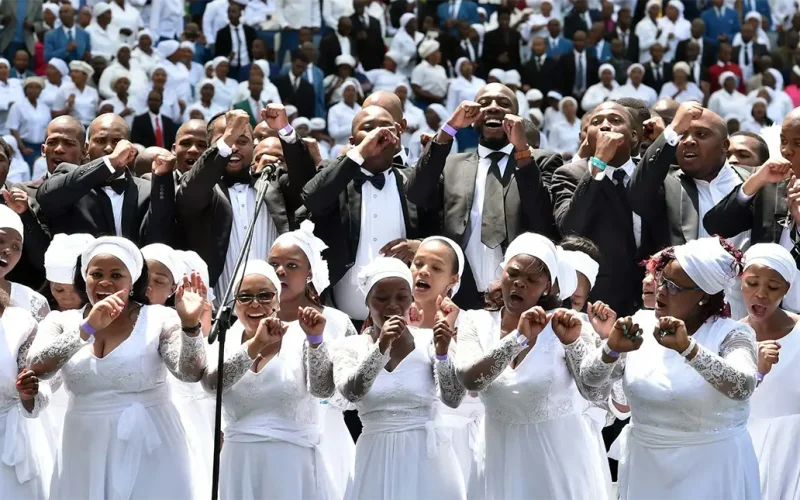
SOUTH AFRICAN actress and businesswoman Enhle Mbali Mlotshwa has won a victory in the Johannesburg High Court. It ruled that her customary marriage to music star Nkosinathi “Black Coffee” Maphumulo was valid, declaring their later civil marriage and antenuptial contract null and void. Mlotshwa is now legally entitled to half of the couple’s vast estate. A scholar of legal pluralism and specialist in customary law marriage, Anthony Diala, answers our questions. What is customary marriage and how does it fit into South African law? A customary marriage is a union between a man and one or more women, which is…
Read More
Raila Odinga: the Kenyan statesman who championed competitive politics and accountability

Raila Odinga: the Kenyan statesman who championed competitive politics and accountability

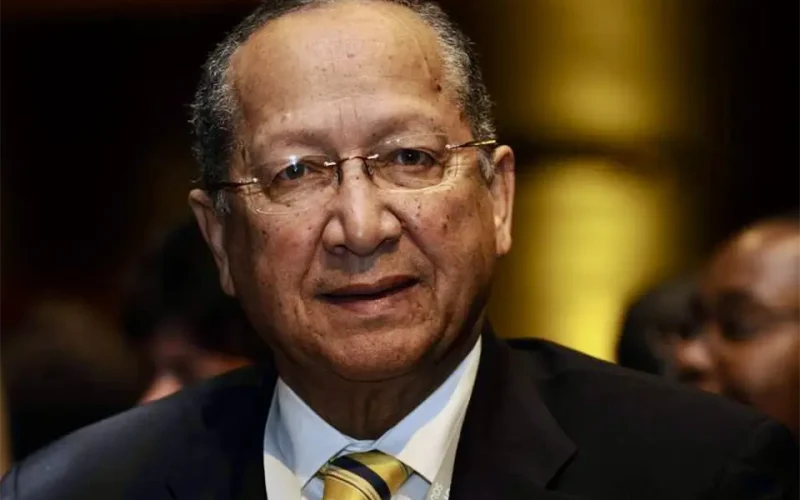
RAILA Amolo Odinga, who died on 15 October 2025, aged 80, ran five times for the Kenyan presidency but didn’t win. Yet he became a statesman of enormous influence, whose political and humanitarian achievements surpassed those of many African heads of state. He will be remembered as one of the most important figures in the struggle for multiparty democracy. In this, he was like his father, Jaramogi Oginga Odinga – who was the country’s first post-independence vice-president. Oginga was a patriot, a nationalist, and one of a small number of Kenyans who were instrumental in the struggle against colonialism. In…
Read More
Madagascar protests: how ousted president Andry Rajoelina’s urban agenda backfired

Madagascar protests: how ousted president Andry Rajoelina’s urban agenda backfired

THE youth-led protests that eventually brought down Madagascar’s President Andry Rajoelina were sparked, in part, by his attempt to use large-scale urban infrastructure projects as a means of consolidating power. Rajoelina’s government placed urban mega-projects at the centre of its strategy to assert power and legitimacy. These projects enabled him to create and channel rents to key allies, while anchoring his rule in Malagasy history and territory. They were also meant to transform the spatial and political imaginaries of the state through monumental visions of modernity and development. By spatial and political imaginaries, I mean the contested ways leaders and…
Read More
Africa’s path to resilience: time for Africa to invest in resilience to reduce disaster risks

Africa’s path to resilience: time for Africa to invest in resilience to reduce disaster risks

EACH year, the International Day for Disaster Risk Reduction - held every year on 13 October  - reminds the world that disasters are not inevitable. While hazards such as floods, droughts, cyclones, and disease outbreaks will continue to occur, the scale of their impact depends on how well prepared we are to anticipate, prevent, and respond to them. This truth is particularly urgent for Africa, where climate change, rapid [informal] urbanisation, and fragile infrastructure make millions of people increasingly vulnerable. The 2025 theme highlights the need to look at disaster risks in a rapidly changing global landscape. Across Africa, climate…
Read More
Zoë Wicomb, the South African-Scottish writer who told powerful stories about belonging

Zoë Wicomb, the South African-Scottish writer who told powerful stories about belonging

ZOË Wicomb, a celebrated South African-Scottish writer and scholar, has died. All my memories of her crystallise around her voice: it brought a small piece of South Africa into whatever context she found herself in. Whether it was a public reading (always a source of terror for her) or an animated conversation in the Glasgow home in Scotland, which she and her husband, the photographer Roger Palmer, had made into a beautiful dwelling. The cadences of her speech, untouched by the Glaswegian accents around her, were those of her native Namaqualand in South Africa and the coloured community among which…
Read More
“Remember we exist”, refugees in Malawi say as aid is slashed

“Remember we exist”, refugees in Malawi say as aid is slashed

FOR more than two decades, I have called the Dzaleka Refugee Camp home, though “home” has always been a complicated word here. Dzaleka was never meant to be permanent, yet for many of us, it has become the only place we know. Over the years, it has grown into a community of its own, made up of refugees from the Democratic Republic of the Congo, Rwanda, Burundi, Somalia, and Ethiopia. Children born here have become parents themselves. Schools and small markets have sprung up, and through it all, one name has been constant – the UN refugee agency, UNHCR. This…
Read More
The longest week: Cameroon’s moment of reckoning

The longest week: Cameroon’s moment of reckoning

CAMEROON stands on a knife-edge this week, a nation gripped by a tense and historic political moment destined to shape its future for years to come. The longest week in Cameroonian politics has unfolded like a high-stakes thriller, with the air thick with anticipation and anxiety as the country waits for the Constitutional Council's official announcement of presidential election results, scheduled for Thursday, October 23rd at 10:30 a.m. at the Yaoundé Convention Center. After a nationwide vote on October 12th that has sparked fierce claims of victory from rival camps, uncertainty reigns supreme. In the capital's streets, in the bustling…
Read More
Should Boko Haram fighters be given a second chance in society? We asked 2,000 young Nigerians

Should Boko Haram fighters be given a second chance in society? We asked 2,000 young Nigerians

ACROSS the world, the question of how to deal with former fighters remains urgent. From Nigeria and Iraq to Syria and the Sahel, governments are wrestling with how to bring people who once fought for violent groups back into society. Reintegrating ex-fighters – after appropriate punishment – is unavoidable. This is because alternatives such as indefinite detention, capital punishment or abandonment are unsustainable and risk fuelling future cycles of violence. Yet local communities often seem to resist welcoming ex-combatants back. How, then, can societies balance the need for reintegration with local resistance? As scholars of public opinion during and after…
Read More