Our website use cookies to improve and personalize your experience and to display advertisements (if any). Our website may also include cookies from third parties like Google Adsense, Google Analytics, and Youtube. By using the website, you consent to the use of cookies.

Nigeria’s President bows down to youth protests, calls for national dialogue

Nigeria’s President bows down to youth protests, calls for national dialogue

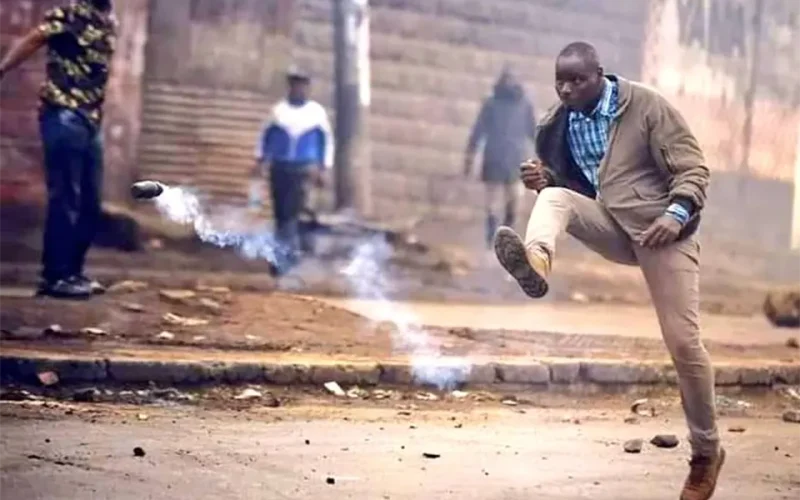
IN a significant development, Nigeria's President Bola Tinubu has become the second head of state to yield to cost-of-living protests led by youth, calling for a national dialogue. This move comes just three weeks after Kenya's President fired his entire cabinet following similar demonstrations. These youth-led protests are posing an unprecedented threat to governments across East and West Africa, echoing the youth uprisings that shook North Africa and brought down Tunisia's government. The current wave of demonstrations also draws parallels to the 1976 youth uprisings in South Africa, which accelerated the fall of the apartheid regime. Addressing the nation in…
Read More
Ghana elections: ethnicity is not allowed in the country’s politics, yet it still helps shape outcomes

Ghana elections: ethnicity is not allowed in the country’s politics, yet it still helps shape outcomes

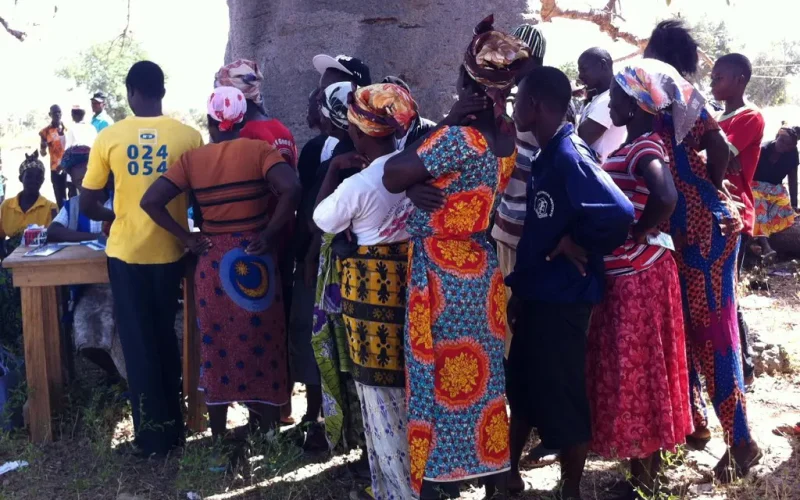
GHANA, which has more than 70 ethnic groups, has been among the most stable democracies in Africa since 1992. It has achieved this by outlawing the use of ethnicity in party politics. The 1992 constitution bars the explicit use of social identities in party politics. That includes ethnic group names, symbols, colours, or artefacts. Yet, Ghanaian politics is not completely devoid of ethnicity. Political scientist Clement Sefa-Nyarko explains why this matters as Ghana prepares for another election in December. Why did Ghana need a clause in its 1992 constitution designed to squeeze ethnicity out of electoral politics? Ethnicity has had…
Read More
The psychology of Olympians and how they master their minds to perform

The psychology of Olympians and how they master their minds to perform

PARTICIPATING in the Olympic Games is a rare achievement the pressures and stressors that come with it are unique. Whether an athlete is battling to win the breaststroke or powering their way to gold in the modern pentathlon, psychology will play a vital role in their success or failure in Paris this summer. In recent Olympics, we have seen the mental toll that competing at the highest level can have on athletes. US gymnast Simone Biles withdrew from five events at the 2020 Tokyo Olympics to protect her mental health and 23-time gold medal winner Michael Phelps has described the…
Read More
Rich countries are paying poorer ones to manage their refugee crises: 3 reasons this is dangerous

Rich countries are paying poorer ones to manage their refugee crises: 3 reasons this is dangerous

IN recent years, western nations have been sending asylum seekers who arrive at their borders to other countries. This is a practice known as offshoring. The UK has become the recent poster country of this practice. The UK, whose plan to send asylum seekers to Rwanda was later scrapped after domestic and international opposition, has continually manufactured a perceived asylum threat. This led to slogans by the UK government such as “send the boats back” and “stop the boats”. Australia pioneered offshoring by sending asylum seekers to Nauru, a small island nation in the Pacific Ocean. This began in 2012.…
Read More
South Africa is trying to put a stop to the abuse of its intelligence agencies – what still needs fixing

South Africa is trying to put a stop to the abuse of its intelligence agencies – what still needs fixing

SOUTH Africa’s security laws are open to abuse by rogue intelligence operatives and politicians. These laws are meant to govern the conduct of covert activities by intelligence agencies and oversight mechanisms. However, weaknesses have been exploited to spy on citizens and for political ends. South Africa has four official intelligence agencies. They are: the State Security Agency, whose job is to inform the government about threats to national stability Crime Intelligence Division of the South African Police Service Defence Intelligence the Financial Intelligence Centre, to counter financial crimes The interception of communications judge grants permission to the above agencies to…
Read More
Kenya’s former President Daniel arap Moi mastered the art of silencing critics – why his tactics wouldn’t work today

Kenya’s former President Daniel arap Moi mastered the art of silencing critics – why his tactics wouldn’t work today

COUNTRYWIDE protests, police killings, mass arrests and calls for the president to stand down. This is Kenya in 2024 – and, for many, it’s evoking memories of another era: the 24-year rule of Daniel arap Moi. However, Kenya is a very different country today with a new constitution, an array of institutional reforms and a freer media environment. This means that Moi-era strategies are no longer available to, or will no longer work for, Kenya’s current president, William Ruto. During his presidency, which lasted from 1978 to 2002, Moi ruled with an iron fist. His obsession with control and loyalty,…
Read More
Cyril Ramaphosa’s speech to parliament listed South Africa’s old problems – but no new solutions

Cyril Ramaphosa’s speech to parliament listed South Africa’s old problems – but no new solutions

SOUTH African President Cyril Ramaphosa’s opening of parliament speech successfully captured the spirit of a diverse and cohesive multi-party government ready to get down to work. But it failed to tell South Africans how the new dispensation will do things differently, and better. In the May 2024 national and provincial elections, Ramaphosa’s African National Congress party received just over 40% of the national vote, triggering a multi-party coalition government for the first time in 30 years. The results signalled frustration with the ANC’s inability to promote job-creating growth, achieve significant reductions in poverty and inequality, and demonstrate clean governance. Ramaphosa’s…
Read More
Kenya protests show citizens don’t trust government with their tax money: can Ruto make a meaningful new deal?

Kenya protests show citizens don’t trust government with their tax money: can Ruto make a meaningful new deal?

EACH year, the Kenyan government tables a finance bill outlining measures for funding the national budget. In the past, these bills have scarcely attracted public attention. This changed dramatically in 2023, with President William Ruto’s first budget following his election victory the year before. Ruto inherited an economy battling high food and fuel prices in addition to a heavy debt burden. His budget policy response, however, added to the crisis by doubling the tax on fuel, increasing income taxes and introducing a levy to fund his pet project of affordable housing. He justified higher taxes as a necessity imposed by…
Read More
Mandela Day lesson to partners in the government of national unity

Mandela Day lesson to partners in the government of national unity

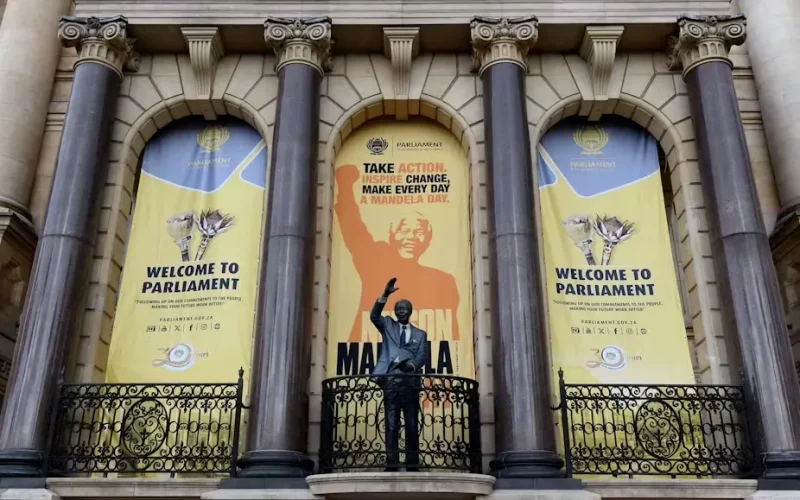
WE are all witnesses of a seismic shift in the South African landscape. Thirty years after liberation, the voters have rejected the ANC as the majority voice of society and forced it onto a government of national unity with a number of other parties, notably the Democratic Alliance and the Inkatha Freedom Party.   As a member of the governing party, we have to admit that, three decades after 1994, we have not achieved our goal of a better life for all. We are not safe, people are hungry and cold, our infrastructure is deteriorating, and we are suffering from terminal…
Read More
South Africa’s new parliament needs to do a better job of holding cabinet to account: legal scholar weighs the chances

South Africa’s new parliament needs to do a better job of holding cabinet to account: legal scholar weighs the chances

SOUTH Africa has entered new territory with a government of national unity after the May elections. The parties representing more than 70% of the electorate will now be the dominant force in parliament. The parties that are not part of the unity government will doubtless continue to demand accountability from the executive. A particular challenge arises, however, for the clear majority of MPs from a range of political ideologies now represented in the executive. The constitution obliges parliament to hold the executive accountable. Having several political parties in the cabinet complicates this. How will this work out, in the light…
Read More