Our website use cookies to improve and personalize your experience and to display advertisements (if any). Our website may also include cookies from third parties like Google Adsense, Google Analytics, and Youtube. By using the website, you consent to the use of cookies.

AI can transform global food security and climate action

AI can transform global food security and climate action

TSHILIDZI Marwala is the Rector of the United Nations University and Under-Secretary-General of the United Nations.   Like all sustainable development challenges, achieving food security is a complex objective intertwined with the environment, economics, peace and security, and technology. But, alarmingly, since 2020 global food insecurity has doubled to over 300 million people. This dramatic decline of food security, a fundamental human right, demands urgent intervention to ensure its four dimensions - availability, access, utilization and stability - do not crumble under the weight of intensifying pressure from climate change. As weather patterns become increasingly disrupted, so too are lives and livelihoods throughout the…
Read More
Kenya clashes and Bolivia’s failed coup show perils of economic hardship

Kenya clashes and Bolivia’s failed coup show perils of economic hardship

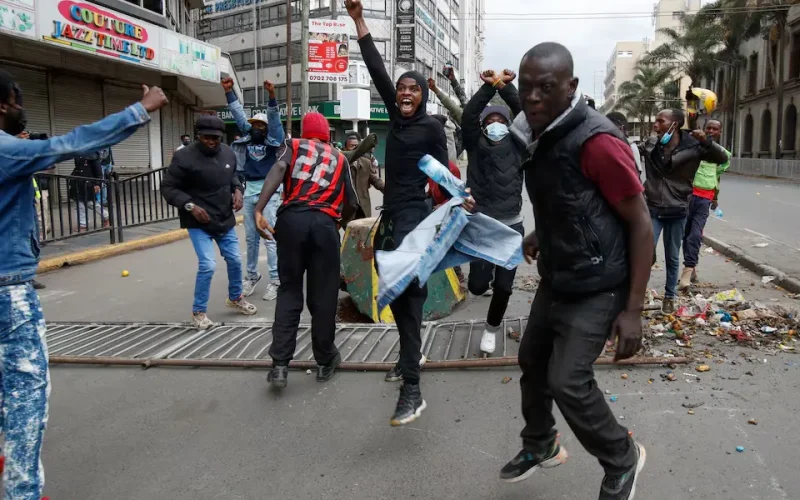
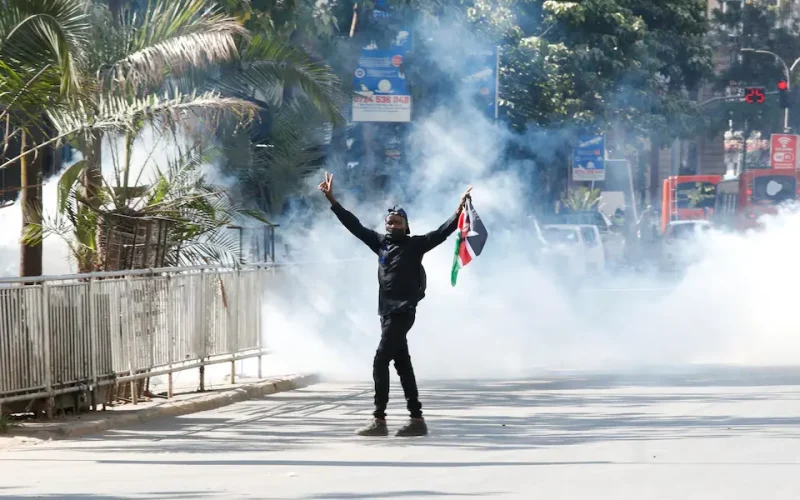
DEADLY Kenyan protests that scuppered tax hikes and a failed coup amid fading economic prospects in Bolivia this week are violent reminders of the dangers posed by faltering economies and punishing austerity measures. Bolivia's President and former economy minister Luis Arce fended off the putsch on Wednesday, but faces ongoing U.S. dollar shortages and soaring borrowing costs that pushed the country's credit rating to "junk." Kenya's President William Ruto, who reversed support for a tax-hike measure, now must find another path to make his nation's debt pile of some $80 billion more manageable. Around the world, low-income nations were sucked into economic crisis - and in…
Read More
Kenyan police and protests: researchers on a violent, corrupt security force that’s beyond reform

Kenyan police and protests: researchers on a violent, corrupt security force that’s beyond reform

KENYA’S police are being criticised for their violent response to protests over the past week against government proposals to raise US$2.7 billion in additional taxes. Hundreds of thousands of people, across 35 of Kenya’s 37 counties, poured out onto the streets in opposition to the tax hikes. The police have reacted with force, using live bullets and tear gas. At least five people are known to have been killed and hundreds have been injured. The reaction by the police force didn’t come as a surprise. Kenya has a long history of policing with excessive force, often resulting in unnecessary deaths.…
Read More
Saulos Chilima: personal tribute to a Malawian leader who stood against hunger and poverty but courted controversy

Saulos Chilima: personal tribute to a Malawian leader who stood against hunger and poverty but courted controversy

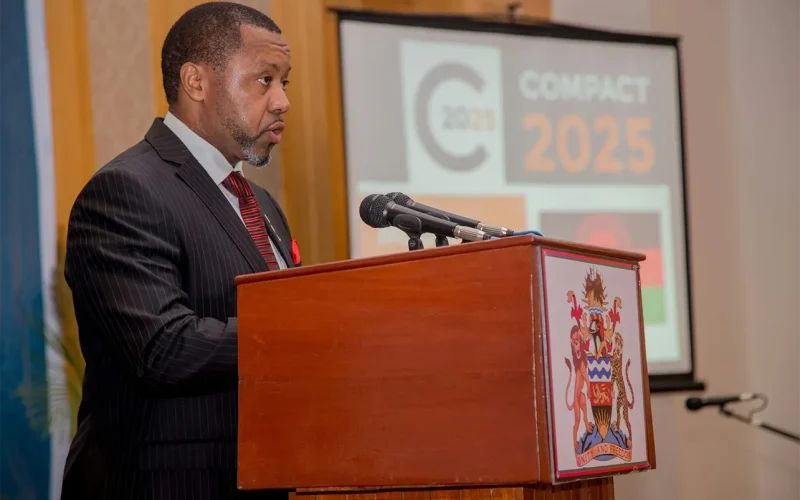
SAULOS Klaus Chilima, the former vice-president of Malawi who died recently in a plane crash, brought to Malawian politics several qualities that made him stand out. But he was also a controversial character. He had a business background and an unusual combination of social science and economics qualifications. Above all, he struck me as someone who was deeply committed to reducing hunger and poverty in Malawi. I got to know Vice-President Chilima between 2016 and 2021 when I was the leader of the International Food Policy Research Institute’s country programme in Malawi. The organisation’s mission is to provide research-based solutions…
Read More
Nigeria’s national anthem change was a tactic to distract attention from the country’s real problems – political analyst

Nigeria’s national anthem change was a tactic to distract attention from the country’s real problems – political analyst

A year into his administration, Nigeria’s President Bola Ahmed Tinubu signed the National Anthem Bill into law, replacing an anthem adopted in 1978 with its predecessor. The decision generated debate among Nigerians, some of whom felt it did not rank on the list of social, economic and security challenges confronting the country. Samuel Oyewole, a political scientist, says it is a “distract and rule” tactic, which he described in his published research as serving the political elite’s goal of a democracy in name only and promoting a democratic setup where people’s involvement in governance is not respected. The recent change…
Read More
South Africa’s foreign policy: a unity government must be practical in a turbulent world

South Africa’s foreign policy: a unity government must be practical in a turbulent world

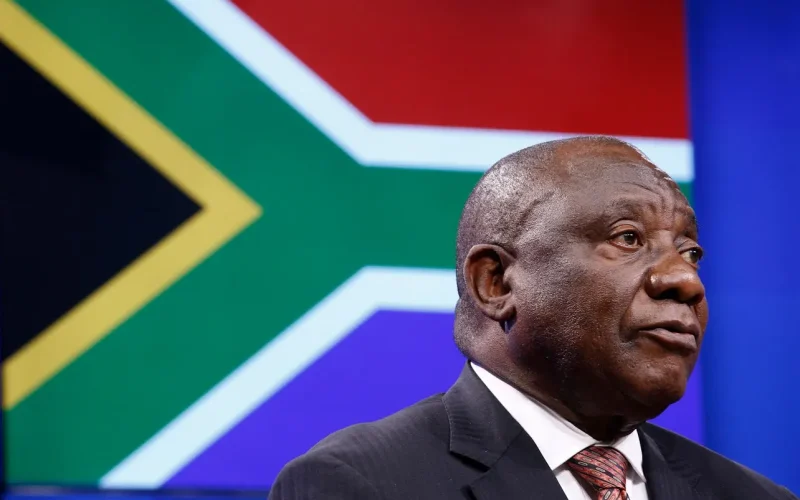
AS South Africa navigates fundamental political change, it faces stark choices on foreign policy posture and priorities. The change has been brought about by the African National Congress’s loss of electoral majority, forcing it into a unity government. Based on my work over many years on South Africa’s foreign policy as well as reflections on the country’s role in Africa and the global south, I argue that the unity government must take a more nuanced approach to international relations. This approach must be based on a shared worldview. Developing that worldview may prove difficult because unity government members range from…
Read More
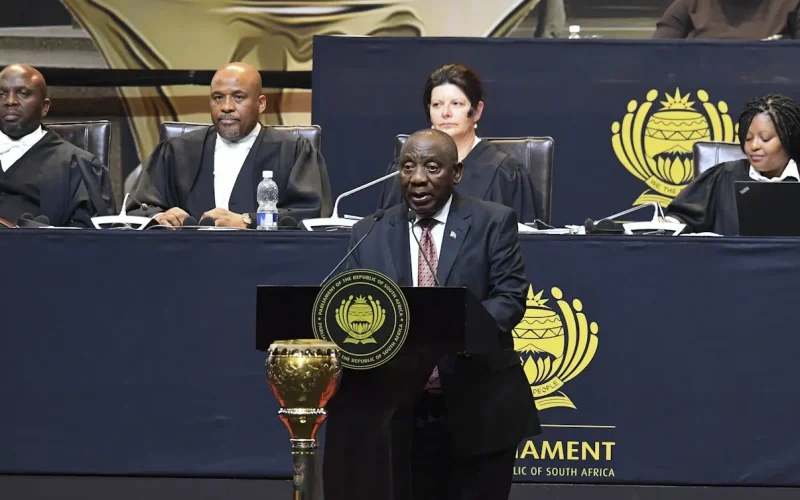
“Today, I make a solemn commitment to be a president for all South Africans, to defend our Constitution and protect our democracy”

“Today, I make a solemn commitment to be a president for all South Africans, to defend our Constitution and protect our democracy”

TODAY, we gather under this vast Highveld sky at the seat of our government, the Union Buildings, to witness before all South Africans and our honoured guests from various countries on our beloved continent and from far afield a fundamental rite of our democracy. In our brilliant diversity, we gather to affirm our solemn conviction that this country belongs to all who live in it, as articulated in the Freedom Charter almost seventy years ago. We gather here, as people born of the same soil across our nine provinces that make up a unitary South Africa, determined that by our…
Read More
South Africa’s unity government: 4 crucial factors for it to work

South Africa’s unity government: 4 crucial factors for it to work

GOVERNMENTS of national unity built on power-sharing arrangements are common in Africa and elsewhere in the world. Now South Africa also has a unity government, following the 2024 general election in which no party won a majority. These governments foster stability through collaboration in grand coalitions. The premise is that in divided societies, stability can be achieved by elites working together in a power-sharing pact. Whether political parties call them coalitions or governments of national unity, these are generally expedient solutions designed to mitigate political conflict or instability. South Africa is not immune to the threat of political instability and…
Read More
AI can make African elections more efficient – but trust must be built and proper rules put in place

AI can make African elections more efficient – but trust must be built and proper rules put in place

TIME magazine has dubbed 2024 a “super election year”. An astonishing 4 billion people are eligible to vote in countries across the world this year. Many are on the African continent, where presidential, parliamentary and general elections have already been held or are set for the latter half of the year. Artificial intelligence (AI) will play a major role in many countries’ elections. In fact, it already does. AI systems are used in a number of ways. They analyse large amounts of data, like voter patterns. They run automated chatbots for voter engagement. They authenticate voters and detect cyber threats.…
Read More
June 16 uprising: how a massacre in South Africa led to Africa’s boycott of the 1976 Olympics

June 16 uprising: how a massacre in South Africa led to Africa’s boycott of the 1976 Olympics

AS the world prepares for the Paris 2024 Olympic Games, can we maintain faith in the nonpolitical ethos of the event? The Montreal Olympics Games in 1976 stands out, among others, as a clear instance of the games being used for political ends. In 1976 Montreal became only the second French-speaking city to host the event since Paris in 1924 and security issues were high on the agenda. Just four years earlier the Munich games had witnessed the tragedy of the execution of the Israeli delegation by the Palestinian Black September commando. But apart from the withdrawal of Taiwan under…
Read More