Our website use cookies to improve and personalize your experience and to display advertisements (if any). Our website may also include cookies from third parties like Google Adsense, Google Analytics, and Youtube. By using the website, you consent to the use of cookies.

Black November: remembering Uganda’s massacre of the opposition three years on

Black November: remembering Uganda’s massacre of the opposition three years on

NOVEMBER marks a sombre anniversary in Uganda’s recent political history. In 2020, the East African country’s leading opposition politician, Robert Kyagulanyi, aka Bobi Wine, was arrested. He was on the campaign trail ahead of the 2021 presidential elections. LUKE MELCHIORRE, Associate Professor, Political Science and Global Studies, Universidad de los Andes Mass demonstrations demanding the release of the popular musician-turned-presidential candidate broke out in and around the capital, Kampala. Over two days, security agents of the regime of Yoweri Museveni – in power since 1986 – cracked down on the protests. They fired live ammunition into crowds of protesters, killing…
Read More
William Ruto’s first year: he promised to make life easier for Kenyans, but things got worse

William Ruto’s first year: he promised to make life easier for Kenyans, but things got worse

IT'S more than a year since President William Ruto was sworn into office as Kenya’s fifth president. He assumed power at a time when Kenya was beset by rising food and fuel prices, high unemployment and a worrying debt burden. During the election campaign, Ruto promised to fix an economy afflicted by corruption and ineptitude. He promised to entrench good governance and place the poor at the centre of economic policy. He pledged to address ethnicised politics and to uphold constitutionalism and the rule of law. WESTEN K SHILAHO, Senior Research Fellow, Institute for PanAfrican Thought and Conversation (IPATC), University…
Read More
DRC elections: the Kabila family legacy looms large over the country’s polls

DRC elections: the Kabila family legacy looms large over the country’s polls

THE Democratic Republic of Congo is expected to hold elections on 20 December 2023. The country’s electoral commission has announced President Felix Tshisekedi will be seeking reelection alongside 23 other candidates. They include Nobel Peace Prize winner Denis Mukwege and the runner-up in the 2018 presidential election, Martin Fayulu. The courts will confirm the final list of candidates. One key political figure has yet to make his intentions known: Joseph Kabila. He was president for 18 years until Tshisekedi took over in 2019. The DRC’s constitution allows two five-year terms, but he remained in power by delaying elections. He holds…
Read More
Madagascar’s 2023 presidential election is crucial for the island’s future, but it’s off to a rocky start

Madagascar’s 2023 presidential election is crucial for the island’s future, but it’s off to a rocky start

MADAGASCAR is set to elect its president on 16 November 2023, for the next five years. There’s a lot at stake. I’ve studied Madagascar’s politics – focusing on democratisation and political transitions – and believe that this election is crucial for the consolidation, or deepening, of democracy. ADRIEN RATSIMBAHARISON, Professor of Political Science, Benedict College Democratic consolidation is vital. It fosters political stability, protects individual rights, and ensures that power is exercised by elected representatives who are accountable to the people. Madagascar has, over the past couple of decades, struggled to consolidate its democracy. The so-called 2009 coup d'état –…
Read More
Embracing Diversity and Inclusion: Lessons for Universities from the Springboks

Embracing Diversity and Inclusion: Lessons for Universities from the Springboks

 UNIVERSITIES across the globe can draw valuable insights from the World Champion Springboks regarding the power of diversity and inclusion. In clinching their fourth world title, the Springboks defeated the formidable All Blacks in an epic final that harked back to their iconic 1995 victory – a moment celebrated as one of the most significant nation-building milestones worldwide. Upon the Springboks triumphant return to Johannesburg, Siya Kolisi, the victorious captain, passionately declared, “This one is for every single person in South Africa, rich or poor - it doesn't matter. This win will inspire a lot of people, but it won’t…
Read More
Visa-free travel for Africans: why Kenya and Rwanda have taken a step in the right direction

Visa-free travel for Africans: why Kenya and Rwanda have taken a step in the right direction

PRESIDENT William Ruto of Kenya recently announced that Kenya’s borders would be open to visitors from the entirety of Africa, with no visas required, by the end of 2023. He said When people cannot travel, business people cannot travel, entrepreneurs cannot travel, we all become net losers. ALAN HIRSCH, Research Fellow New South Institute, Emeritus Professor at The Nelson Mandela School of Public Governance, University of Cape Town A few days later, President Paul Kagame of Rwanda followed suit, saying all Africans would be able to enter Rwanda without visas. Neither Kenya nor Rwanda will be the first. By the…
Read More
British king acknowledges colonial atrocities in Kenya – here’s what could happen next

British king acknowledges colonial atrocities in Kenya – here’s what could happen next

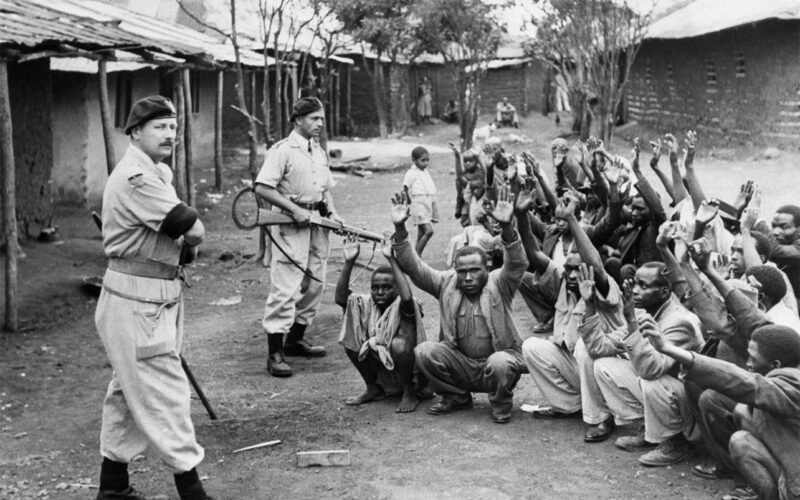
ON his official visit to Kenya, King Charles III acknowledged Britain’s colonial era “wrongdoings”. He also paid tribute to Kenyan soldiers who had participated in the First and Second World Wars on behalf of Britain. His visit coincided with Kenya’s 60th independence anniversary. TONNY RAYMOND KIRABIRA, Teaching Fellow, University of Portsmouth British colonial rule in Kenya was characterised by injustices. Among these were forceful dispossession of indigenous people’s land, torture, detention and brutal suppression of anti-colonial movements. An excerpt from King Charles’s speech is useful to decipher the value and implications of his apology, from an international law perspective: The…
Read More
Whose job will AI replace? Here’s why a clerk in Ethiopia has more to fear than one in California

Whose job will AI replace? Here’s why a clerk in Ethiopia has more to fear than one in California

ARTIFICIAL intelligence is changing the world – and one of the main areas it will affect in the short-to-medium term is the workforce. AI algorithms imitate real-world systems. The more repetitive a system is, the easier it is for AI to replace it. That’s why jobs in customer service, retail and clerical roles are regularly named as being the most at risk. NIUSHA SHAFIABADY, Associate Professor in Computational Intelligence, Charles Darwin University That doesn’t mean other jobs won’t be affected. The latest advances in AI have shown all kinds of creative work and white-collar professions stand to be impacted to…
Read More
Some African governments are spending millions to spy on their citizens – stifling debate and damaging democracy

Some African governments are spending millions to spy on their citizens – stifling debate and damaging democracy

GOVERNMENTS around the world use surveillance technology to monitor external threats to national security. Some African governments are also spending vast sums on mass surveillance of their own citizens. They are using mobile phone spyware, internet interception devices, social media monitoring and biometric identity systems. Artificial intelligence for facial recognition and car number plate recognition is another digital surveillance technology in their growing toolkit. TONY ROBERTS, Digital Research Fellow, Institute of Development Studies I recently led research which found that governments in Nigeria, Ghana, Morocco, Malawi and Zambia were collectively spending over US$1 billion a year on these digital surveillance…
Read More
Kenya’s courts were under political pressure: how a constitutional reform empowered judges

Kenya’s courts were under political pressure: how a constitutional reform empowered judges

CHANGES to Kenya’s constitution in 2010 on the independence of the judiciary created room for judges to act as guardians of the electoral process. THALIA GERZSO, Postdoctoral Fellow, London School of Economics and Political Science Before this, the law gave Kenya’s presidents considerable influence over courts’ actions. Historically, the judiciary was not an independent branch. It was categorised as a governmental department working under the authority of the attorney general. The president was responsible for appointing judges. For instance, Daniel Moi, who was president from 1978 to 2002, systematically appointed loyalists. The close links between the government and the judiciary…
Read More