Our website use cookies to improve and personalize your experience and to display advertisements (if any). Our website may also include cookies from third parties like Google Adsense, Google Analytics, and Youtube. By using the website, you consent to the use of cookies.

Germany is returning Nigeria’s looted Benin Bronzes: why it’s not nearly enough

Germany is returning Nigeria’s looted Benin Bronzes: why it’s not nearly enough

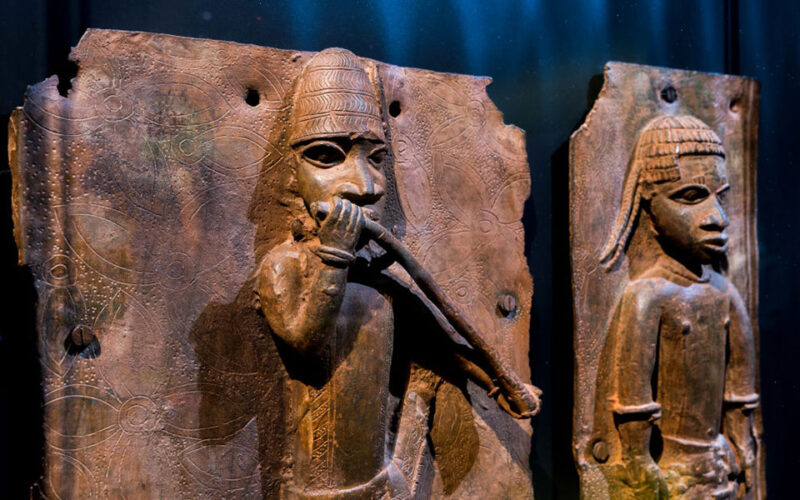
AFTER years of pressure, Germany recently announced that an agreement had been reached to return hundreds of priceless artefacts and artworks that had been looted from Nigeria in colonial times and were on display in German museums. Commonly called the Benin Bronzes, these beautiful and technically remarkable artworks have come to symbolise the broader restitution debate. Why has it taken so long, will other countries follow Germany and what happens next? We asked a leading expert on colonial German history and a prominent voice in the debate around the artefacts, Dr Jürgen Zimmerer, to tell us. JÜRGEN ZIMMERER, Professor, University…
Read More
Africa can prevent Ethiopia from going down Rwanda’s path: here’s how

Africa can prevent Ethiopia from going down Rwanda’s path: here’s how

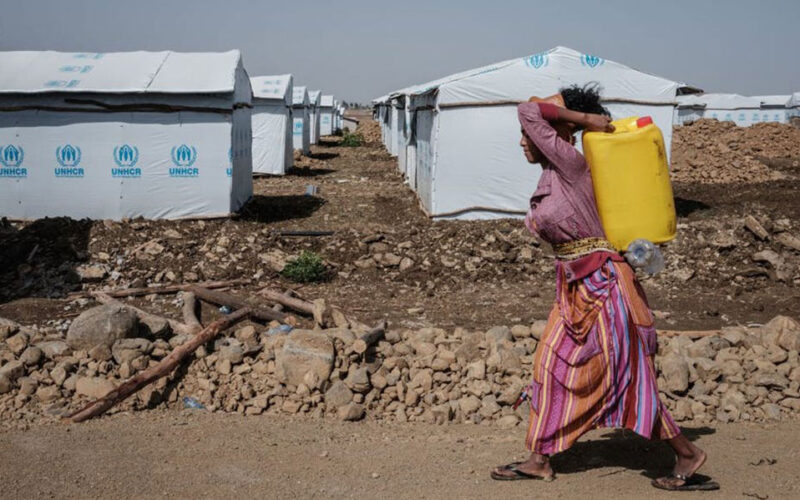
WHEN Ethiopia’s Prime Minister Abiy Ahmed was awarded the Nobel peace prize in 2019, I congratulated him in a public US and Africa dialogue forum. I thought he deserved the prize, given what he had done. In particular, he showed a calm and responsible interest in listening to all community grievances to avoid outbursts of war. EDWARD KISSI, Associate Professor, School of Interdisciplinary Global Studies, University of South Florida Today, under Abiy’s watch, Ethiopia has descended into a political and humanitarian crisis that threatens the very survival of the federal state. There are reports of ethnic groups in various regions…
Read More
Zuma’s abuse of South Africa’s spy agency underscores need for strong civilian oversight

Zuma’s abuse of South Africa’s spy agency underscores need for strong civilian oversight

IF people who work for the government tell us our safety depends on us not knowing what they do, we might suspect that they wanted to cover up wrong-doing. Unless, it seems, they work for state security agencies. STEVEN FRIEDMAN, Professor of Political Studies, University of Johannesburg South Africa’s media are awash with shock at “bombshell” revelations about the country’s security services at the hearings of a commission of inquiry into “state capture”. Testimony shows that the State Security Agency, which is meant to provide the government with intelligence on domestic and foreign threats, was used to fight factional battles…
Read More
Simeon Nyachae: the larger-than-life civil servant who made his mark on Kenya

Simeon Nyachae: the larger-than-life civil servant who made his mark on Kenya

SIMEON Nyachae, who passed away in early February at the age of 88, was among the men who shaped Kenya and made it one of Africa’s leading economies. For Kenya’s first 40 years of independence, he was highly visible in government and helped to craft an economy oriented to the private sector that also was favourable to both large and small-scale agriculture. DAVID K. LEONARD, Professor Emeritus of Political Science, University of California, Berkeley Nyachae held senior leadership positions under all three of Kenya’s first presidents – Jomo Kenyatta, Daniel arap Moi and Mwai Kibaki – from 1963 to 2007.…
Read More
Why being endowed with oil is not always a boon: the case of Nigeria and Angola

Why being endowed with oil is not always a boon: the case of Nigeria and Angola

ROSS HARVEY, Senior Research Associate, Institute for the Future of Knowledge, University of Johannesburg IN countries with weak governance institutions, natural resource wealth tends to be a curse instead of a blessing. Where citizens are relatively powerless to hold ruling elites to account, resource wealth undermines development prospects. On the contrary, where citizens are able to exert constraints on executive power, resource wealth can generate development that benefits ordinary citizens. Development scholar Richard Auty first coined the term ‘resource curse’ in the early 1990s. He used the phrase to describe the puzzling phenomenon of resource wealthy countries failing to industrialise.…
Read More
What a real state of the nation address would say about South Africa

What a real state of the nation address would say about South Africa

EVERY year in February South Africa’s president delivers a state of the nation address. One theme which is never addressed is the state of the nation. STEVEN FRIEDMAN, Professor of Political Studies, University of Johannesburg The address, given this year by President Cyril Ramaphosa, marks the opening of parliament. Every year, it is treated with expectation way out of line with its importance and is followed by loud disappointment. No talk could possibly live up to the hype which envelops it and, despite the name, it is actually an outline of the government’s plans for the year. This is rarely…
Read More
Joe Gqabi: “The enemy has struck us a blow”

Joe Gqabi: “The enemy has struck us a blow”

GERALDINE FRASER-MOLEKETI GERALDINE FRASER-MOLEKETI AT comrade Joe Gqabi’s funeral on August 9th 1981, the President of the ANC, OR Tambo, addressed those gathered to mourn: “to say that the enemy has struck us a blow is to tell the truth. He was a positive loss because he was the type of leader who knew how to follow. He was the type of operative who yielded results. He was a leader who in his sector produced results. And it is the test of leadership to be able to produce intended results. Joe Gqabi passed this test with great distinction.” As we…
Read More
Zuma’s defiance is a grave moment for South Africa. But it’s not a constitutional crisis

Zuma’s defiance is a grave moment for South Africa. But it’s not a constitutional crisis

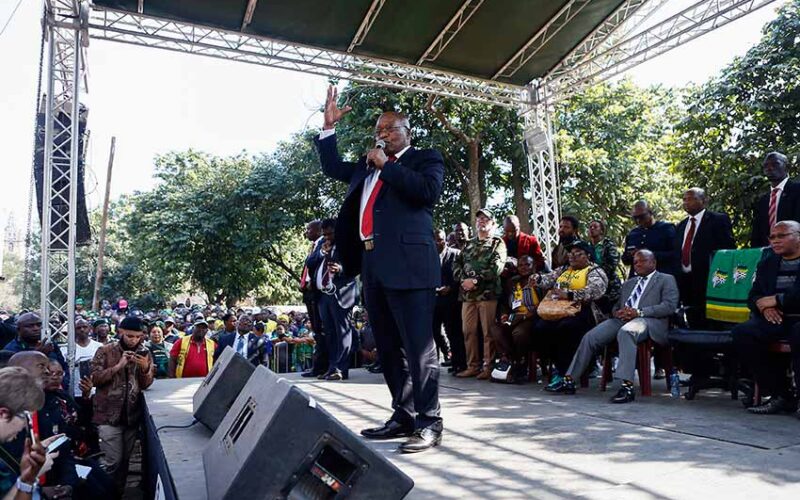
THE attempt by former South African president Jacob Zuma to destabilise the country’s constitutional order, and defy the rule of law, does not constitute a constitutional crisis as some have claimed. RICHARD CALLAND, Associate Professor in Public Law, University of Cape Town It is, nonetheless, a grave moment for modern South Africa and its fledgling democracy. A former president who, as the Constitutional Court has pointed out, has a particular responsibility to respect the constitution even out of office, has chosen to defy an order from the highest court. This, while attacking the legitimacy of the judiciary and the Commission…
Read More
What Tanzania’s COVID-19 vaccine reluctance means for its citizens and the world

What Tanzania’s COVID-19 vaccine reluctance means for its citizens and the world

TANZANIA’S health minister said earlier this month that the country has no plans to procure COVID-19 vaccines. Moina Spooner, an editor with The Conversation Africa, asked Catherine Kyobutungi to explain Tanzania’s COVID-19 response and why it’s problematic. CATHERINE KYOBUTUNGI, Executive Director, African Population and Health Research Center Why has the decision been taken not to vaccinate? Tanzania has had a unique approach to controlling COVID-19. Only a few months into the pandemic last year, the president of the country, John Magufuli, declared Tanzania COVID-free following three days of national prayers. He has since refused to impose a lockdown, re-opened schools,…
Read More
New Development Bank a breath of fresh air

New Development Bank a breath of fresh air

ABBEY MAKOE BRICS Bank, commonly referred to by the markets and industry alike as the New Development Bank (NDB), is proving to be a worthy multilateral lending vehicle particularly in the wake of the emergence of Covid-19 pandemic. Established in 2014 and kick-started its operations a year later from its headquarters in Shanghai, China, the NDB is the brainchild of Brazil, Russia, India, China and South Africa (BRICS). Established in 2006, BRICS seeks to improve the global South relations to a point of economic self-reliance and broader solidarity in matters of common interest from all spheres of life including international…
Read More