Our website use cookies to improve and personalize your experience and to display advertisements (if any). Our website may also include cookies from third parties like Google Adsense, Google Analytics, and Youtube. By using the website, you consent to the use of cookies.

What happens to health research when ‘women’ is a banned word?

What happens to health research when ‘women’ is a banned word?

This story was originally reported by Shefali Luthra and Barbara Rodriguez of The 19th. Meet Shefali and Barbara and read more of their reporting on gender, politics and policy. DANIELLA Fodera got an unusually early morning call from her research adviser this month: The doctoral student’s fellowship at Columbia University had been suddenly terminated.  Fodera sobbed on phone calls with her parents. Between the fellowship application and scientific review process, she had spent a year of her life securing the funding, which helped pay for her study of the biomechanics of uterine fibroids — tissue growths that can cause severe…
Read More
The world is in crisis – what role should our universities play?

The world is in crisis – what role should our universities play?

IT’S hard not to categorize our present global moment as a crisis. And just when we think things can’t get worse — they do. Across the globe, we’re witnessing a rise in far-right movements and governments. Just a few weeks ago, the AfD party in Germany secured second place. This marks the first time a far-right party has gained this level of power in the country since the Second World War. Germany is not alone in this trend: Italy, Hungary, Finland, Slovakia, Czech Republic and Croatia are now led by far-right governments. And it may come as no surprise that…
Read More
UNHCR: Funding cuts threaten the health of nearly 13 million displaced people

UNHCR: Funding cuts threaten the health of nearly 13 million displaced people

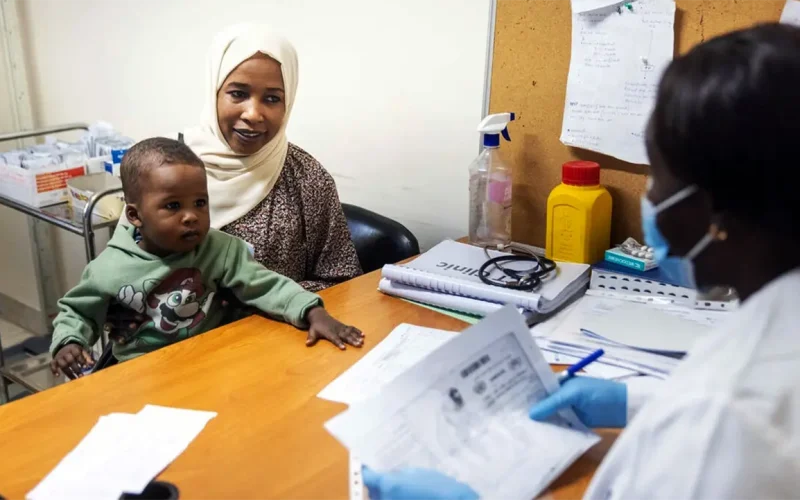
WITHOUT adequate resources, an estimated 12.8 million displaced people, including 6.3 million children, could be left without life-saving health interventions in 2025, UNHCR, the UN Refugee Agency warns today. The current humanitarian funding crisis, exacerbated by declining health spending in hosting countries, is affecting the scope and quality of public health and nutrition programmes for refugees and host communities, disrupting access to essential services and increasing the risk of disease outbreaks, malnutrition, untreated chronic conditions and mental health issues. When support for refugee health care is cut, refugees will be forced to pay from their own pockets – but they…
Read More
The peculiar Turkish corruption issue behind Istanbul mayor’s arrest – and how it became a tool of political oppression

The peculiar Turkish corruption issue behind Istanbul mayor’s arrest – and how it became a tool of political oppression

TURKEY is in turmoil after Istanbul’s mayor, Ekrem Imamoglu, a leading opposition figure and potential challenger to Turkey’s president, Recep Tayyip Erdogan, was arrested on March 19 on charges of corruption. More than 1,000 people who protested against the arrest have also been detained as hundreds of thousands of demonstrators took to the streets in anger at what they say is a major blow against democracy. Imamoglu, who denies all charges against him, has since been endorsed as the candidate for the 2028 presidential elections for the Republican People’s Party (CHP). Central to the allegations of corruption is what is…
Read More
The Alawites caught between revenge and a new Syria

The Alawites caught between revenge and a new Syria

This story was originally published by The New Humanitarian.By Amer al-Meri WEEKS after a wave of retaliatory violence is believed to have killed more than 1,000 people – including some 800 civilians – Alawites in the religious minority’s Syrian coastal heartland are still reeling from the scale and brutality of the killings, and wondering what the events mean for hopes of a peaceful new country. The massacres took place mostly in the provinces of Latakia and Tartous, known as bastions of support for former president Bashar al-Assad, whose family is Alawite and who ruled Syria for decades before his ouster…
Read More
Leak of US military plans on Signal is a classic case of ‘shadow IT’. It shows why security systems need to be easy to use

Leak of US military plans on Signal is a classic case of ‘shadow IT’. It shows why security systems need to be easy to use

YESTERDAY, The Atlantic magazine revealed an extraordinary national security blunder in the United States. Top US government officials had discussed plans for a bombing campaign in Yemen against Houthi rebels in a Signal group chat which inadvertently included The Atlantic’s editor-in-chief, Jeffrey Goldberg. This is hardly the first time senior US government officials have used non-approved systems to handle classified information. In 2009, the then US Secretary of State Hilary Clinton fatefully decided to accept the risk of storing her emails on a server in her basement because she preferred the convenience of accessing them using her personal BlackBerry. Much…
Read More
As Yemen’s conflict reaches 10-year mark, over half a million children severely malnourished

As Yemen’s conflict reaches 10-year mark, over half a million children severely malnourished

IN Yemen, a decade of conflict has been catastrophic for the country’s children living under the threat of airstrikes and staggeringly high malnutrition rates, the UN Children’s Fund (UNICEF) said. Speaking from Yemen’s capital Sana’a, Mr Hawkins told reporters that the “manmade” disaster has decimated Yemen's economy, healthcare system and infrastructure. “Even during periods of reduced violence, the structural consequences of the conflict, especially for girls and boys, have remained severe,” he said, underscoring that more than half of the country’s population of close to 40 million people relies on humanitarian assistance. UNICEF supports life-saving health facilities and malnutrition treatment…
Read More
Are the glory days of German carmakers gone forever?

Are the glory days of German carmakers gone forever?

THE car industry is rarely out of the news, often under gloomy headlines related to tariffs, falling sales, low uptake of electric vehicles (EVs) and workers’ strikes. While the crisis in the sector affects all global brands, German companies have been especially badly hit. Volkswagen has been reducing its production capacity, Mercedes-Benz has issued a profit warning and announced a cost-cutting programme and BMW’s value has dropped substantially over the past year. There are several reasons for German carmakers’ troubles. These include changes in regulations, the emergence of new competitors, high energy prices, COVID disruption in both the market and…
Read More
The war that never ended returns to Gaza

The war that never ended returns to Gaza

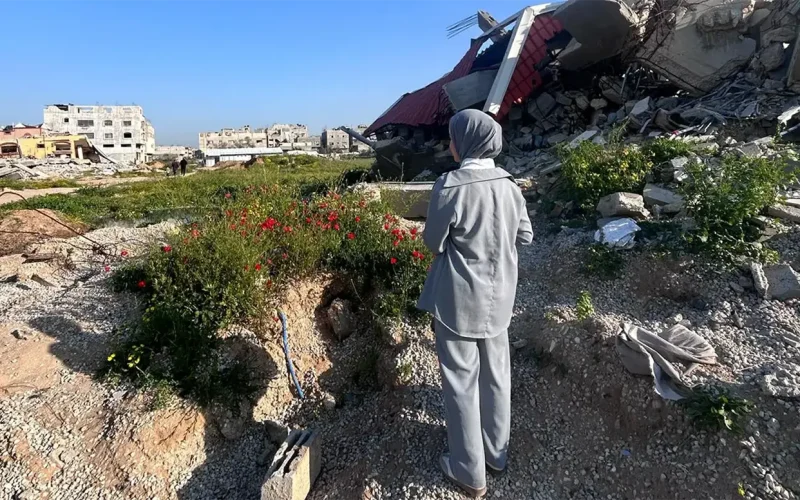
This story was originally published by The New Humanitarian.By Nour ElAssy There is a moment, right before waking up, when the world is silent, a moment where sleep still holds you, where reality has not yet sunk its claws into you. But then, in an instant, the silence is gone. The ground heaves beneath you. The sky erupts in fire. Walls shake. Screams cut through the night. And suddenly, you are awake, not to the soft breath of dawn, not to the quiet murmur of life returning, but to devastation – to a war that was supposed to have paused,…
Read More
UN and partners seek $934.5m for life-saving aid to 1.5 million Rohingya refugees and their hosts in Bangladesh

UN and partners seek $934.5m for life-saving aid to 1.5 million Rohingya refugees and their hosts in Bangladesh

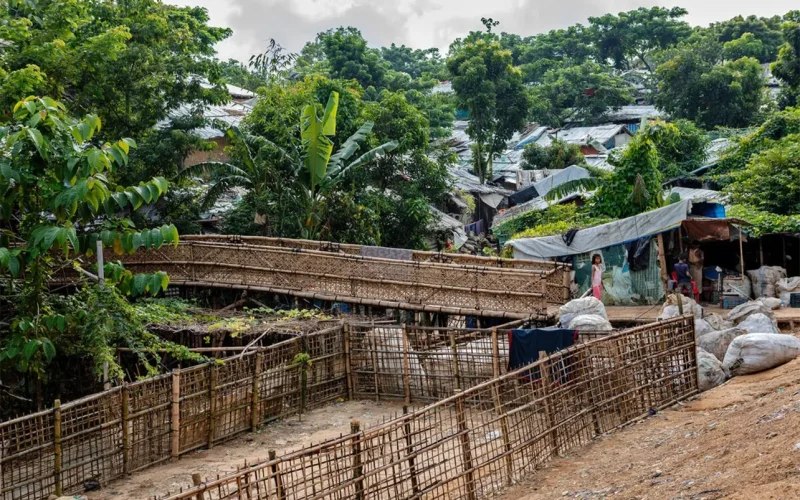
UNHCR, the UN Refugee Agency, with the International Organization for Migration (IOM) and partners today called on the international community to enhance its support for Rohingya refugees and their hosts in Bangladesh amid rising insecurity in Myanmar and ongoing forced displacement.  Unrelenting conflict in Myanmar, dwindling financial resources and competing global crises have made it critical for the international community to step up for the Rohingya refugees, who remain in a precarious situation, entirely dependent on humanitarian aid. The 2025-26 Joint Response Plan (JRP) for the Rohingya Humanitarian Crisis brings together 113 partners and is being jointly launched by UNHCR and…
Read More