
THE battle for Africa’s streaming market is increasingly being fought beyond content libraries and into distribution systems and payment infrastructure.
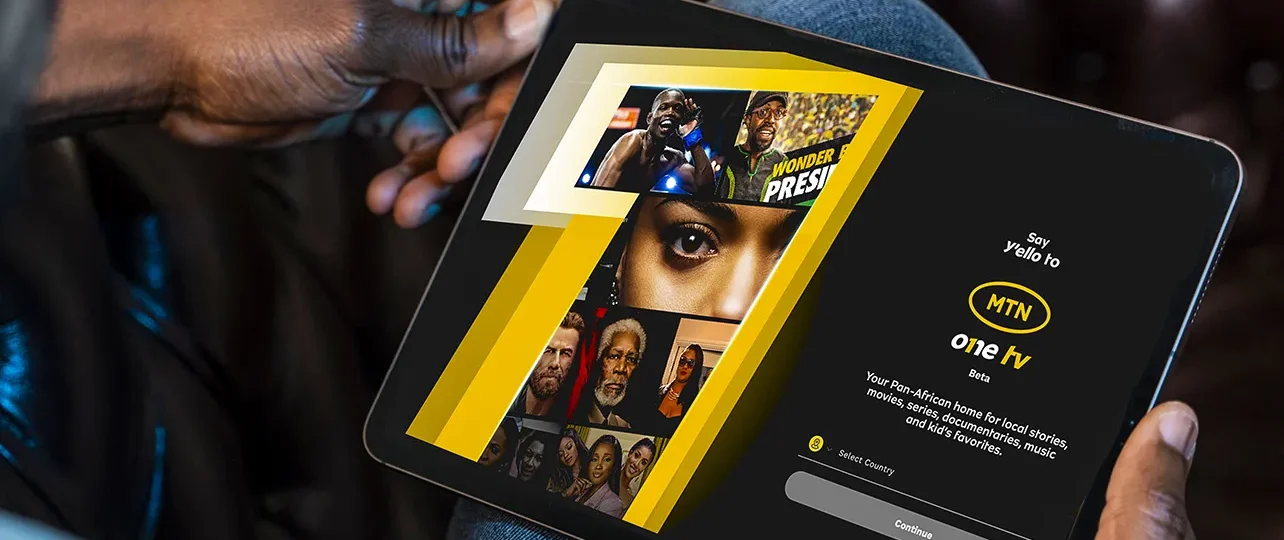
MTN Group has recently launched MTN One TV, a new entertainment proposition combining live television, local storytelling, international programming, and flexible viewing models across African markets.
“MTN One TV is more than just another streaming platform entering a competitive market,” Chomba Victoria Mkasanga, founder of AFRO Magazine, said in an exchange with bird story agency.
It represents a broader shift in how African companies are approaching content ownership, distribution, and digital ecosystems,” she added.
She also noted the entry of African telecom operators into streaming reflects a structural change in how content is financed and accessed across the continent.
“For years, African creatives have largely had to fit into the priorities and criteria of global platforms to gain visibility,” she said, adding that mobile-first distribution and bundling with connectivity could change how African audiences access content.
MTN’s statement said the platform will combine free-to-view, advertising-supported, pay-per-view, and subscription models depending on market conditions. Customers will also be able to pay using airtime and mobile money in selected markets.
“Entertainment is increasingly becoming an important gateway to digital participation,” according to Selorm Adadevoh, MTN Group Chief Commercial, Strategy, and Transformation Officer.
He said the company is leveraging its connectivity and fintech infrastructure to expand access to content while supporting Africa’s creative economy.
The launch comes shortly after MultiChoice’s Showmax exited the standalone streaming market, leaving a structural gap in a sector already under pressure from global and regional competition.
Even with MTN One TV’s entry, competition continues to intensify.
Amazon expanded its Prime Video footprint in South Africa in June 2026, bundling entertainment with its broader Prime ecosystem that includes delivery, gaming, and retail perks.
Netflix, meanwhile, is deepening its production footprint rather than only expanding distribution. In June 2026, it named 14 young South Africans for its ScreenCraft Pathways programme, a 12-month industry placement initiative developed with local film commissions and production houses. The programme, now entering a second cohort, highlights a longer-term strategy focused on building production capacity and embedding talent pipelines within South Africa’s film industry.
According to Netflix, the initiative is designed to “provide a structured, professional pathway into the industry” through hands-on placements across production and post-production environments. Industry partners describe it as part of strengthening the country’s “production pipeline” and linking skills development more directly to employment outcomes in the screen sector.
MTN’s scale remains central to its strategy. The company reports more than 307 million subscribers across 16 African markets, giving it a distribution footprint that few entertainment players can match.
The logic behind One TV reflects a broader shift in streaming economics. Rather than relying solely on subscriptions, platforms are increasingly combining advertising, pay-per-view, and telecom bundling models tied directly to mobile ecosystems.
That shift is closely linked to how Africans actually pay for digital services.
Credit card penetration remains structurally limited across much of the continent, reshaping how subscription models scale.
Data compiled from Onafriq and African payments industry reporting indicates that credit cards account for roughly 3% of transactions in Africa, while debit cards account for about 18%, compared with a global average of around 51%. In more developed markets, card-based payments remain the backbone of digital subscriptions, while in Africa, they remain concentrated in higher-income urban segments.
Mobile money has instead become the dominant transaction rail. The Boston Consulting Group estimates that Africa now accounts for roughly 74% of global mobile money activity, underscoring how digital payments are evolving outside traditional banking infrastructure.
This creates a structural constraint for streaming platforms built around card-based recurring billing. MTN is solving the need for subscription video services to increasingly adapt to mobile money, prepaid systems, and telecom-bundled billing rather than credit-led consumption models.
According to Wunpini Fatimata Mohammed, an assistant professor of communication at Cornell University, global streaming platforms have created opportunities for African stories while also introducing new questions about who those stories are ultimately being produced for.
In a recent analysis, Mohammed argued that “global cosmopolitan audiences are prioritised over African audiences,” warning that market incentives can influence which narratives receive visibility and investment.
That concern has become increasingly relevant as African creators seek greater control over distribution and intellectual property.
In Nigeria, for instance, there is a growing number of filmmakers who are releasing feature-length productions directly on YouTube, bypassing both cinemas and subscription platforms. The model has demonstrated that large-scale audiences can be reached without traditional gatekeepers while simultaneously generating data on demand and audience behavior that can be monetized through advertising and future licensing.
The result is a streaming environment that is fragmenting rather than consolidating.
Across the continent (countries in the Mediterranean excluded), streaming is not displacing pay TV but expanding alongside it. According to 3Vision’s Video Markets Tracker, streaming revenue is projected to reach US$2.2 billion by 2030, while Pay TV remains larger at US$5.9 billion over the same period.
Pay TV is expected to reach 56.4 million subscribers by 2030 compared to 10.7 million SVOD subscribers, according to the same report.