
MUSIC streaming companies are increasingly taking music discovery beyond smartphones and playlists, creating physical experiences that bring artists and fans together as competition for Africa’s fast-growing audience intensifies.
Between July 15 and 26, 2026, Spotify transformed Nairobi’s Heltz House into a 12-day Greasy Tunes residency featuring live performances, creator workshops, fashion showcases, podcast recordings, and fan meet-ups. The programme follows earlier Greasy Tunes editions in Johannesburg (2023) and Lagos (2025), with each installation adapted to local music cultures and audience habits.
“Greasy Tunes brings the energy people experience on Spotify into a shared physical space,” according to Agnes Opondo, Spotify’s Artist & Label Partnerships Lead for East Africa.
Spotify first introduced Greasy Tunes in Johannesburg’s Braamfontein creative district, where a township-inspired café became a month-long gathering space for Amapiano, hip-hop, and Afrotech performances.
The concept expanded to Lagos in 2025 as a three-week pop-up centred on Nigerian dining culture, pairing local cuisine with curated playlists, live podcast recordings, artist conversations, and performances.
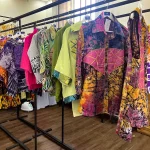
In Nairobi, the residency combines cafés, workshops, fashion showcases, comedy, spoken word and live music around the city’s listening habits, bringing musicians, creators, cultural organisations and audiences into the same space over 12 days.
According to Spotify, listeners aged between 18 and 24 accounted for more than half of all streams in Nairobi in June 2026, with listening peaking during the evening. Those insights informed the programme, which brings together cultural platform The BAG, fashion collective Studio 18, podcasters, spoken-word performers and artists including Nyashinski and Buruklyn Boyz. Listening data shaped the programme’s timing and content, while the residency extends that engagement through performances, conversations, workshops and creator collaborations.
The expansion of these programmes comes as streaming continues to dominate the recorded music business. According to the International Federation of the Phonographic Industry (IFPI), streaming generated more than US$22 billion in 2025, accounting for about 70% of global recorded music revenues, while paid subscriptions reached 837 million worldwide. Sub-Saharan Africa was among the industry’s fastest-growing regions, with recorded music revenues increasing 15.2% during the year.
As streaming has expanded, industry research has increasingly examined how digital platforms and live performance can reinforce one another rather than compete.
A 2022 Concerts SA report on South Africa’s music sector argues that the industry’s future depends on sustainable revenue models that connect artists, venues, audiences, promoters and digital platforms, with collaboration across the wider live music ecosystem becoming increasingly important.
Alongside Greasy Tunes, Spotify has expanded programmes including RADAR Africa, EQUAL Africa and Fresh Finds, combining editorial playlists with live showcases, artist workshops, networking sessions and mentorship for emerging musicians across East and West Africa. The programmes pair digital promotion with in-person showcases, allowing artists featured on the platform to meet audiences, industry executives and fellow creators.
Other streaming platforms are also organising in-person experiences around artists and audiences. In 2024, Boomplay partnered with smartphone maker itel for its Power Up Your Life campus tour, staging multi-day activations at universities in Nigeria and Ghana that combined live performances, gaming hubs, playlist listening sessions and artist appearances by musicians including Joeboy, Bnxn, Qing Madi, E.L and Tulenkey. The events brought together technology brands, universities, artists and students through a single programme built around music discovery.
Audiomack has continued creator-focused programmes such as Keep The Beat Going, combining artist workshops, promotional campaigns and educational initiatives across African markets.
In January 2026, Apple Music unveiled its Africa Rising Class of 2026, extending its flagship programme supporting emerging artists from across the continent through editorial promotion, artist development and audience-facing programming.
The residency format is also appearing in artist-led productions and festival programming. Earlier this year, Kenyan artist Nyashinski staged Showman, billed as the country’s first concert residency, presenting seven performances over five days that combined music, theatre, dance, storytelling and visual art. Rather than a conventional concert series, the production repeated and refined the same theatrical experience across multiple performances.
In June 2026, Nigeria’s Lagos International Jazz Festival (LIJF/NAIJAZZ) launched the Super Sessions residency at Dulles Restaurant & Lounge, creating a recurring platform for live jazz performances in an intimate hospitality setting. “We are creating a cultural platform where great music, meaningful connections, and quality hospitality come together,” said festival founder Ayoola Sadare.
In May 2026, Eswatini-born DJ Uncle Waffles joined Black Coffee’s summer residency at Hï Ibiza alongside South African Amapiano pioneers DJ Maphorisa and Kabza De Small, bringing the genre into one of the world’s best-known club residency programmes.
The format has also attracted audiences seeking experiences beyond conventional concerts. Cinematographer John Milimu described Nyashinski’s Showman as “a full-on production told in seven episodes,” while cultural commentator Cecilia Bosire said it blended storytelling, music, dance and acrobatics into “one of those experiences where you leave full.”