THE long-troubled eastern region of the Democratic Republic of the Congo (DRC) stands on the threshold of a historic transformation. After years of violence, displacement, and humanitarian crisis, recent diplomatic breakthroughs involving six nations, the DRC, Rwanda, Qatar, Togo, the United States, and France have illuminated a promising path toward lasting peace and stability.
In March 2025, the capitals of diplomacy shifted to Doha, where leaders from the DRC, Rwanda, and Qatar convened for a trilateral summit. This meeting, attended by President Félix Tshisekedi of the DRC, President Paul Kagame of Rwanda, and Emir Sheikh Tamim bin Hamad Al Thani of Qatar, set the stage for a broader coalition. Soon after, representatives from Togo, the United States, and France joined the dialogue, underscoring the international community’s shared commitment to peace, stability, and economic development in the Great Lakes region.
The Doha discussions marked a turning point. The parties welcomed a joint declaration between the DRC government and the Alliance Fleuve Congo/March 23rd (AFC/M23) movement, facilitated by Qatar, in which both sides committed to a ceasefire. This agreement, seen as an urgent priority, aims to facilitate the delivery of humanitarian assistance to the millions affected by conflict in eastern DRC. The representatives emphasised the importance of addressing the root causes of instability through dialogue, respect for sovereignty, and adherence to African Union and United Nations resolutions.
The momentum for peace did not emerge in isolation. It builds on the progress achieved at the joint East African Community (EAC) and Southern African Development Community (SADC) summit in Dar es Salaam in February 2025, where regional leaders called for an immediate and unconditional ceasefire and reaffirmed their commitment to the Luanda and Nairobi peace processes. The African Union, recognising the need for harmonised mediation, appointed Togolese President Faure Gnassingbé as its official mediator, tasking him with merging and streamlining the various peace initiatives to avoid fragmentation and ensure coherence.
The six-nation coalition’s efforts have been complemented by robust support from the African Union, which has deployed a Humanitarian Assessment Team to the DRC and neighbouring countries to address urgent needs and coordinate emergency assistance. The United States and France, as key international partners, have reaffirmed their readiness to contribute to ongoing efforts that promote mutual trust, sustainable ceasefire, and peaceful resolution, including support for the EAC and SADC under the African Union’s auspices.
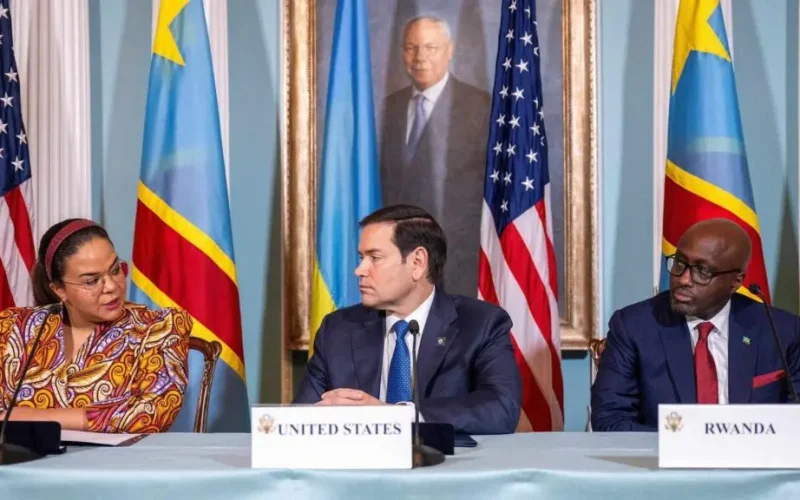
The representatives expressed deep appreciation to Qatar for its diplomatic facilitation and reiterated their collective commitment to continued dialogue and action. The signing of the Declaration of Principles in Washington, D.C., on April 25, 2025, is a testament to the international community’s resolve to turn words into action, ensuring that peace is not just a fleeting hope but a sustainable reality for the people of eastern DRC.
“The Heads of State then agreed on the need to continue the discussions initiated in Doha in order to establish solid foundations for lasting peace as envisioned in the Luanda/Nairobi process, now merged and/or aligned.”
For the first time in years, the prospects for peace in eastern DRC are not just bright-they are tangible. Through unprecedented cooperation among African nations and their international partners, the region is witnessing the emergence of a new diplomatic architecture, one that prioritises dialogue, humanitarian relief, and the sovereignty of states. This collective action offers hope that the cycle of violence can finally be broken and that the people of eastern DRC can look forward to a future defined by stability, prosperity, and peace.