
UNDER the scorching African sun, millions of Malawians trek to polling stations across the landlocked nation today, their weathered hands clutching ballot papers that could reshape their country’s destiny. In a dramatic electoral showdown five years in the making, voters are choosing between three battle-tested former presidents in what observers are calling the most consequential election in Malawi’s modern democratic history.
The stakes could not be higher in this nation of 23 million, where a quarter of the population faces acute food insecurity and soaring inflation has pushed basic commodities beyond the reach of ordinary families. Queue lines snake around dusty polling stations from the bustling markets of Blantyre to remote villages in the northern highlands, as citizens prepare to deliver their verdict on a presidency marked by unfulfilled promises and economic turmoil.
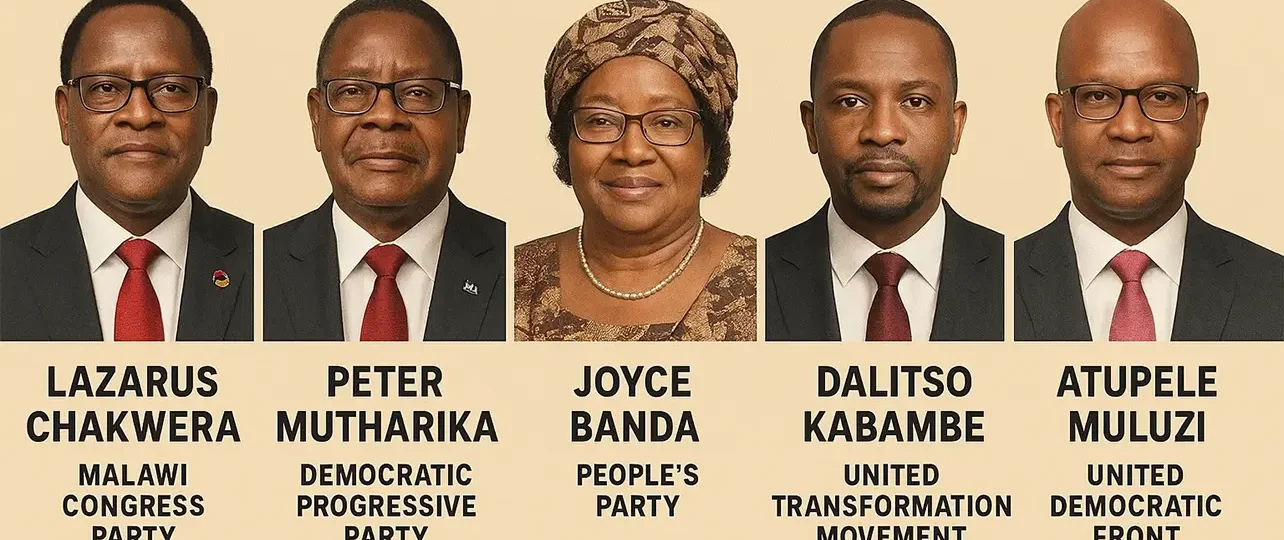
At the centre of the political storm stands incumbent President Lazarus Chakwera, the 70-year-old former theology teacher whose meteoric rise from pastoral pulpit to presidential palace captivated a nation hungry for change. Now, five years after his historic 2020 victory following a court-ordered re-run that sent shockwaves through Africa’s democratic landscape, Chakwera faces the brutal arithmetic of voter discontent. His infrastructure-focused presidency has collided head-on with relentless economic headwinds – inflation has devoured household budgets while fuel shortages have paralysed transportation networks across the country.
Mounting the most formidable challenge is Peter Mutharika, the 85-year-old political veteran whose Democratic Progressive Party faithful believe their patriarch deserves vindication. The silver-haired former law professor, who governed from 2014 to 2020 before losing the historic re-run election, has emerged from political exile with supporters pointing to his earlier record on inflation management. Yet whispers about his advancing age and limited campaign appearances have fueled questions about whether the octogenarian can withstand the gruelling demands of another presidential term.
Adding a third dimension to this political chess match is Joyce Banda, the iron-willed former president whose brief 2012-2014 tenure was marked by both praise for democratic governance and criticism over economic management. The People’s Party leader, who relaunched her campaign with characteristic determination in June, represents a wild card in a race where coalition mathematics could prove decisive.
The electoral battlefield extends far beyond personality politics. In rural areas devastated by the brutal 2024 El Niño drought, farmers whose crops withered in parched fields are weighing promises of agricultural recovery against years of bitter experience. In urban centres where young entrepreneurs struggle to access capital and employment opportunities remain scarce, voters are demanding more than rhetorical flourishes about economic transformation.
Perhaps most critically, this election serves as a litmus test for Malawi’s democratic institutions, which gained international acclaim after the Constitutional Court’s bold 2019 decision to nullify fraudulent election results. That watershed moment, which forced the historic re-run that brought Chakwera to power, demonstrated the judiciary’s independence and boosted confidence in democratic accountability.
Yet storm clouds have gathered over the current electoral process. Opposition parties have raised alarm bells about potential bias within the Malawi Electoral Commission, while reports of voter registration irregularities and concerns about electronic counting systems have cast shadows over the process. Political violence has flared in several constituencies, with opposition events disrupted and activists reporting intimidation – a troubling echo of the tensions that have periodically scarred Malawi’s political landscape.
The mathematical complexity of the race adds another layer of intrigue. With 17 candidates competing and victory requiring an absolute majority of over 50 percent, coalition building may prove decisive if no candidate achieves an outright first-round victory. This dynamic elevates the influence of smaller parties and candidates like former Reserve Bank governor Dalitso Kabambe and veteran politician Atupele Muluzi, whose supporters could hold the keys to the presidency.
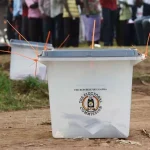
International observers are watching closely as ballot boxes are sealed and counting begins, recognising that the outcome will reverberate far beyond Malawi’s borders. In a region where democratic backsliding has become an alarming trend, the “Warm Heart of Africa” – as Malawi proudly calls itself – has an opportunity to demonstrate that African democracies can weather economic storms while maintaining institutional integrity.
As the sun sets over Lake Malawi’s shimmering waters tonight, election officials will begin the painstaking process of tallying votes that represent more than political preferences – they embody the hopes, frustrations, and dreams of a nation at a crossroads. Whether those votes will chart a course toward economic recovery and democratic consolidation, or plunge the country into renewed political uncertainty, remains the defining question of this pivotal moment in Malawian history.
The people have spoken. Now the counting begins.