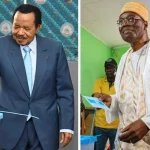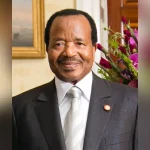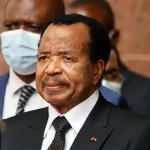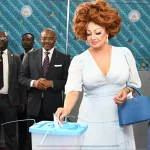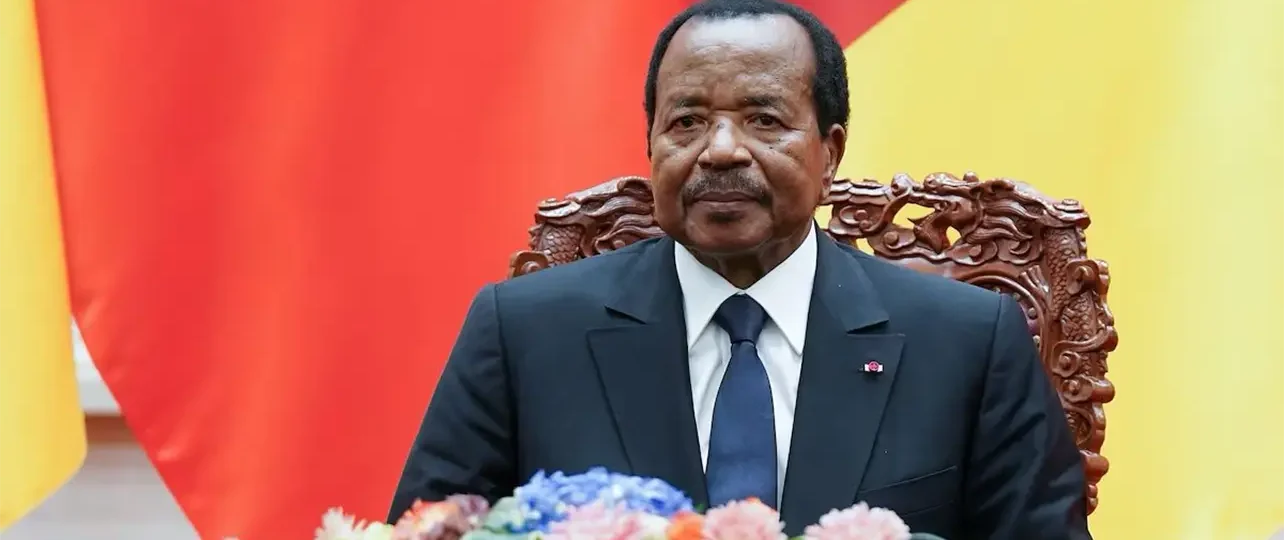

THE morning sun cast long shadows across the marble floors of the presidential palace in Yaoundé, but Paul Biya was thousands of miles away, watching the same sun rise over the manicured gardens of his Swiss residence. At 92, Cameroon’s president for the past four decades announced that his name will be on the ballot paper when the presidential elections are held on October 12.
Biya’s confirmation pinged across Cameroon like lightning splitting the sky. In the bustling markets of Douala, vendors paused mid-haggle. In the universities of Yaoundé, students looked up from their books with expressions caught between disbelief and resignation. The world’s oldest serving head of state – a man who had ruled since Ronald Reagan occupied the White House – was running again.
Biya had not simply governed Cameroon; he had become its living embodiment. When he first took power in 1982, the Soviet Union still existed, the Berlin Wall stood tall, and the internet was a distant dream. He had outlasted seven U.S. presidents, watched the rise and fall of Nelson Mandela, and witnessed the birth of nations that didn’t exist when his presidency began.
But whispers followed him like shadows. For 42 days the previous year, he had vanished from public view, sparking rumours that spread through the capital like wildfire. Had the lion finally fallen? His eventual return – stepping off a plane with the careful gait of a man carrying the weight of nearly a century – only intensified the speculation. The government’s swift ban on discussing his health, declaring it a matter of “national security,” spoke volumes about their fears.
From his European sanctuary, Biya ruled a nation in turmoil. The English-speaking regions burned with separatist fervor, while in the north, Boko Haram’s shadow stretched across the border like a dark hand. Economic challenges mounted like storm clouds, yet still he clung to power with the grip of a man who had made himself indispensable – or perhaps simply irreplaceable.
His opponents circled like vultures sensing weakness. Maurice Kamto, the runner-up from 2018, sharpened his rhetoric about reform and renewal. Joshua Osih spoke of democratic awakening. Young lawyers like Akere Muna and Cabral Libii painted visions of a Cameroon beyond the Biya era. They were jackals challenging a lion, forgetting that even wounded lions remained dangerous.
The irony was not lost on those who remembered: Cameroon, a nation born from the merger of French and British colonial territories, had known only two presidents since independence. First Ahmadou Ahidjo, then Biya – a political dynasty that had spanned six decades. The country that had given the world legendary footballers and rich cocoa harvests had become a gerontocracy, ruled by a man who spent more time in European capitals than in his own.
In 2008, Biya had scrapped term limits with the casual efficiency of a man swatting flies. Democracy, he seemed to suggest, was a luxury that developing nations could ill afford. His 2018 victory – 71.28% of the vote – had been as predictable as sunrise, though opposition cries of fraud echoed through the halls of power like ghost voices.
Now, as October 12 approached, the question hung heavy in the humid African air: What happened when an immovable object met the unstoppable force of time? Biya’s determination to serve until he was nearly 100 seemed less like public service and more like a man’s desperate refusal to accept that even the mightiest rivers eventually reach the sea.
The ruling Cameroon People’s Democratic Movement rallied around their eternal leader, their loyalty born from four decades of patronage and fear. But beneath the surface, even his supporters whispered the unthinkable: What would happen if the old lion finally fell? The succession crisis that loomed over Cameroon was not just political – it was existential.
As the campaign began, Biya remained in his European exile, governing through tweets and rare public appearances, a ghost president ruling a nation that had become as much his prisoner as he was its captive. At 92, he was no longer just running for office – he was running from the inevitable, carrying the weight of a nation that had forgotten how to imagine itself without him.
The ballot box awaited, as it had seven times before. But this time, the question was not whether Biya would win – it was whether Cameroon could survive the answer, whatever it might be.
In the end, the lion in winter faced his greatest opponent not in any political rival, but in the mirror – and the inexorable march of time that even the longest-serving president in the world could not decree into submission.