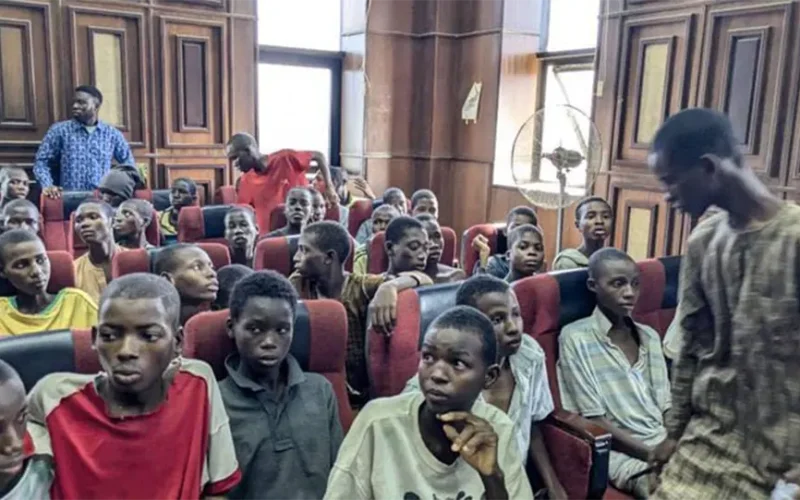
IN the sweltering streets of Lagos, where hope once marched alongside determination, 76 Nigerians – including 30 children – now face the weight of treason charges for daring to raise their voices against crushing poverty.
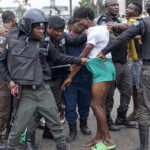
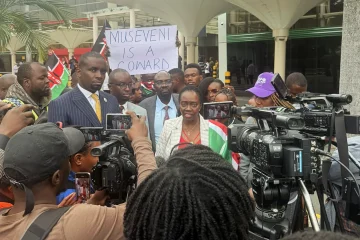
The August protests that echoed through Nigeria’s major cities have transformed from a cry for economic justice into a battle for civil liberties, as authorities wield one of the nation’s most serious criminal charges against citizens who simply demanded the right to afford their daily bread.
“They came with empty stomachs and left in handcuffs,” says a local rights activist who requested anonymity. “When did asking for affordable food become an act of treason?”
The crackdown has sent shockwaves through civil society, with parents forced to visit their children behind bars since August. These young protesters, who should be in classrooms dreaming of their futures, instead found themselves in cells, caught in the crossfire between civil dissent and state power.
The human cost has been devastating. Amnesty International confirms that 13 souls were lost on the first day alone, their voices permanently silenced in clashes with security forces. Their stories add to the growing narrative of a nation struggling to balance reform with human rights.
In the northern regions, where armed gangs have turned farmlands into battlegrounds and schoolchildren into bargaining chips, the economic reforms championed by President Bola Tinubu feel like a distant concern. Here, survival itself is a daily negotiation.
“We cannot feed our children, we cannot protect our children, and now we cannot even let them speak for their future,” laments a mother whose teenage son faces charges that could have been ripped from a colonial-era playbook.
As the accused await their January court date – the minors now released on bail – Nigeria stands at a crossroads. The government’s message is clear: economic reforms will continue, regardless of the human cost. But in the streets, markets, and homes of Africa’s most populous nation, a different message resonates: the price of silence has become too high to bear.
Meanwhile, in the bustling markets of Abuja and Lagos, where inflation turns yesterday’s comfort into today’s luxury, the question remains: In a country where the cost of living soars but the cost of speaking out may be freedom itself, what choice do its people have?
For the 76 facing treason charges, their protest for a better life has become a fight for their liberty. Their story is no longer just about economic hardship – it’s a testament to the escalating cost of democracy in a nation where the right to protest hangs precariously in the balance.