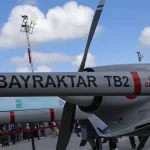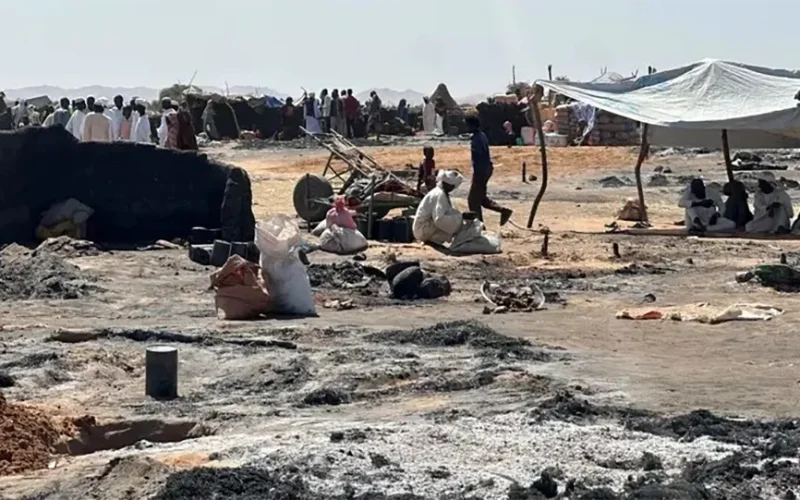
THERE are no soldiers at a wedding. There are no military targets between a bride and her guests, no strategic assets tucked inside a celebration of life in the town of Kutum, in Sudan’s North Darfur state. There is only music, family, and the terrible vulnerability of civilians who believed, for a few hours, that joy was still possible in a country at war.
On Thursday, a drone strike ended that belief for at least 30 of them. Women. Children. Gone.
UN Secretary-General spokesperson Stéphane Dujarric condemned the attack in a press briefing, calling drone strikes against civilians and civilian objects “unacceptable.” The condemnation is correct. It is also, by now, almost ritualistic – the latest in an unbroken series of UN statements issued over nearly three years of industrial-scale atrocity in Sudan, statements that have not stopped a single drone, a single mortar, a single act of sexual violence against the women this war is being fought on.
That is not a criticism of Dujarric. It is an indictment of the international community’s failure to treat Sudan’s catastrophe with the urgency it demands.
“Attacks using drones against civilians and civilian objects are unacceptable.”
THE ARCHITECTURE OF A FORGOTTEN WAR
The war between the Sudanese Armed Forces (SAF) and the paramilitary Rapid Support Forces (RSF) erupted in April 2023. What began as a power struggle between two generals – SAF chief Abdel Fattah al-Burhan and RSF commander Mohamed Hamdan Dagalo, known as Hemedti – has metastasised into a conflict that now holds the grim distinction of being the world’s worst humanitarian crisis.
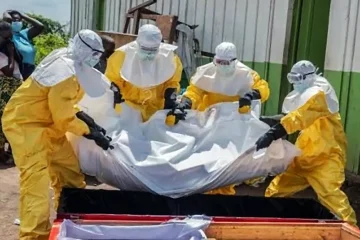
The numbers are almost too large to hold. More than 400,000 people have been killed. Some 11.6 million have been displaced. More than 33 million – roughly two-thirds of Sudan’s entire population – require humanitarian assistance. Three million people had returned to their home areas by January 2026, only to find towns contaminated with unexploded ordnance, homes destroyed, and hospitals shuttered or bombed.
The Kutum wedding attack is not an anomaly. It is a pattern. In the same week, Dujarric reported that clashes near Dilling in South Kordofan killed 47 civilians and wounded dozens more. Earlier in April, a drone strike on a hospital in Sudan killed 10 people, according to MSF. In March, a WHO-confirmed attack on a hospital killed 64, including 13 children. The RSF was accused of killing 6,000 people in El Fasher in October alone – an assault a UN report described as war crimes and possible crimes against humanity.
The drone that killed wedding guests in Kutum did not appear from nowhere. It is the product of a conflict in which both sides have demonstrated utter contempt for the laws of war, and in which the international community’s response has been measured in words while the body count is measured in hundreds of thousands.
THE HUMANITARIAN ABYSS
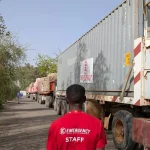
Humanitarian aid has not merely been strained – it has been weaponised. Dujarric on Thursday called for “rapid, safe and unhindered humanitarian access across all areas of Sudan,” a call that has been made repeatedly and repeatedly ignored. Aid convoys are blocked, humanitarian workers are killed, and supply lines are severed as a deliberate instrument of war.
For people with disabilities – an estimated 4.6 million Sudanese, approximately 16 percent of the population – the crisis has a particular cruelty. The NGO Humanity & Inclusion reported on Thursday that displacement, trauma, injury, and the collapse of health services have likely pushed that number far higher in conflict zones. Persons with disabilities are, the organisation noted, consistently among the first left behind during evacuations and face the highest risks of violence, abuse, and exclusion.
They are also now living among fields laced with unexploded ordnance. Antipersonnel mines and war remnants contaminate homes, schools, roads, and places of worship in areas to which displaced Sudanese are returning. The act of going home has become its own death sentence.
“Areas of return and former front lines are heavily contaminated with unexploded ordnance — posing a constant threat to civilians.”
WHAT CONDEMNATION WITHOUT CONSEQUENCE COSTS AFRICA
Sudan is an African crisis. Its victims are African. Its displacement has destabilised neighbours – Chad alone hosts over 900,000 Sudanese refugees, making it Africa’s largest per-capita host of displaced people, a burden falling on a country already struggling with poverty and food insecurity.
Yet the diplomatic energy directed at Sudan bears no proportion to its scale. The African Union, hamstrung by its own internal divisions and the principle of non-interference, has struggled to mount a credible mediation. The international community – consumed by Gaza, Ukraine, and the cascading effects of the US-Israeli war on Iran – has granted Sudan the coverage it deserves only when the body count becomes briefly impossible to ignore.
A drone at a wedding is impossible to ignore. For a moment.
The question is what follows the moment. Whether the UN’s statement translates into pressure – on arms suppliers, on regional enablers, on the SAF and RSF commanders whose decisions produce these strikes – or whether it joins the archive of condemnations that have accumulated since April 2023 while Sudan burns.
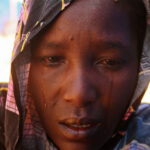
Thirty civilians died at a wedding in Kutum. They were not combatants, not collateral, not statistics. They were people who had gathered to celebrate something human in the middle of a war that had forgotten what humanity means.
The world’s worst humanitarian crisis will not be resolved by press briefings. It will be resolved when the international community decides that African lives carry the same weight as the lives it chooses to defend elsewhere — and acts accordingly.
KEY FACTS: SUDAN’S WAR — BY THE NUMBERS
| War started | April 2023 — SAF vs RSF power struggle |
| Estimated killed | 400,000+ (UN and NGO estimates) |
| Displaced | 11.6 million people within Sudan |
| Needing aid | 33 million — approx. Two-thirds of the population |
| Kutum attack | 30+ civilians killed at a wedding, incl. women & children |
| Dilling clashes | 47 civilians killed, dozens wounded (week of 7 Apr 2026) |
| Disability burden | 4.6 million (16% of population) — likely far higher in conflict zones |
| Chad refugees | 900,000+ Sudanese in Chad; Africa’s largest per-capita host |
| Aid access | Blocked; UN calls for immediate cessation of hostilities |