A former member of Gambia’s brutal presidential guard was sentenced Friday to more than 67 years in federal prison, marking the first time a non-U.S. national has been convicted on federal torture charges in American courts.
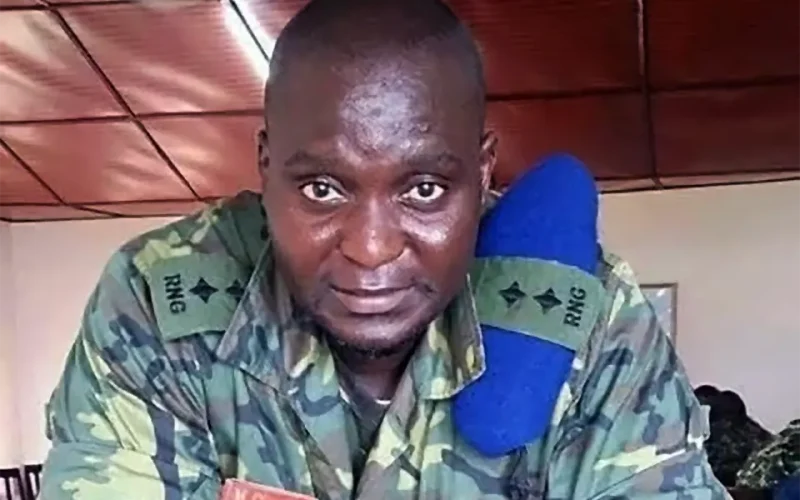
Michael Sang Correa, 46, received an 810-month sentence from Senior Judge Christine M. Arguello in Colorado for his role in a systematic torture campaign that included burning victims with molten plastic and subjecting them to weeks of vicious beatings.
“The victims of these crimes carried the weight of unimaginable suffering for years, not knowing whether they would ever see their torturer held accountable,” U.S. Attorney Peter McNeilly for the District of Colorado said following the sentencing. “Today’s sentence delivers a measure of justice for them and affirms that the United States stands firmly with those whose human rights have been violated.”
The case represents a watershed moment in U.S. efforts to prosecute human rights violators who seek refuge on American soil. Correa served in an elite military unit called the “Junglers” under Gambia’s former dictator Yahya Jammeh, targeting suspected dissidents in March 2006 following a failed coup attempt.
Evidence presented during trial revealed a horrific pattern of abuse at Mile 2 Prison, Gambia’s main detention facility. Victims testified to being electrocuted, beaten while suspended upside down, struck with hammers and pistols, and burned with cigarettes. One survivor described having his thigh seared with molten plastic before being suspended in a bag and dropped to the ground. Another recounted being suffocated with plastic bags and having a gun barrel forced into his mouth.
“This prosecution and sentence should serve as a deterrent for criminals who think they might escape accountability by coming to Colorado,” McNeilly emphasized, underscoring the precedent-setting nature of the case.
Correa managed to evade justice for more than a decade, obtaining a U.S. visa and entering the country in December 2016. Immigration and Customs Enforcement agents arrested him in 2019, leading to his indictment on torture charges in 2020.
The investigation spanned continents, with HSI Denver Field Office coordinating with agents in Senegal and personnel at the U.S. Embassy in Banjul. The Human Rights Violators and War Crimes Center provided crucial support in building the case against Correa.
During Friday’s sentencing hearing, several torture survivors described the lasting physical and psychological trauma they continue to endure from Correa’s actions. Their testimony provided a powerful reminder of the human cost of the systematic brutality carried out by Jammeh’s regime.
The conviction sends a clear message that the United States will pursue human rights violators regardless of where their crimes were committed. Acting Assistant Attorney General Matthew R. Galeotti of the Justice Department’s Criminal Division noted that “the United States will not be a safe haven for individuals who seek to conceal their egregious human rights violations.”
Correa was found guilty of one count of conspiracy to commit torture and five counts of torture following a trial that laid bare the systematic nature of abuse under Jammeh’s rule. The former dictator himself fled Gambia in 2017 after losing elections and currently lives in exile in Equatorial Guinea.
The case was prosecuted by a team including Assistant U.S. Attorney Melissa Hindman and attorneys from the Justice Department’s Human Rights and Special Prosecutions Section, highlighting the federal government’s commitment to pursuing accountability for international human rights violations.