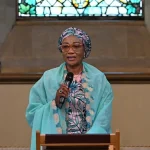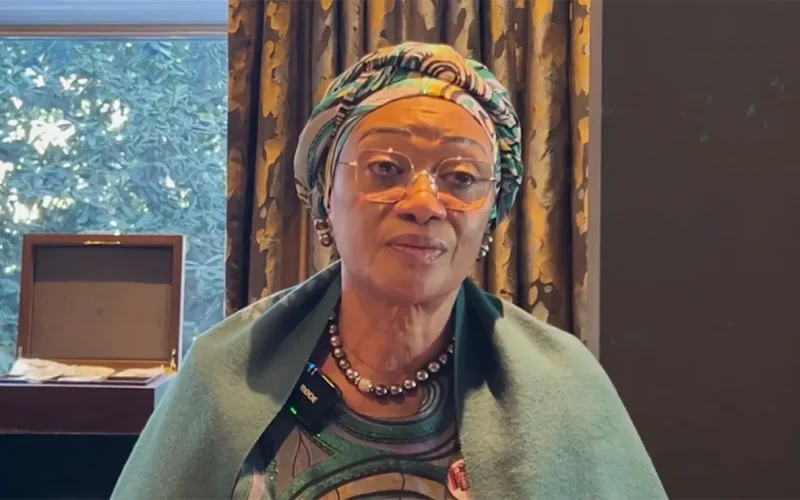
NIGERIA’S First Lady, Oluremi Tinubu, has characterised recent US military strikes on her country’s soil as a “blessing” and called for expanded American intervention – even as serious questions emerge about the accuracy of the Christmas Day bombing and its place in Nigeria’s complex security landscape.
“The intervention of the U.S. was quite a welcome development,” Tinubu told Fox News Digital during a week-long Washington visit aimed at deepening security cooperation. “We are expecting that there will be more.”
The statement represents a remarkable endorsement of foreign military action within Nigerian borders, particularly given mounting evidence that challenges the official narrative surrounding the strikes.
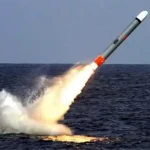
The Christmas Day operation targeted what US and Nigerian officials described as Islamic State positions in northwest Nigeria. But the government’s framing of the attack as a surgical counterterrorism success now faces significant pushback from within the country, where residents of the affected area have reportedly stated they had neither seen nor heard of a jihadist presence in their village prior to the bombing.
These allegations – that the strike may have hit a community with no active militant presence – add a troubling dimension to the First Lady’s enthusiastic welcome of American firepower. Her call for “more” US intervention comes without any public acknowledgement of these concerns or commitment to investigating what actually happened on the ground.
Tinubu’s Washington visit was designed to counter President Trump’s designation of Nigeria as a “country of particular concern” over religious freedom violations. The Nigerian government argues that violence in the country, while severe, is not religiously motivated but rather the result of criminal gangs, bandits, and opportunistic militants who target all faiths.
The First Lady pointed to a recent attack in Kwara state, where at least 162 people were killed in Muslim-majority villages – casualties she said demonstrated that “the violence now cuts across regions and religious lines.”
Yet this argument sits uneasily beside her embrace of US strikes explicitly framed as targeting “Islamist militants.” If the violence is truly non-sectarian criminality rather than religious extremism, the logic for American counterterrorism intervention – and the narrative justifying it – begins to unravel.
Tinubu occupies a unique position in Nigerian politics. A Christian pastor in an interfaith marriage to Muslim President Bola Ahmed Tinubu, she represents a living symbol of the religious coexistence the government says defines Nigeria. During her Washington meetings, she served as what one might call the administration’s “Christian validator” – a prominent Christian voice vouching for the government’s handling of religious violence.
This positioning is strategic. By centring a Christian leader in Nigeria’s response to US concerns about Christian persecution, the Tinubu administration attempts to defuse American criticism while simultaneously requesting the very military intervention that Trump-aligned voices have advocated.
It’s a delicate balancing act: deny that Christians are being uniquely targeted, while welcoming US military action ostensibly designed to protect Christians from Islamist violence.
Perhaps most striking is what remains unsaid in the First Lady’s remarks. There is no discussion of sovereignty concerns, no acknowledgement of the domestic debate over allowing foreign military operations on Nigerian soil, and no mention of accountability mechanisms for strikes that may have gone wrong.
“We live in Nigeria. We know the situation on the ground,” Tinubu said, yet her comments suggest a willingness to defer to American military judgment about where and when to strike within her own country’s borders.
The enthusiasm for expanded US involvement also raises questions about the capacity and credibility of Nigeria’s own security forces. The government has announced plans to recruit 50,000 new police officers and redeploy 11,000 personnel from VIP protection to conflict zones. But the eagerness for American military solutions may signal that these domestic measures are insufficient – or that the government lacks confidence in its own institutions.
Nigeria’s openness to US military presence cannot be separated from its strategic interests. The country sits on vast reserves of lithium, cobalt, and other critical minerals that Washington wants to keep out of Chinese control. The First Lady explicitly linked security cooperation to attracting foreign investment, suggesting that welcoming US strikes may be part of a broader transactional relationship.
“We’re doing all we can to make sure that when investors come, they can feel comfortable and their investment can yield,” she said.
In this framing, American bombs become a form of investment insurance—a signal to Western capital that Nigeria is willing to align itself with US security interests in exchange for economic engagement.
Lost in the geopolitical manoeuvring are the people of northwest Nigeria, who live under the threat of both militant violence and foreign military strikes conducted without their input or consent. If the allegations about the Christmas Day attack are true, that it struck a village with no jihadist presence, then the “blessing” the First Lady describes may have fallen on innocent civilians.
Christian advocacy organisations estimate that more than 50,000 Christians have been killed in Nigeria since 2009, though these figures are difficult to verify independently. Tens of thousands have been kidnapped. The violence is real and devastating.
But the solution Tinubu proposes, more US military intervention, with apparently no strings attached and little concern for accuracy or accountability, risks compounding the tragedy while eroding Nigerian sovereignty in the name of security.
As the First Lady returns from Washington having secured what she described as productive conversations with senior US officials, one question lingers: In the rush to embrace American military power, who speaks for the villagers who claim they never saw a jihadist before the bombs fell?