SOUTH Africa’s police service has been systematically transformed from a crime-fighting force into a political weapon serving African National Congress (ANC) insiders rather than ordinary citizens, according to a leading governance expert.
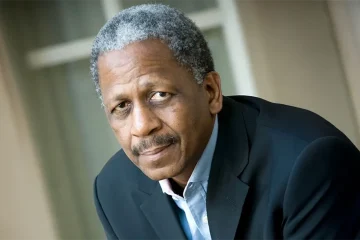
Professor Ivor Chipkin, director of the New South Institute and a specialist in public policy at the University of Pretoria’s Gordon Institute of Business Science, says the politicisation of the police began in earnest in 2000 and has steadily worsened over the past two decades.
Writing in The Conversation, Chipkin traces the decline back to a pivotal appointment that marked “the end of the focus on civilian control of the police force and prosecuting authorities.”
“The appointment of Jackie Selebi as national police commissioner in 2000 heralded a new era,” Chipkin writes. “Selebi was an African National Congress (ANC) insider… His appointment as police commissioner was the start of a significant change in the purpose of policing.”
From Crime Fighting to Political Protection
The transformation has been dramatic. Chipkin’s research reveals that while visible policing programmes meant to deter crime through patrols and roadblocks saw resource cuts and declining employee numbers between 2015 and 2021, the Protection and Security Services programme responsible for providing bodyguards to politicians experienced sharp increases between 2014 and 2016.
“Evidence heard by the commission of inquiry into state capture suggested that some officers and budgets in the service were even used to supply President Jacob Zuma and other politicians with what amounted to a private militia,” Chipkin writes.
The academic notes that this reorientation coincided with rising crime nationwide, a 24.5% decline in arrests, and reduced police effectiveness in solving crimes.
“Furthermore, a politicised police leadership effectively stopped policing various categories of crime. This was particularly true of offences like fraud, corruption, and certain types of theft, and particularly when politically connected persons were involved,” he states.
The politicisation came into sharp focus in early July when Lieutenant General Nhlanhla Mkhwanazi, KwaZulu-Natal’s police commissioner, made explosive allegations against Police Minister Senzo Mchunu. At a press conference while wearing a camouflage uniform, Mkhwanazi “implicated the minister of police, Senzo Mchunu, together with the deputy national commissioner for crime detection, in a scheme to close down investigations into political assassinations in the province.”
President Cyril Ramaphosa was forced to cut short a BRICS meeting in Brazil, placing the police minister on leave and announcing a judicial inquiry.
Structural Reform Needed
Chipkin warns that appointing another ANC insider as acting police minister compounds rather than solves the problem. He calls for fundamental structural changes to appointment processes.
“Under the current system, the president has sole discretion. This bakes party-political considerations into the decision-making process,” he writes.
The academic’s concerns are underscored by alarming crime statistics. “In 2024/25 the murder rate in South Africa stood at 42 per 100,000, among the highest in the world and close to levels not seen since the early 2000s.”
Chipkin’s analysis, based on a decade of research into South Africa’s security apparatus and forthcoming work in the Journal of Southern African Studies, suggests the police service now often serves as “the thin (blue) line between multiparty contestation according to constitutional rules and the criminalisation of politics in South Africa.”
His prescription is clear: “At the very least, the minister of police must not be an ANC insider. Democratic renewal in South Africa requires bringing the police firmly under parliamentary control.”
The transformation from the promising police reforms of the 1990s to today’s politicised force represents what Chipkin sees as a fundamental threat to South African democracy, where “police resources were actively redirected as weapons of elite competition, pursuing political enemies and protecting allies within the ruling party.”