THE UN refugee agency warned Thursday of a deteriorating humanitarian crisis in Afghanistan as mass returns from Pakistan coincide with earthquake recovery efforts in the same regions, while funding shortfalls threaten to cripple relief operations.
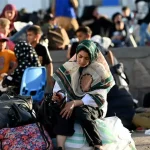
Nearly 100,000 Afghans crossed back from Pakistan in the first week of September alone, according to the UN High Commissioner for Refugees (UNHCR), pushing assistance capacities to breaking points as communities struggle to rebuild from recent devastating earthquakes.
Since January, 2.6 million Afghans have returned from neighbouring countries, with 554,000 arriving from Pakistan since April under Islamabad’s “Illegal Foreigners Repatriation Plan.” August saw 143,000 returns, many involuntary.
“We are witnessing a crisis within a crisis,” said Arafat Jamal, UNHCR Representative to Afghanistan, at a Geneva press briefing Thursday. The returns are “rising sharply at the very same time that communities are struggling to recover from a devastating earthquake in many of the same areas where returnees are arriving.”
The returnees include Afghans who have not been in their homeland for decades and others born in exile arriving for the first time. They are entering a country already stretched by poverty, drought and high humanitarian needs.
UNHCR operations face additional complications as the Taliban authorities have prevented female UN staff from entering UN compounds, forcing the temporary suspension of cash and support centres across Afghanistan.
“It is not possible to serve women without female staff,” Jamal said, calling for the immediate lifting of the restrictions affecting all UN agencies.
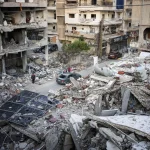
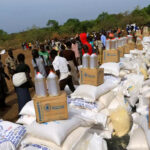
In earthquake-affected areas, UNHCR has encountered families who returned from Pakistan only to lose their homes again to seismic damage. The agency is distributing thousands of tents and relief supplies while scaling up protection programs.
The organisation urged Pakistan to maintain its “long-standing humanitarian approach” by extending legal stay for those needing international protection and developing mechanisms to identify vulnerable individuals.
UNHCR has updated its regional appeal to $258.6 million, warning that without additional funding, life-saving assistance for Afghan families cannot be sustained amid the overlapping crises.