THE world woke on Monday, 23 March 2026, to the grimly familiar spectacle of air raid sirens shrieking across Tel Aviv and the occupied West Bank, streaks of light cutting across the Israeli night sky as incoming Iranian missiles were intercepted — and the sober realisation that humanity may have stumbled into the most consequential military conflagration since the Second World War.
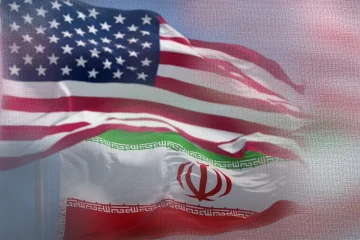
Twenty-five days after the United States and Israel launched their joint assault on the Islamic Republic of Iran on 28 February, the war shows no sign of relenting. More than 2,000 people have been killed. Iran’s missile capabilities have been degraded, its supreme leadership wounded and isolated. And yet Tehran is fighting back — and the weapons it is now threatening to deploy are not merely military. They are existential.
For the more than seven billion people who depend on the uninterrupted flow of oil and liquefied natural gas through the Strait of Hormuz, and for the tens of millions across Gulf states whose every drop of drinking water flows from electricity-powered desalination plants, this is no longer a regional war. It is a threat to the basic conditions of human life.
The Ultimatum and the Counter-Threat
On Saturday, President Donald Trump issued what amounted to a war ultimatum in miniature: Iran had 48 hours — until approximately 11:44 pm GMT on Monday — to “fully open” the Strait of Hormuz to all shipping, or face the obliteration of its power network.
Iran’s response came swiftly, and it was both calculated and chilling. The Islamic Revolutionary Guard Corps issued a statement that reframed Trump’s threat in terms of precise, symmetrical deterrence: “If you hit electricity, we hit electricity.” The IRGC made clear that any strike on Iranian power infrastructure would be answered with attacks on Israel’s power grid and on the plants supplying electricity to United States military bases scattered across the Gulf region.
“If you hit electricity, we hit electricity.” — Islamic Revolutionary Guard Corps, 23 March 2026
Iran’s Defence Council went further still, threatening to mine the entire Persian Gulf — not merely the Strait of Hormuz — with floating sea mines if Trump followed through on his threat. “The entire Gulf will practically be in a situation similar to the Strait of Hormuz for a long time,” the Council warned. The implications are staggering: the Persian Gulf, the jugular vein of global energy supply, converted overnight into a de facto naval exclusion zone.
In what appeared to be a partial climbdown, the IRGC also walked back earlier threats to strike desalination plants in Gulf countries — infrastructure whose destruction would deprive millions of drinking water in Bahrain, Qatar, the UAE and Saudi Arabia. The retraction was notable, but the threat to power grids — which feed those same desalination plants — renders the distinction largely academic.
The Energy Crisis That Dwarfs All Others
Fatih Birol, the executive director of the International Energy Agency, offered the starkest assessment yet of the conflict’s economic consequences. The energy disruption caused by Iranian attacks effectively closing the Strait of Hormuz, he said, was already worse than the oil shocks of the 1970s and the gas shortage that followed Russia’s invasion of Ukraine in 2022 — combined.
The IEA says this energy crisis ‘exceeds the last three shocks combined’ — a warning whose weight the world has barely begun to absorb.
The Strait of Hormuz carries approximately one-fifth of the world’s oil supply and a significant proportion of global liquefied natural gas. Its closure — even partial, even temporary — has sent fuel prices spiralling, stoked global inflation fears, and begun to convulse the postwar Western alliance in ways not seen since the Suez Crisis.
Oil markets opened choppy in Asian trading on Monday as the threat of strikes on Gulf electricity grids raised fresh fears of cascading supply disruptions. The prospect of Gulf desalination plants losing power — and the drinking water crises that would follow — added a humanitarian dimension to what markets had previously analysed purely in terms of barrels and basis points.
For African nations, the consequences are already severe. Fuel import costs have surged. Inflation is eating into the purchasing power of ordinary citizens from Lagos to Nairobi to Johannesburg. Energy-dependent industries are contracting. And the war’s trajectory suggests no relief is imminent.
A War Machine That Presses On
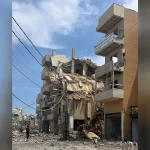
The Israeli military announced in the early hours of Monday that it had launched a new, broad wave of strikes on infrastructure in Tehran. Iranian news agencies reported that six people were killed and 43 were injured in strikes on residential buildings in the western city of Khorramabad. The Iranian Red Crescent posted footage of a severely damaged residential building in affluent northern Tehran, with emergency workers extracting a survivor from its upper floors on a stretcher.
Across the Gulf, Saudi Arabia’s defence ministry confirmed that two ballistic missiles had been fired towards Riyadh — one intercepted, the other landing in an uninhabited area. The reach of the conflict continues to expand.
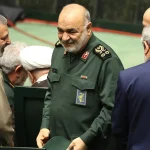
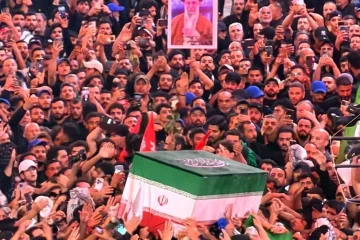
The Washington Post reported on Monday that Iran’s new Supreme Leader, Mojtaba Khamenei — who succeeded his father, Ayatollah Ali Khamenei, killed in the first wave of strikes on 28 February — was “injured, isolated, and not responding to messages.” An Iranian official had acknowledged earlier this month that Mojtaba had sustained a light injury; he has not been seen in public since his appointment to the supreme leadership. The decapitation of Iran’s command structure, so prized in the opening weeks of the campaign, has not produced the political capitulation Washington and Tel Aviv sought.
The Humanitarian Reckoning
The United Nations High Commissioner for Human Rights, Volker Türk, was unambiguous: attacks on civilian infrastructure — power grids, desalination plants, residential buildings — do not meet the strict legal definition of military objectives and amount to war crimes. His statement has been met, as similar statements often are, with silence from the belligerents.
Beyond the legal framework, the humanitarian arithmetic is devastating. Gulf states consume electricity at roughly five times the per-capita rate of Iran. Bahrain and Qatar depend on desalination for 100% of their drinking water. The UAE relies on desalination for more than 80% of its water supply; Saudi Arabia for 50%. A sustained attack on the Gulf’s power infrastructure — retaliatory or otherwise — would not merely disrupt economies. It would threaten mass civilian suffering on a scale the region has never known.
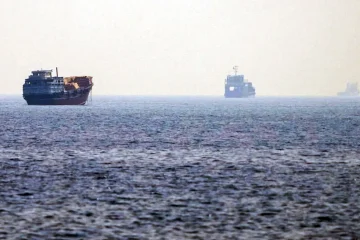
Iranian media reported that the Strait of Hormuz remains formally open to all shipping except vessels linked to “Iran’s enemies” — Indian and Pakistani ships, among others, have reportedly been permitted safe passage. But the distinction between formal openness and practical navigability is wearing thin as the conflict escalates.
The Contradictions of Washington’s War
Trump’s 48-hour ultimatum came less than a day after he had signalled that the United States might be considering winding down the conflict. The contradiction — between apparent off-ramp and fresh escalation — reflects the deep incoherence at the heart of the American war posture. Even as the President spoke of de-escalation, US Marines and heavy landing craft were reported to be heading to the region. The military machine and the political messaging are no longer aligned.
Israeli military spokesperson Brigadier General Effie Defrin told reporters on Sunday that Israel expects “weeks more of fighting against Iran and Hezbollah.” On the Lebanese front, Israeli troops raided Hezbollah sites in southern Lebanon over the weekend. Hezbollah retaliated with attacks on border areas in northern Israel; Israeli emergency services reported one person killed in a kibbutz near the Lebanese border — though Israel later said it was investigating whether the death had been caused by Israeli fire.
The war, in other words, is simultaneously too large to end quickly and too dangerous to be allowed to continue indefinitely. The world finds itself trapped between those two realities.
What Africa Must Say
For the African continent — home to 1.4 billion people, deeply integrated into global energy markets as both consumer and, increasingly, producer — the stakes of this war are not abstract. Rising fuel costs are already reversing hard-won development gains. Inflation is widening inequality. The disruption of global shipping routes is adding weeks and hundreds of millions of dollars to the cost of African imports.
Africa’s diplomatic voice — expressed through the African Union, through South Africa’s ongoing ICJ proceedings against Israel, through the continent’s non-aligned traditions — must be amplified in this moment. A war prosecuted by two nuclear-armed allies, against a country that sits astride the global energy system, without a credible diplomatic off-ramp, is not a regional problem. It is a planetary emergency.
A war prosecuted without a credible diplomatic off-ramp is not a regional problem. It is a planetary emergency — and Africa’s voice must be heard.
The world is praying for an end to this war. But prayer, without political courage, will not be enough.