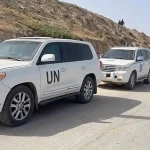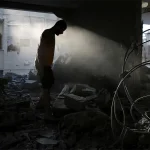
IN Gaza today, arithmetic tells a story of unprecedented human suffering. The numbers are stark and unforgiving: 600 trucks of aid are needed daily to meet basic humanitarian needs for over 2 million people. The reality? A handful of convoys trickling through tactical pauses, carrying supplies that disappear like water into desert sand.
“Everybody expects me to clap and say thank you,” said Jens Laerke, spokesperson for the UN Office for the Coordination of Humanitarian Affairs, his frustration cutting through diplomatic niceties. The bitter irony in his words captures the essence of Gaza’s crisis – where gratitude is expected for gestures that barely register against the magnitude of human need.
This is not a crisis that emerged overnight. It is the culmination of months of systematic deprivation, building toward what UN officials now describe as the brink of famine. The fuel shortage alone illustrates the depth of the emergency: Gaza receives 29,000 litres while requiring 70,000 litres daily just for emergency operations. Water, sanitation, and hygiene systems – the basic infrastructure of human dignity – continue to collapse.
The implications cascade through every aspect of life. Without fuel, water pumps fail. Without clean water, disease spreads. Without proper sanitation, the vulnerable become more vulnerable still.
Children as the Ultimate Victims
Perhaps no statistic captures the horror more completely than this: on average, a child has been killed every single hour since October 7, 2023. UNICEF reports that over 50,000 boys and girls have been killed or injured in the violence that followed Hamas’s massacre and hostage-taking.
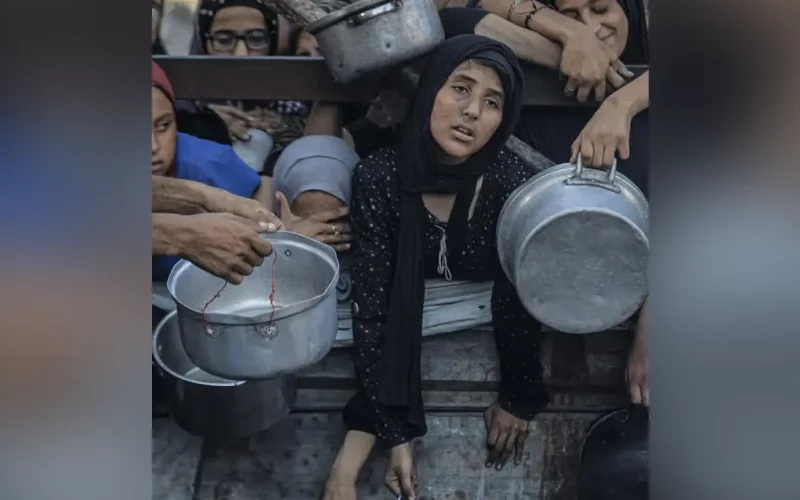
But death in Gaza comes in many forms. Severe malnutrition is spreading among children faster than aid can reach them, creating what UNICEF describes as “catastrophic levels” of child hunger. The cruellest mathematics of war: severely malnourished children are ten times more likely to die from pneumonia, measles, or other diseases. Most will never even reach a hospital to be counted among the dead.
The Paradox of Plenty and Scarcity
Thousands of tons of aid – food, medicine, supplies already paid for by international donors – sit just outside Gaza’s borders. The resources exist. The international will exist. What doesn’t exist is the facilitation needed to deliver life-saving supplies to those who desperately need them.
Israel’s recent announcement allowing limited commercial goods represents a recognition of the crisis, but also highlights the inadequacy of current approaches. Basic food products, baby formula, and hygiene items will enter through strictly controlled channels, available only to a limited number of Gaza-based traders. For a population where the vast majority is unemployed, the distinction between commercial and humanitarian supplies becomes academic – both remain largely out of reach.
The Long Road Ahead
“The needs inside Gaza are such that there should be hundreds and hundreds and hundreds and hundreds and more hundreds of trucks, not only every day, not only every week, but for months, possibly years to come,” Laerke emphasised. This is not a crisis that will be resolved with temporary measures or tactical pauses. It is a humanitarian emergency that demands sustained, massive intervention.
The international community faces a moment of moral reckoning. As diplomatic negotiations continue and military operations persist, over 2 million people – half of them children – exist in conditions that challenge the very notion of human dignity in the 21st century.
The Question of Tomorrow
Gaza’s humanitarian crisis has moved beyond statistics and into the realm of historical tragedy. The question is no longer whether the international community can respond adequately – it’s whether it will choose to do so before the window for meaningful action closes entirely. Every hour of delay is measured not just in trucks undelivered or fuel tanks unfilled, but in lives lost and futures destroyed.
In Gaza today, hope itself has become a scarce commodity, rationed like fuel and clean water. The world watches, calculates, and debates while children starve and families mourn. The mathematics of desperation continue their relentless count, hour by hour, day by day, life by life.