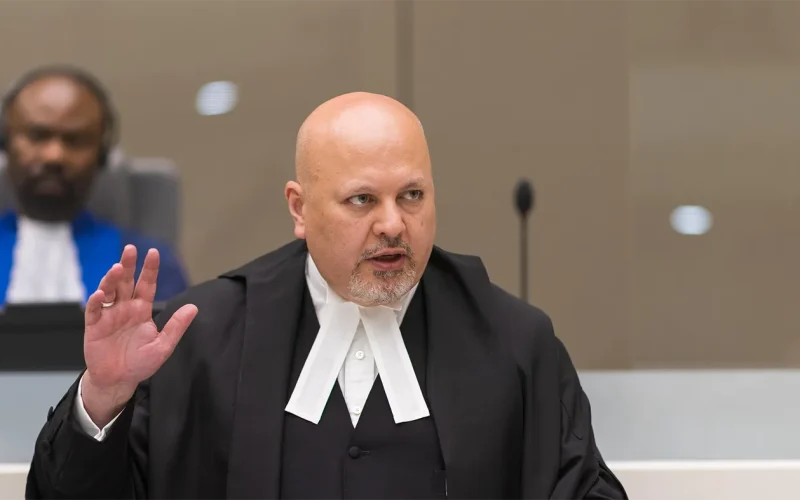
THE International Criminal Court has plunged into its most devastating crisis as chief prosecutor Karim Khan was suspended with immediate effect on June 8, 2026, the first time an ICC prosecutor has ever been formally removed from duty by the court’s oversight body. The suspension over sexual misconduct allegations carries a darker shadow for international justice advocates: Khan’s troubles exploded into full-blown political warfare only after he indicted Israeli Prime Minister Benjamin Netanyahu for war crimes in Gaza.
The Bureau of Assembly of Parties, the ICC’s executive committee, has referred Khan to disciplinary proceedings that will require all 125 member nations to vote on whether he should be permanently removed. A minimum of 63 countries must support dismissal for Khan to lose his position. Until that vote, Khan — 56, British-Iraqi, and previously the UK’s top prosecution lawyer — stands suspended while the world watches the most powerful war crimes tribunal face its ultimate test of independence.
The Allegations That Silenced the Prosecutor
The suspension follows an 18-month investigation into allegations that Khan engaged in sexual misconduct with a female aide within the ICC’s Office of the Prosecutor. The timeline reveals a scandal that unfolded with chilling precision.
On April 29, 2024, the female assistant reportedly arrived at colleagues’ offices “in tears,” claiming Khan had been sexually abusing her for months in his office, at his home, and during work missions. Three weeks later, on May 3, 2024, the ICC’s Independent Oversight Mechanism was formally notified of harassment allegations. By October 17, 2024, the allegations were unleashed publicly through an anonymous X account, igniting international media scrutiny.
The UN Office of Internal Oversight Services concluded there was a “factual basis” for the allegations concerning unwanted sexual advances and nonconsensual sexual contact. Yet three judges appointed to evaluate the legal findings reached a contradictory conclusion: the evidence was insufficient to confirm allegations “beyond a reasonable doubt.”
Khan’s attorneys have categorically denied every accusation, insisting the investigation is politically motivated. His lawyers have argued the findings do not establish or breach duty and that the timing coincides precisely with heightened global scrutiny of both the ICC and Khan following his historic actions on the Israel-Hamas conflict.
The Netanyahu Warrant: When Political Retribution Began
Everything changed on May 19, 2024, when Khan publicly requested arrest warrants against Israeli Prime Minister Benjamin Netanyahu and former Defense Minister Yoav Gallant, alleging war crimes and crimes against humanity in Gaza. On November 20, 2024, ICC judges approved those warrants alongside warrants for Hamas leader Yahya Sinwar, marking the first time the court indicted leaders of both sides of an active conflict.
The warrants cited a devastating pattern of alleged crimes: starvation as a tactic of warfare through food deprivation, intentional attacks on civilian populations, deliberate targeting of hospitals and clinics, and blocking of medical and humanitarian aid.
Within days of the Netanyahu warrant, Khan became the target of an unprecedented international pressure campaign that his legal team now argues was the true origin of the sexual misconduct investigation.
The Global Pressure Campaign
The reaction to Khan’s indictment of Netanyahu was swift and brutal. On November 21, 2024, Israeli politicians from across the spectrum united to condemn the ICC decision, labeling it antisemitic and an outrageous reward for terrorism. But behind diplomatic channels, far worse threats emerged.
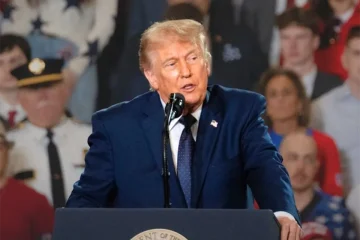
In February 2025, during Netanyahu’s visit to Washington, President Donald Trump imposed sanctions on Khan and other ICC officials. The sanctions targeted Khan personally, marking the first time the United States had sanctioned an ICC prosecutor for actions related to Israel.
Months earlier, in April 2024, a US official had warned Khan of disastrous consequences if warrants were issued against Netanyahu. Khan later stated: “I was left in no doubt… consequences were conveyed” regarding the pressure surrounding the Netanyahu warrant.
The threats extended beyond American officials. A British-Israeli defense lawyer named Nicholas Kaufman, linked to Netanyahu’s advisory team, delivered a message to Khan that Khan described as a warning he would be destroyed if the warrants were withdrawn. Meanwhile, an unnamed UK government official reportedly threatened that London could cut funding to the ICC and quit the Rome Statute if the warrants proceeded.
Khan now claims the sexual misconduct investigation is a politically motivated attack manufactured after he indicted one of the world’s most powerful leaders. His legal team argues the investigation gained traction only after the Netanyahu warrant made Khan a political target.
Israel’s Legal Counterattack
The Israeli government has responded with a legal offensive. In November 2025, Israel formally requested the ICC dismiss the Netanyahu warrant, citing the allegations against Khan as grounds for invalidating the court’s decision. Israeli officials have argued that Khan’s alleged misconduct undermines the credibility of the entire prosecution.
The timing is no accident. Israel is not an ICC member state, yet the court denied earlier challenges to its jurisdiction over the Palestine situation. Now, all 124 ICC member countries face legal obligations to arrest Netanyahu if they encounter him anywhere in the world. Israel’s dismissal request appears designed to preempt any such arrests by invalidating the warrant itself.
Israeli politicians have continued their public condemnation, with leaders from across the political spectrum calling the warrant illegitimate and politically motivated.
The Worst Crisis in International Justice History
Khan’s suspension represents the first formal removal of an ICC prosecutor by the court’s oversight body — a watershed moment that legal experts describe as the most dangerous crisis in the history of international justice.
The timing raises an unsettling question: Did the sexual misconduct investigation gain political traction because Khan became a target after indicting Netanyahu? The evidence suggests the investigation was filed in May 2024, but the suspension and disciplinary proceedings only began after the November 2024 warrant approval and the subsequent international pressure campaign.
Khan garnered unprecedented global attention not just for the Netanyahu warrant, but also for seeking arrest warrants against Hamas leader Yahya Sinwar for the October 7, 2023, massacre that killed 1,200 Israelis. By indicting leaders from both sides of an active conflict, Khan positioned the ICC as the world’s most prominent war crimes tribunal — and made himself a target for powerful governments on both sides.
What Happens Now
The Assembly of States Parties holds sole authority to remove Khan permanently, requiring a majority vote among its 125 member states. The vote will be held during a confidential ballot at a special session, with no public debate allowed.
During Khan’s absence, Deputy Prosecutors Nazhat Shameem Khan and Mame Mandiaye Niang have assumed leadership of the Office of the Prosecutor. Yet the suspension creates profound uncertainty about the continuity of the ICC’s Palestine investigation and other ongoing cases — particularly as pressure from global powers continues mounting over the Netanyahu warrant.
For the 300 million people living in ICC member states, Khan’s suspension represents a moment of existential doubt. The court’s ability to prosecute war crimes depends entirely on its perceived independence from political pressure. If Khan’s suspension is ultimately linked to his indictment of Netanyahu, the ICC may lose its credibility as an impartial arbiter of international justice.
The vote among 125 nations will determine whether the world’s most powerful war crimes tribunal survives its greatest crisis or collapses under the weight of political retribution.