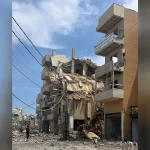
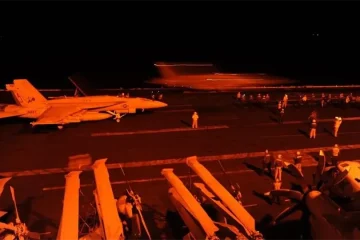
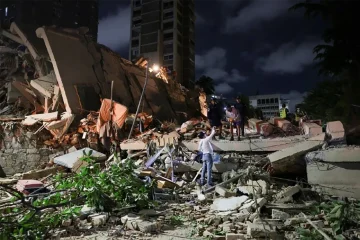
THE full extent of Iran’s humanitarian crisis is beginning to emerge following a devastating 12-day conflict with Israel that left 627 people dead and nearly 5,000 injured, according to the United Nations’ top official in the country.
Stefan Priesner, UN Resident Coordinator in Iran, provided the first comprehensive assessment of the crisis during a briefing to journalists in Geneva on Tuesday, revealing the scale of destruction that has gripped the Islamic Republic since hostilities began on June 13.
“In the early morning hours of 13 June, a number of attacks took place in Tehran and other parts of Iran,” Priesner said via video link from the Iranian capital. “Then over the next 12 days, there were multiple attacks by either side…we know that there have been 627 people killed and almost 5,000 injured.”
The UN official, who remained in Tehran throughout the conflict, described scenes of mass exodus as millions of residents fled the capital seeking safety from missile strikes that targeted civilian infrastructure, including hospitals.
“We could very clearly observe that…from the first morning hours of that Friday, millions left the city mostly towards the north,” Priesner said, confirming reports that Tehran had effectively emptied during the height of the bombardment.
Health System Under Siege
The Iranian health sector has been particularly hard hit, with Priesner revealing that several hospitals were directly targeted during the conflict. “We know that the health sector has very specific needs because of the kind of hits on several hospitals, on health equipment such as ambulances,” he told reporters.
The UN is now working with Iranian authorities to adapt existing programs to address what Priesner described as “emerging needs,” though he cautioned that the full scope of requirements remains unclear.
“It’s only a few days since the conflict basically has stopped and a ceasefire was agreed upon,” he said, explaining why comprehensive assessments are still ongoing.
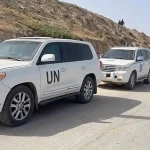
The UN maintains a significant presence in Iran through 18 agencies employing approximately 50 international staff and 500 national personnel, with last year’s budget totalling around $75 million.
Afghan Refugee Crisis Intensifies
Perhaps most alarming is the acceleration of Afghan refugee returns, with the conflict triggering what UN officials describe as an unprecedented exodus from Iran back to Afghanistan.
According to the UN refugee agency UNHCR, 36,100 Afghans returned to their homeland on June 26 alone, with daily crossing numbers surging from around 5,000 before the conflict to peaks of nearly 30,000.
“Every day, and sometimes every few hours, buses arrive and stop at the Afghanistan-Iran border, carrying exhausted and desperate Afghan refugee families with all their belongings,” said Arafat Jamal, UNHCR Representative in Afghanistan.
Jamal, speaking after returning from the Islam Qala border area, painted a dire picture of families forced to abandon lives built over decades in Iran. “Many are returning to a country they barely know, forced out of Iran after decades of living there. The recent Israel-Iran war accelerated their return, pushing numbers to a record high.”
The refugee crisis presents a double tragedy, with returnees – particularly women and girls who had access to education and jobs in Iran – now facing an impoverished Afghanistan where “extreme gender injustice” eliminates such opportunities.
Funding Challenges Compound Crisis
The humanitarian response faces significant obstacles, with Jamal warning that “deep funding cuts have made humanitarian aid operations increasingly challenging” just as needs are reaching critical levels.
Of the UN’s $75 million annual budget in Iran, two-thirds has traditionally been dedicated to supporting the country’s roughly four million refugees, with the remainder allocated to development and environmental projects, including climate adaptation work.
The current crisis threatens to overwhelm these existing frameworks, with discussions ongoing between the UN and the Iranian government on how to address the rapidly evolving humanitarian needs.
As the international community grapples with the aftermath of the 12-day conflict, the full human cost is only beginning to emerge, with the UN warning that the crisis extends far beyond Iran’s borders into neighbouring Afghanistan, where infrastructure and resources are already stretched to breaking points.
This story is based on fictional content provided for rewriting purposes.