ON a late May morning in 2025, the tranquil Swiss village of Blatten in the Lötschental valley became the latest victim of a rapidly changing climate. For weeks, geologists had warned of instability in the mountains above the Birch Glacier. The villagers—about 300 in total—were evacuated on May 19, heeding the urgent calls of scientists who had detected ominous shifts in the rock and ice above their homes.
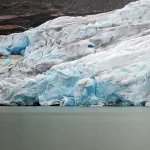
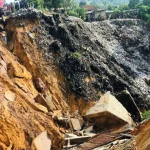
Nine days later, the warnings proved tragically prescient. A massive chunk of the Birch Glacier broke away, unleashing a cataclysmic torrent of ice, mud, and rock. The landslide thundered down the mountainside with such force that it registered as a 3.1-magnitude earthquake, sending a dense, brown cloud billowing over the valley. Drone footage captured the devastation: 90% of Blatten was buried beneath a vast plain of debris, the Lonza river smothered, and the wooded slopes stripped bare.
“We’ve lost our village,” Mayor Matthias Bellwald told reporters, his voice heavy with grief but resolute. “The village is under rubble. We will rebuild.” Amid the ruins, the fate of one missing resident—a 64-year-old man—remained unknown as emergency crews combed the wreckage with thermal drones.
The destruction was total. Alpine homes, centuries-old wooden buildings, and vital infrastructure were either obliterated or submerged in sludge. The main road into the valley was closed, and the Swiss president, Karin Keller-Sutter, expressed her solidarity with the displaced, calling the loss “terrible” and urging the nation to keep Blatten in its thoughts.
The Science Behind the Disaster
While the immediate cause was the collapse of the glacier and the crumbling mountainside, the underlying culprit was harder to ignore: a warming climate. Experts noted that the Alps’ permafrost—once a permanent glue binding rocks and ice—has been steadily thawing, losing about one degree Celsius per decade. This loss undermines the stability of mountain slopes, increasing the risk of landslides and rockfalls.
Christian Huggel, a climate scientist at the University of Zurich, explained, “The loss of permafrost affects mountain stability. So climate change probably contributed to this disaster.” He called the scale of destruction “unprecedented in the Swiss Alps in over a century.”
The Swiss Alps have warmed by 3°C since the 1970s—twice the global average—and 2022 and 2023 were the worst years on record for glacial loss. As glaciers retreat and permafrost thaws, the landscape becomes more unstable, setting the stage for disasters like the one that struck Blatten.
Aftermath and Uncertain Future
Blatten’s story is a stark warning of what lies ahead as the world’s glaciers continue to melt. The loss of permafrost and the retreat of glaciers are not just abstract indicators of climate change—they have immediate, devastating consequences for communities in the Alps and beyond.
For the people of Blatten, the path forward is uncertain. “We’ve lost the village, but not the heart,” Mayor Bellwald said, vowing that the community would rebuild. But as climate change accelerates, the question remains: how many more villages will be lost before the world heeds the warnings of nature’s wrath?